 Skip to content
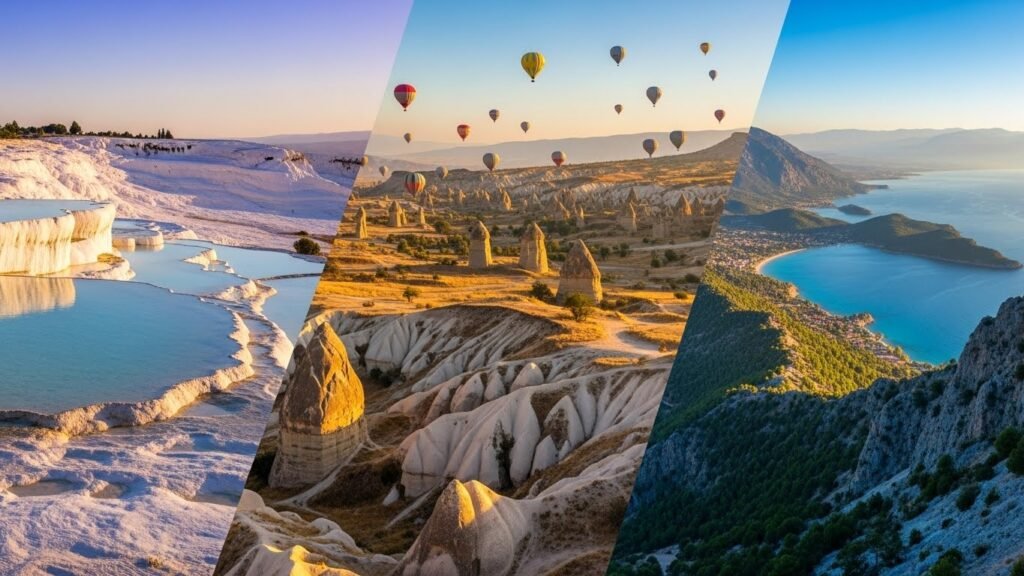
Turkey is a place that will totally blow your mind. It is where the East meets the West in a wild mix of vibes. You get to see old ruins and crazy nature all in one spot. If you want turkey natural attractions, you are in the right place. This land sits right on the edge of Europe and Asia. It has a history that goes back forever. You can find snowy peaks and sunny beaches on the same trip. The food is amazing and the people are super chill. Let’s dive into the best spots you need to visit right now.
Introduction to the Diverse Beauty of Türkiye
Turkey is a massive bridge between two different worlds. One foot is in Europe and the other is in Asia. This makes the culture feel like a huge, tasty melting pot. You will see sights that you can’t find anywhere else on earth. The landscapes change every few hours when you are on a road trip.
A Crossroads of Continents
This country is the heart of Eurasia. You can walk across a bridge in Istanbul and change continents in minutes. This location made it the center of big empires like Rome and the Ottomans. Every corner has a story from a thousand years ago. You get the best of both worlds here.
The Blend of History and Nature
The turkey natural attractions here are not just about rocks and water. You will find ancient temples built right into the side of mountains. Some of the coolest spots are UNESCO World Heritage Sites. Nature and history are basically best friends in this country. It is a dream for anyone who loves exploring.
Planning Your Journey
You need to know that the weather varies a lot. The coast stays warm while the mountains get super cold.
- Summer is perfect for hitting the beaches in the south.
- Spring is the best time for hiking and seeing flowers.
- Autumn is great for exploring cities without the huge crowds.
- Winter is for skiing or seeing Cappadocia covered in snow.
The Architectural Majesty of Istanbul

Istanbul is a city that never sleeps and looks like a movie. The skyline is full of massive domes and tall minarets. It is a mix of old school and super modern. You can feel the energy the second you step off the plane.
A Skyline of Domes and Minarets
The views in Istanbul are basically iconic. Massive mosques reach up toward the clouds. At sunset, the whole city glows in a golden light. It is one of the most beautiful cities you will ever see.
Hagia Sophia & The Blue Mosque
The Hagia Sophia is a total legend. It started as a church and then became a mosque. Inside, you will see golden mosaics that are hundreds of years old. Right across from it sits the Blue Mosque. It is famous for the thousands of blue tiles on its walls. Both are absolute must-see spots in any guide.
Suleymaniye Mosque
This spot is a bit more chill than the others. It was built by a famous architect named Sinan. The mosque sits on a hill and has the best views. You can see the whole city from the courtyard. It is a great place to escape the busy streets.
The Bosphorus Experience
The Bosphorus is the water that splits the city in half. A Bosphorus cruise is the best way to see the palaces. You can see old wooden houses right on the water. It is super romantic and very relaxing.
Cultural Hubs
The city is full of places to shop and eat.
- Grand Bazaar is a giant maze with thousands of shops.
- Spice Bazaar smells like heaven and has every tea imaginable.
- Beyoğlu is where the nightlife and cool cafes are.
- Topkapi Palace shows you how the sultans used to live.
The Aegean Coast and Ancient Heritage
The western side of Turkey is full of blue water and ruins. It is the place to go for sun and history. The Aegean coast has a very relaxed and Mediterranean feel.
The Ruins of Ephesus

Ephesus is like a time machine to the Roman Empire. It is one of the biggest ancient cities you can visit.
- Library of Celsus is a huge stone building that still stands tall.
- Temple of Hadrian has carvings that are super detailed.
- The Great Theatre could hold 25,000 people back in the day.
- Terrace Houses show you the fancy mosaics of the rich locals.
Bodrum: The Blue Gem of the Aegean
Bodrum is where the cool kids go to hang out. It has white houses and clear blue water everywhere.
- St. Peter’s Castle sits right on the harbour.
- Museum of Underwater Archaeology has cool stuff from old shipwrecks.
- Mausoleum of Halicarnassus was one of the original Seven Wonders.
The Surreal Landscapes of Central Anatolia
Central Anatolia looks like it belongs on another planet. It is home to some of the top turkey natural attractions. You won’t believe your eyes when you see the rocks here.
Cappadocia: The Land of Fairies and Caves

Cappadocia is famous for its fairy chimneys. These are tall rock towers that look like mushrooms. They call them hoodoos in some other places.
- Geological Origins come from old volcanic ash and erosion.
- Underground Cities like Derinkuyu were built to hide from enemies.
- Göreme Open Air Museum has churches carved right into the stone.
- Ihlara Valley is a green canyon with a river at the bottom.
- Love Valley has the most famous rock shapes for photos.
- Boutique Hotels let you sleep inside an actual cave room.
- Hot-Air Balloons fill the sky every single morning at sunrise.
The Radiant Turkish Riviera (South Coast)
The south coast is called the Turquoise Coast for a reason. The water is a bright, glowing blue. This is the heart of the turkey natural attractions scene.
Pamukkale and Hierapolis
Pamukkale means Cotton Castle in the local language. It is a UNESCO World Heritage Site with white terraces.
- White Travertine Terraces are made of mineral-rich thermal water.
- Hierapolis is an old Roman city right on top of the hill.
- Cleopatra’s Pool lets you swim over sunken Roman columns.
Antalya: The Gateway to the Riviera
Antalya is a big city with a great old heart.
- Kaleiçi is the old town with cool gates and stone walls.
- Konyaaltı Beach is a long pebble beach with mountain views.
- Duden Waterfalls are super cool because they fall into the sea.
- Aspendos has a Roman theatre that is still used today.
Fethiye and the Surrounding Natural Wonders

Fethiye is a base for some of the best nature trips.
- Blue Lagoon in Ölüdeniz is world-famous for its calm water.
- Butterfly Valley is a beach at the bottom of a giant cliff.
- Babadağ Mountain is where people go for epic paragliding.
- Saklıkent Gorge is a massive canyon where you walk in the water.
Hidden Coastal Gems
There are so many more spots along the coast to find.
- Kas is a tiny town with great food and diving.
- Kaputas Beach is a small cove with the brightest blue water.
- Patara Beach is 18 kilometers long and has ancient ruins.
- Iztuzu Beach is where the loggerhead sea turtles lay their eggs.
- Lycian Rock Tombs look like temples carved into the cliffs.
- Kekova: An area famous for its “Sunken City,” where ancient ruins can be seen just beneath the clear turquoise water.
- Butterfly Valley: A secluded beach nestled between high cliffs, accessible primarily by boat and named for the rare butterfly species that migrate there.
The Rugged Mountains and Remote East
The eastern side of Turkey is wild and very different. It is for people who want a real adventure.
Mount Nemrut
Mount Nemrut has giant stone sculptures on its peak.
- Stone Sculptures include heads of gods and kings.
- King Antiochus built this as a giant tomb for himself.
- Sunrise is the best time to see the statues glow red.
Lake Van and the Eastern Reaches

Lake Van is the largest lake in Turkey.
- Akdamar Island has an old Armenian church with cool carvings.
- Submerged City is an old fortress hidden under the water.
- Van Breakfast is a huge feast with dozens of small plates.
Mount Ararat (Ağrı Dağı)
This is the highest peak in the whole country.
- Noah’s Ark is said to have landed right on this peak.
- Mountaineering here is tough and needs a lot of prep.
- Wildlife includes bears and rare mountain goats.
Mardin: The Golden City of Mesopotamia
Mardin is an old city made of yellow stone. It looks out over a massive flat plain. The streets are like a maze for donkeys and people.
The Lush Black Sea Region (The North)
The North is green, rainy, and full of forests. It feels more like the Alps than the Mediterranean.
Sumela Monastery

This monastery is built into a cliff high above a forest. It is a Greek Orthodox site with amazing paintings inside. It looks like it is floating in the clouds.
Kaçkar Mountains & Ayder Plateau
This area is a dream for people who love trekking.
- Ayder Plateau is a high mountain village with wooden hotels.
- Thermal Baths here are great for relaxing after a hike.
- Rize is the center of the tea-growing region.
National Parks of the North
The parks here are full of lakes and massive trees.
- Kure National Park has deep canyons and wild nature.
- Yenice Forests are great for seeing rare plants and trees.
- Uzungöl is a famous lake surrounded by tall green mountains.
Exploring the Wilderness: Hiking and Ecotourism
Turkey is a top spot for ecotourism and outdoor fun.
The Lycian Way
This is a 500 kilometer hiking trail along the coast. You walk through old ruins and pine forests. You can stop at tiny villages along the way.
Dilek Peninsula National Park
This park has some of the last untouched beaches.
- Zeus Cave is a cool cave with deep blue water you can swim in.
- Wildlife includes wild boars that walk right onto the beach.
Cultural and Climatic Considerations for Travelers
Traveling here is easy if you know the basics.
- Traditional Towns like Kusadasi and Marmaris are very welcoming.
- Hospitable Culture means you will get offered tea everywhere.
- Cuisine is more than just meat; try the meze and fresh fish.
10-Day Road Trip Itinerary for Turkey’s Natural Wonders

This itinerary is designed for travelers who want to experience the wild mix of vibes where East meets West. From the edge of Europe and Asia to the heart of Eurasia, this road trip showcases how the landscapes change every few hours.
Days 1-2: Istanbul – The Gateway of Empires
- Arrival and Exploration: Start in Istanbul, the city that bridges two continents. Visit the Hagia Sophia to see golden mosaics and the Blue Mosque for its famous tile work.
- Panoramic Views: Head to the Suleymaniye Mosque, built by the architect Sinan, to enjoy the best courtyard views of the city.
- On the Water: Take a Bosphorus cruise to see old wooden houses and palaces along the water that splits the city in half.
- Bazaar Culture: Spend time in the Grand Bazaar’s maze of shops or the Spice Bazaar for exotic teas.
Days 3-4: Cappadocia – The Martian Landscape
- Fairy Chimneys: Travel to Central Anatolia to see rock towers that look like mushrooms.
- Underground Discovery: Explore deep underground cities like Derinkuyu, originally built to hide from enemies.
- Sunrise Skies: Wake up early to see hot-air balloons fill the sky at sunrise.
- Cave Living: Stay in a boutique cave hotel to experience sleeping inside an actual stone room.
Day 5: Pamukkale – The Cotton Castle
- Travertine Terraces: Walk along the white mineral-rich terraces made of thermal water.
- Ancient Spa: Explore the ruins of Hierapolis, an old Roman city sitting right on top of the hill.
- Cleopatra’s Pool: Swim over sunken Roman columns in the warm, mineral-rich waters.
Days 6-7: Fethiye and the Turquoise Coast
- The Blue Lagoon: Visit Ölüdeniz for its world-famous calm and clear water.
- Butterfly Valley: Take a boat to the beach at the bottom of a giant cliff to look for rare butterflies.
- Saklıkent Gorge: Walk through the water in this massive canyon.
- Aerial Adventure: Head to Babadağ Mountain for an epic paragliding experience overlooking the coast.
Day 8: Kaş and Hidden Coastal Coves
- Kaputas Beach: Stop at this small cove to see some of the brightest blue water in the country.
- Patara Beach: Explore 18 kilometers of sand and see where loggerhead sea turtles lay their eggs.
- Lycian History: View the rock tombs carved high into the cliffs that look like ancient temples.
Day 9: Antalya – The Heart of the Riviera
- Old Town Charm: Walk through Kaleiçi to see the old stone walls and historic gates.
- Waterfalls: Visit the Duden Waterfalls, which are unique because they fall directly into the sea.
- Ancient Theatre: Tour Aspendos to see a Roman theatre that is still used for performances today.
Day 10: Departure and Reflection
- Final Bites: Enjoy a last meal of fresh meze and fish before heading home.
- Planning the Next Trip: Reflect on the snowy peaks and sunny beaches you encountered on this single journey.
Recommended Boutique Hotels for Your Turkey Road Trip
Finding the right place to stay can make your trip even more memorable. Many of the coolest spots in the country feature boutique hotels that let you sleep inside history or right on the edge of nature.
Istanbul: Historic Elegance
- Sultania Hotel: Located in the heart of the city, offering a mix of old-school Ottoman luxury and modern comfort.
- White House Hotel Istanbul: A charming spot near the Hagia Sophia and Blue Mosque.
- Georges Hotel Galata: Situated in the trendy Beyoğlu district, famous for its nightlife and cool cafes.
Cappadocia: Living in the Stone
- Museum Hotel: A luxury boutique hotel where you can sleep inside an actual cave room.
- Kelebek Special Cave Hotel: Offers traditional fairy chimney rooms with views of the balloons at sunrise.
- Sultan Cave Suites: Known for its famous terraces that provide the perfect spot for photos of the valley.
Pamukkale: Near the Cotton Castle
- Venus Suite Hotel: A relaxed boutique option located very close to the white travertine terraces.
- Doga Thermal Health & Spa: Perfect for those who want to experience the healing mineral-rich thermal water.
Fethiye & Ölüdeniz: Coastal Retreats
- Yacht Classic Hotel: Located on the Fethiye harbour, providing a Mediterranean feel and high-end service.
- Lissiya Hotel: Tucked away in the mountains near Butterfly Valley, offering views of the turquoise water.
- Nautical Hotel: A secluded escape for those looking for romance and a “hidden gem” vibe.
Kaş: Bohemian Charm
- Meis Exclusive Hotel: Features bright blue water views and a quiet, relaxed atmosphere.
- Linda Beach Boutique Hotel: A small, welcoming hotel in this tiny town known for great food.
Antalya: Old Town Heritage
- Tuvana Hotel: Located in the old town of Kaleiçi, this hotel consists of restored Ottoman-era stone walls and gardens.
- Akra V Hotel: Offers modern stays with views of the Mediterranean and the Taurus Mountains.
Transportation Options for Connecting Turkey’s Natural Wonders
Traveling through Turkey is efficient once you understand the basic options for moving between the edge of Europe and Asia and the remote eastern reaches. The landscapes change every few hours, making the journey as scenic as the destinations.
Road Trips and Car Rentals
- Flexibility: Renting a car is the best way to see turkey natural attractions that are off the beaten path, like the Yenice Forests or Mount Nemrut.
- Scenic Routes: Driving allows you to experience the transition from snowy peaks to sunny beaches on a single journey.
- Coastal Access: A car is ideal for exploring hidden coastal gems like Kaputas Beach or the 18-kilometer stretch of Patara Beach.
- Navigation: Modern GPS makes it easy to navigate through traditional towns and reach sites like the Saklıkent Gorge.
Domestic Flights
- Time Efficiency: Because Turkey is a massive bridge between different worlds, flying is the fastest way to travel from Istanbul to the far east, like Lake Van.
- Major Hubs: Istanbul serves as the heart of Eurasia and the primary gateway for flights to Antalya or Cappadocia.
- Regional Airports: You can fly directly into Erzurum for Mount Ararat or Trabzon to reach the Sumela Monastery and Uzungöl.
Public Buses and Shuttles
- Extensive Network: Turkey has a world-class bus system that connects almost every city, including remote spots like Mardin or the Black Sea region.
- Comfort: Long-distance buses are super chill, often offering tea, snacks, and comfortable seating.
- Local Minibuses (Dolmuş): These are perfect for short trips, such as getting from Fethiye to the Blue Lagoon in Ölüdeniz.
Specialized Travel
- Bosphorus Cruises: In Istanbul, the best way to see palaces and old wooden houses is by taking a cruise on the water that splits the city in half.
- Boat Trips: Reaching Butterfly Valley or seeing the submerged city at Akdamar Island requires local boat transfers.
- Hiking: For a slower pace, the Lycian Way is a 500-kilometer trail where you can walk through old ruins and pine forests.
Recommended Packing List for Turkey’s Varied Climates
Since Turkey spans several unique climate zones, you will need to pack strategically to stay comfortable. You might experience the humid air of the Aegean coast and the dry, chilly mornings of Central Anatolia all in the same week. This guide will help you prepare for everything from mosque visits to mountain treks.
Essential Clothing for All Seasons
- Comfortable Walking Shoes: This is the most important item. From the uneven cobblestones of Istanbul to the rocky trails of Cappadocia and ancient Ephesus, you will be on your feet a lot.
- Lightweight Layers: Temperatures can fluctuate between day and night. Pack light sweaters, cardigans, or a pashmina that you can easily add or remove.
- Modest Attire for Mosques: Respecting local customs is key. Both men and women should have clothing that covers their shoulders and knees.
- A Versatile Scarf: For women, a lightweight scarf is essential for covering your hair when entering mosques. It also serves as great protection against the sun or wind.
- Breathable Fabrics: Stick to cotton and linen, especially for the summer. Avoid heavy denim, which takes a long time to dry and can feel stifling in the Mediterranean heat.
Regional and Seasonal Specifics
- For the Turkish Riviera (Summer): Don’t forget your swimwear, a wide-brimmed hat, and polarized sunglasses. Reef-safe sunscreen is recommended if you plan on taking boat trips in Fethiye or Kaş.
- For Cappadocia (Mornings): Even in the summer, pre-sunrise balloon rides and early hikes can be quite chilly. A light fleece or synthetic jacket is a must.
- For the Black Sea and East (Spring/Autumn): This region is much rainier. A packable waterproof rain jacket and waterproof walking shoes will keep you comfortable during sudden showers.
- For Winter Travel: If you are visiting the eastern regions like Van or Erzurum, you will need serious insulation. Pack thermal base layers, a down jacket, gloves, and thick wool socks.
Health, Tech, and Travel Essentials
- Sun Protection: Sunscreen is often more expensive in tourist areas. Bring your own high-SPF bottle, along with lip balm that contains SPF.
- Hydration Tools: A reusable water bottle is eco-friendly. In rural areas or long hiking stretches like the Lycian Way, consider a hydration bladder.
- Electronics: Turkey uses European-style Type C and F plugs. A portable power bank is essential for long days of navigating with GPS or taking photos.
- Personal Care: Pack hand sanitizer and small tissue packs. Some public restrooms in remote areas or older bazaars may not always be fully stocked with paper.
- Health Kit: Include basic medications for motion sickness (useful for the winding mountain roads), pain relief, and any personal prescriptions.
Packing Strategy Tips
- The “Modesty Hack”: For women, maxi dresses are the ultimate travel hack—they are stylish, cool in the heat, and usually modest enough for spontaneous mosque visits.
- Leave Room for Souvenirs: Turkish markets are legendary. You’ll likely want to bring home some high-quality cotton towels (Peshtemals) or spices, so don’t fill your suitcase to the brim.
- Roll, Don’t Fold: Rolling your clothes saves space and helps prevent wrinkles, which is great when you are moving between boutique hotels every few days.
Essential Turkish Phrases for Your Road Trip
Learning a few local words will help you connect with people as you travel between the edge of Europe and Asia. Turkish people are famous for their hospitality, and they truly appreciate it when travelers try to speak their language. These phrases will help you navigate traditional towns and interact with locals more easily.
Basic Greetings and Politeness
- Merhaba (mer-ha-ba): This is the most common way to say “Hello.” You can use it at any time of day.
- Teşekkür ederim (te-shek-kur e-der-im): This means “Thank you.” It is a bit of a mouthful, so you can also just say Sağol (sa-ol) for a shorter version.
- Lütfen (lut-fen): The magic word for “Please.”
- Günaydın (goo-nay-din): Use this for “Good morning” when you head out for your early balloon ride or breakfast.
- İyi akşamlar (ee-ee ak-sham-lar): This means “Good evening” and is perfect for when you arrive at your boutique hotel.
- Rica ederim (ri-ja e-der-im): The standard way to say “You’re welcome.”
Navigating the Road and Directions
- Nerede? (ne-re-de): This means “Where is…?” You can use it for anything, like “Müze nerede?” (Where is the museum?).
- Sağ (sa) and Sol (sol): These mean “Right” and “Left.” They are essential for following directions in a new city.
- Düz (duz): This means “Straight.”
- Otogar (o-to-gar): The word for the main bus station.
- Benzinlik (ben-zin-lik): You will need this to find a “Gas station” during your road trip.
Dining and Markets
- Afiyet olsun (a-fee-yet ol-sun): Locals say this to each other before or after a meal; it basically means “Enjoy your meal.”
- Hesap, lütfen (he-sap lut-fen): Use this to ask for “The bill, please” at a cafe or restaurant.
- Çok güzel (chok goo-zel): This means “Very beautiful” or “Very good.” Use it to compliment the food or a view.
- Ne kadar? (ne ka-dar): The most important phrase for shopping in the Grand Bazaar; it means “How much is it?”
- Ekmek (ek-mek): The word for “Bread,” which is a staple of every Turkish meal.
Useful Social Phrases
- Evet (e-vet) and Hayır (ha-yir): These mean “Yes” and “No.”
- Tamam (ta-mam): This is the Turkish word for “Okay.” You will hear it constantly throughout the day.
- Hoşça kalın (hosh-cha ka-lin): A polite way to say “Goodbye” when you are the one leaving a place.
- Güle güle (gu-le gu-le): This is “Goodbye” said by the person who is staying behind.
- Afedersiniz (a-fe-der-si-niz): Use this for “Excuse me” to get someone’s attention.
Emergency and Safety
- Yardım edin! (yar-dim e-din): This means “Help me!” and should only be used in emergencies.
- Su (su): The word for “Water.” Staying hydrated is key while exploring turkey natural attractions.
- Tuvalet (tu-va-let): The universal word for “Toilet” or “Restroom.”
Conclusion
Turkey is a land of unmatched beauty that truly offers something for every traveler. Throughout this journey, we have explored how this unique country acts as a massive bridge between two different worlds—blending the deep history of the Roman and Ottoman empires with surreal geological wonders. Whether you are walking through the iconic skyline of Istanbul, drifting over the fairy chimneys of Cappadocia in a hot-air balloon, or soaking in the turquoise waters of the Blue Lagoon, you are witnessing a landscape that changes every few hours.
The true magic of Turkey lies in its diversity. You can find snowy peaks in the East and sunny, Mediterranean beaches in the West all within the same trip. Beyond the famous landmarks, hidden gems like the Yenice Forests and the remote stone houses of Mardin offer a glimpse into the country’s quiet, untamed side. This guide has shown that Turkey is not just a destination for sightseeing, but a place to experience a rich, hospitable culture and a history that breathes life into every corner of its extraordinary terrain.
As you plan your own adventure to explore turkey natural attractions, remember that the warmth of the Turkish people is just as memorable as the views. From the “Cotton Castle” of Pamukkale to the rugged peaks of Mount Ararat, this country promises an unforgettable experience that stays in your heart long after you return home. Turkey is a land of surprises, and its breathtaking landscapes are waiting for you to discover them.
FAQs About Turkey Natural Attractions
What are the best turkey natural attractions for birdwatching?
The Dilek Peninsula-Büyük Menderes Delta National Park is a premier spot, acting as a vital stopover for migratory birds. You can observe over 250 species here, including flamingos, herons, and pelicans. Lake Van also attracts birdwatchers from all over the world due to its vibrant ecosystem and diverse avian life.
Where can I see rare wildlife in the Eastern Anatolian mountains?
Mount Ararat (Ağrı Dağı) National Park is home to rare species like the Armenian mouflon and the Caucasian lynx. While extremely rare to spot, the Anatolian leopard is also noted to inhabit this vast area.
Are there any specific natural wonders for seeing butterflies?
Butterfly Valley near Fethiye is a sanctuary for over 80 species, including the Jersey Tiger Moth. In the Yenice Forests, birdwatchers can also find unique avian species like woodpeckers and eagles amidst the high biodiversity.
Which caves are famous for their unique geological formations?
Dim Cave is known for its limestone erosion and karst topography, featuring impressive stalactites and stalagmites. Altinbesik Cave National Park houses a unique underground lake and complex limestone structures.
What is the legend behind the Zeus Cave?
According to Greek mythology, the King of the Gods, Zeus, used the cave to bathe in its milky blue waters. It is located within the Dilek Peninsula and is famous for its refreshing coolness and stalactite formations.
Where can I find natural “eternal flames” in Turkey?
The Chimaera flames, known locally as Yanartaş, are located on Mount Olympos. These are natural geothermal fires that have been burning for thousands of years due to gas seeping through the rocks.
What makes Salda Lake different from other lakes in Turkey?
Salda Lake is nicknamed the “Turkish Maldives” because of its blinding white sand and clear blue water. It has a unique geological formation with a high concentration of magnesium, giving it a tropical appearance.
Is there a specific park known for having “Seven Lakes”?
Yedigöller National Park, located in Bolu, is famous for its seven small lakes formed by landslides. It is a popular spot for photography and seeing the changing colors of the flora throughout the seasons.
Which canyon is best for white-water rafting?
Köprülü Canyon National Park, situated in the Taurus Mountains, is the most popular destination for rafting and water sports. The canyon provides a dramatic backdrop for adventurous travelers.
What is the “Blue Lagoon” most famous for?
The Blue Lagoon in Ölüdeniz is world-renowned for its turquoise waters and its status as a top paragliding destination. It sits on a breathtaking stretch of water protected by majestic mountains.
Are there any natural attractions in the Black Sea region for trekking?
The Kaçkar Mountains National Park offers rugged peaks and emerald-green valleys perfect for mountaineers. The park covers over 50,000 hectares and features challenging trails for hikers.
Where is the best place to experience a traditional Turkish plateau?
Ayder Plateau in the Rize province is a famous mountain village known for its lush green valleys and waterfalls. It is also highly regarded for its natural hot springs believed to have healing properties.
What are the main features of the Yenice Forests?
The Yenice Forests in Karabuk are known for their incredible biodiversity and “fairy tale” atmosphere. A major highlight is Lake Hasanerdiren, which offers a picture-perfect reflection of the surrounding rare tree species.
Can you visit an ancient city underwater in Turkey?
Kekova is famous for its partially submerged ruins of an ancient city, which visitors can see via boat or kayak. It is located along the Lycian Coast of the Mediterranean Sea.
What is the historical importance of Patara Beach?
Beyond its 18km of golden sand, Patara was a thriving port city during the Lycian period. It is part of a protected area that preserves both ancient ruins and the nesting grounds of loggerhead sea turtles.
Why is the Ihlara Valley culturally significant?
The valley is a 14km lush canyon where early Christians sought refuge, carving over 100 rock-cut churches into the cliffs. Many of these churches still contain mesmerising frescoes today.
What are the “Fairy Chimneys” in Cappadocia?
Also known as hoodoos, these are whimsical rock formations carved over millions of years by wind and water. Many were historically hollowed out to serve as cave dwellings and churches.
Which lake is known for its “Cotton Castle” appearance?
Pamukkale is the site known as the “Cotton Castle” due to its white mineral-rich carbonate terraces. The calcium-rich thermal waters create a surreal landscape of cascading white pools.
Where can I see the tallest statues in Turkey’s mountains?
Mount Nemrut features colossal stone heads and statues dating back to the 1st century BC. These monuments were erected by King Antiochus I on a peak that stands at 7,001 feet.
What natural attractions can be found near Dalyan?
Dalyan is famous for Iztuzu Beach, a vital breeding ground for loggerhead sea turtles. The area is also well-known for its natural mud baths and the ancient Lycian rock tombs carved into the cliffs.