 Skip to content
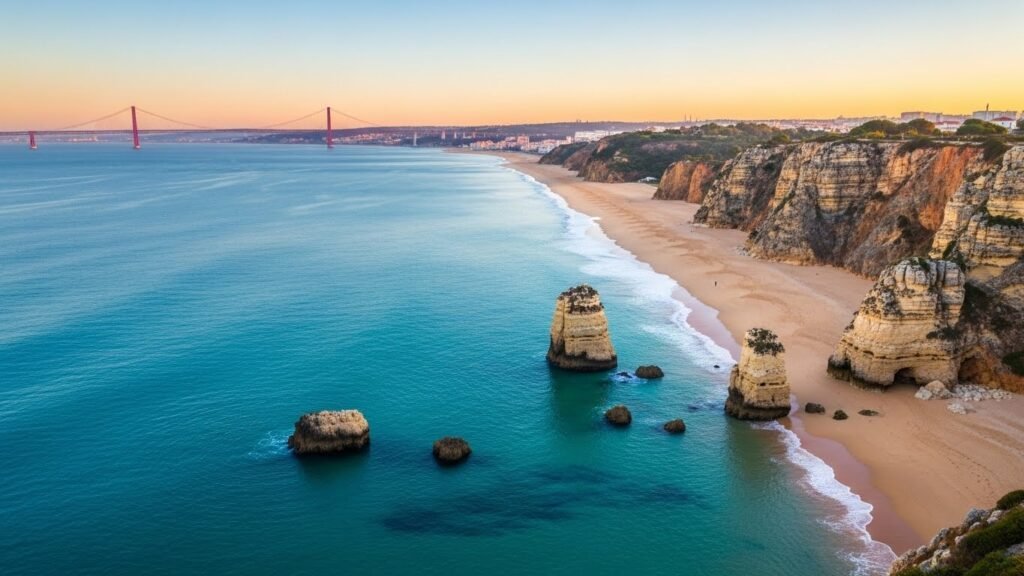
Lisbon is a city of hills and tiles but it is also about the sea. Most people think of it as just a cool city break. They imagine the old trams and the chic shops in the center. But you should know that some of the best lisbon portugal beaches are just a short ride away. You can easily find a spot to chill in the sun or ride some big waves. This guide will show you how to find the perfect beach for your vibe.
Exploring Lisbon’s Coastline: More Than Just a City Break
The coast near Lisbon is a mix of wild nature and fancy towns. You get the best of both worlds here. You can see high cliffs and also find quiet coves with soft sand. The area is split into four main parts that each have a different feel. These are the Cascais line, the Sintra coast, the Caparica shore, and the Arrabida park.
- The Cascais Line is easy to reach and has a high-end feel.
- The Sintra Coast is rugged and perfect for those who love drama.
- Costa da Caparica has long stretches of white sand and cool beach clubs.
- Arrabida National Park looks like the Mediterranean with clear blue water.
Geography of the Coast
The coast goes in several directions from the city center. To the west, the train follows the Tejo River to the Atlantic Ocean. To the south, you cross the big bridge to find endless sandy shores. Up north, the land gets rocky and the waves get much bigger. Knowing these zones helps you pick the right day trip.
Traveler’s Toolkit
You need to be ready for the changing weather on the coast. The sun is strong but the wind can be very chilly. Pack your swimsuit and plenty of sunscreen for the day. Bring good shoes if you want to explore the cliffs or the trails. Do not forget your sunglasses and a light jacket for the evening.
Getting There: Navigating the Lisbon Coast
Getting to lisbon portugal beaches is actually pretty simple. You have a few ways to get around depending on where you want to go. Some places are a breeze to reach with public transit. Others require a bit more planning and maybe a set of wheels.
By Train
The train is the best way to see the Cascais coast. You go to the Cais do Sodre station in the city. The ride is very cheap and gives you great views of the water. Trains run often and stop at many popular beach spots. It is the most sustainable way to travel for a day trip.
By Rideshare (Uber/Bolt)
Ridesharing is a great call for groups. It is very handy for reaching the south shore or Caparica. The cost is often around 25 to 30 dollars from the city center. You can skip the bus schedules and go right to the beach club. It saves you a lot of time and hassle.
Renting a Car
A rental car is a must for the wilder spots. You will need it to reach the deep parts of Arrabida or Sintra. Parking can be tough in the summer so you must arrive early. Having your own car lets you find the hidden gems that buses do not reach. It gives you the freedom to chase the best sunset views.
Public Transport Constraints
Some beaches are hard to reach without a car. Buses to remote areas do not run very often. You might spend a lot of time waiting at a bus stop. It is better to use an Uber or a car for the national parks. This keeps your trip stress-free and fun.
The Sophisticated West: Cascais and Estoril
The west coast is where the city meets luxury. These towns have been famous summer retreats for a long time. You will find cobblestone streets and very fancy houses here. It feels a bit like the coast of California but with European soul.
Cascais: The Santa Barbara of Europe
Cascais is the cutest and prettiest town near the city. It has a lively feel but stays relaxed at the same time. You can spend hours just walking through the historic town center. It is full of history and great places to eat.
- Praia da Rainha is a tiny beach right in the middle of town.
- Praia da Conceicao is a bigger spot that is very easy to access.
- Boca do Inferno is a rocky cliff where the waves crash hard.
- Tasca Da Vila is the place to go for the best local sardines.
Estoril: The Family-Friendly Classic
Estoril is right next to Cascais and is very easy to reach. It is known for having a quieter and more family vibe. The water here is usually very calm and safe for kids. You can find many cafes and sunbeds for a lazy day. It is one of the closest beaches to the city center.
The Wild North: Sintra’s Rugged Gems
The coast of Sintra is for those who love nature and big views. It is much more dramatic than the southern beaches. The wind can be strong and the water is cold but the beauty is unmatched. It is home to some of the most iconic spots in the country.
Azenhas do Mar: The Most Scenic Village in Portugal

This village sits right on the edge of a high cliff. It is famous for its white houses and a natural saltwater pool. You can walk along the coast from Cabo da Roca to get here. The views from the viewpoint will blow your mind.
- The Viewpoint offers the best photo spot in the entire region.
- The Saltwater Pool lets you swim safely even when the ocean is rough.
- Azenhas do Mar Restaurante serves amazing fish and local wine.
Praia da Adraga: The Foodie’s Secluded Cove
This beach is tucked away between huge dark cliffs. It has a wild feel that surfers really love. There is a small cafe but the main draw is the nature. It is a great place to sit and watch the power of the ocean.
- The Cliffs create a stunning backdrop for a day at the beach.
- Restaurante da Adraga is known for very fresh seafood.
- The Atmosphere is peaceful and perfect for a quiet escape.
Praia da Ursa: The Romantic Outpost

This is likely the most beautiful beach you will ever see. It is very hard to reach and requires a steep hike down. Because of this, it stays very quiet and romantic. Huge rock towers rise out of the water like bears. It is a top spot for a sunset picnic.
Praia do Guincho: The Wind and Surf Powerhouse
Guincho is a massive white sand beach near the hills of Sintra. It is part of a protected natural park. The wind here is world-famous for windsurfing and kitesurfing. The waves are big and the water is very clean.
- The Dunes are part of a fragile and beautiful ecosystem.
- The Surf is world-class but can be tough for beginners.
- Estrela da Serra is a local favorite for a late beach lunch.
The Golden South: Costa da Caparica
If you want miles of sand, you have to go south. Costa da Caparica is a massive coastline with room for everyone. It is where the locals go to escape the heat of the city. The vibe here is young and very active.
The 10km Stretch of White Sand
This is one of the longest beaches in the country. You can walk for hours and never run out of sand. The water is usually a bit warmer than the northern beaches. It is a paradise for those who just want to soak up the sun.
Beach Club Culture

The clubs in Caparica are legendary for their style and music. You can rent a lounger and have drinks brought to you. Many clubs have DJs that play as the sun goes down. It is a very chic way to spend a summer day.
- Princesa is a chill spot that is great for families and friends.
- Irmao has a very cool and trendy vibe.
- Buya Beach is known for having a great food menu.
Fonte da Telha: The Authentic Escape
This little town at the end of the beach is more local. It has a very authentic Portuguese feel with fewer tourists. The seafood here is often cheaper and very fresh. It is a great place to see how the locals enjoy their summer.
Sunset at Caparica
The sunset over the Atlantic here is something special. The sky turns bright orange and pink over the waves. People often stay on the sand until the very last light. It is the perfect way to end a day in Lisbon.
The Mediterranean Escape: Arrábida National Park
For the most beautiful water, you must visit Arrábida. It is south of the city but feels like a different world. The hills are covered in green trees that go right to the water. The sea is calm and bright turquoise.
A Natural Wonderland
The park is a protected area with stunning landscapes. It is a great place for hiking before you hit the sand. The air is clean and smells like salt and pine. It is the best place to find tranquility and peace.
Praia de Galapinhos: The Instagram Famous Cove

This beach was once voted the most beautiful in Europe. It is a small cove with golden sand and clear water. The walk down is a bit steep so wear good shoes. It is very popular now so you must go early.
- The Water is very calm and safe for swimming or snorkeling.
- The Scenery makes you feel like you are in the Mediterranean.
- The Hike down the dirt path is part of the adventure.
Praia dos Galapos: The Snorkeler’s Paradise
This is a tiny treasure right next to Galapinhos. It is often a bit quieter and more peaceful. The rocks in the water are full of fish to see. It is a hidden gem for those who want to avoid the crowds.
Praia da Figueirinha: The Local Favorite
This is the largest beach in the Arrábida park. It is a favorite for local families because of the shallow water. You will find more space here but it still gets very busy. It is a must-visit for the amazing views of the bay.
Specialist Beaches for Every Traveler
There are a few more beaches that deserve a mention. These spots are perfect for specific activities or types of people. Whether you want to surf or just sit by a river, there is a spot for you.
Ericeira: The World Surfing Reserve

Ericeira is a world-class surf town with a cool vibe. It is a fishing village that has kept its local charm. You will find many surf shops and great coffee spots. It is a top choice for those who love the surf culture.
- Praia dos Pescadores is a calm beach right in the town.
- Praia Sao Juliao is a wilder spot with amazing waves.
- The Town is full of white and blue houses and narrow streets.
Praia de Carcavelos: The All-Rounder
This is the most popular beach for students and young people. It is very easy to reach by train from the city. It has soft sand and a very long shoreline for walking. You can find surfers and sunbathers here all year round.
Praia da Ponta dos Corvos: The River Escape
This is a unique river beach on the south side of the Tejo. Locals call it Praia dos Tesos. It is not the best for swimming but it is great for relaxing. It offers a different view of the water and the city.
Planning Your Journey: Practical Tips and Safety

A good trip to lisbon portugal beaches requires some planning. You want to stay safe and have the best time possible. The ocean here is beautiful but it can also be very powerful.
Safety First
It is a smart move to have travel insurance like SafetyWing. The cliffs can be unstable so stay on the marked trails. Always watch the flags at the beach for swimming safety. The waves can be much stronger than they look from the sand.
Atlantic Awareness
The water in the Atlantic is quite cold even in the summer. You might want a wetsuit if you plan to surf for a long time. Many remote beaches do not have lifeguards on duty. Be extra careful with kids in the water at these spots.
Seasonality
Summer is the best time for sunbathing and beach clubs. Winter is the time for the truly massive waves in Ericeira. Spring and fall are great for hiking without the burning heat. Lisbon is a great year-round destination for ocean lovers.
3-Day Lisbon Beach Escape
Day 1: The Sophisticated West (Cascais and Estoril)
- Morning: Take the scenic train from Cais do Sodré station to Cascais.
- Late Morning: Explore the historic town center and relax at Praia da Rainha, a tiny beach right in the middle of town.
- Afternoon: Walk along the coast to see the dramatic Boca do Inferno cliffs.
- Evening: Enjoy a traditional dinner of local sardines at Tasca Da Vila.
- Sunset: Catch the train back, or stop at Estoril for a quiet evening walk by the calm water.
Day 2: The Rugged North (Sintra and Azenhas do Mar)
- Morning: Rent a car or take a rideshare to the village of Azenhas do Mar.
- Late Morning: Take photos at the famous viewpoint and swim in the natural saltwater pool.
- Afternoon: Head to Praia da Adraga for a fresh seafood lunch at the beachside restaurant.
- Late Afternoon: Hike down to Praia da Ursa if you are feeling adventurous, or visit Praia do Guincho to watch the world-class windsurfers.
- Sunset: Visit Cabo da Roca, the westernmost point of Europe, to watch the sun dip into the Atlantic.
Day 3: The Golden South (Costa da Caparica)
- Morning: Take an Uber or Bolt across the 25 de Abril Bridge to Costa da Caparica.
- Late Morning: Walk along the 10km stretch of white sand and find a spot to soak up the sun.
- Afternoon: Spend the day at a chic beach club like Princesa or Irmao for lunch and music.
- Late Afternoon: Explore the authentic local town of Fonte da Telha for a traditional Portuguese feel.
- Sunset: Stay on the sand to witness the sky turn bright orange and pink over the Atlantic waves.
Packaging Essentials
The weather on the coast can change quickly, with strong sun and chilly winds. Use this checklist to stay prepared:
- Swimwear: Pack your swimsuit and board shorts for the Atlantic waters.
- Sun Protection: High-SPF sunscreen and sunglasses are mandatory for the strong Portuguese sun.
- Clothing Layers: Bring a light jacket or sweater for the evening when the ocean breeze gets cold.
- Sturdy Footwear: Comfortable walking shoes are essential if you plan to explore cliff trails or rocky coves.
- Beach Gear: A lightweight towel and a reusable water bottle.
- Waterproof Pouch: Useful for keeping your phone and keys safe while you swim.
- Wetsuit (Optional): If you plan on surfing or snorkeling for a long time, a 3/2mm wetsuit is recommended as the water stays cool year-round.
Choosing Your Perfect Beach Town
The best town for you depends on what you want to do. Each spot has its own unique flavor and vibe. Use this list to help you decide where to go first.
- For Luxury & Shopping go to Cascais for the day.
- For Families Estoril or Figueirinha are the best bets.
- For Dramatic Photos Azenhas do Mar is the place to be.
- For Surf & Cool Vibes head to Ericeira or Guincho.
- For All-Day Beach Parties check out the clubs in Caparica.
Frequently Asked Questions About Lisbon Portugal Beaches
What is the closest beach to Lisbon city center?
The closest beaches are along the Cascais train line. Praia de Carcavelos and the beaches in Estoril are just 20 to 30 minutes away. You can reach them very easily by train from Cais do Sodre station.
Can you swim in the ocean near Lisbon?
Yes, you can swim at almost all of these beaches. However, the water is cold and the waves can be very strong. It is best to swim at beaches with lifeguards or in calm coves like those in Arrábida.
Is it expensive to visit the beaches near Lisbon?
Most beaches are free to access. The train ride is very cheap, costing only a few dollars. Renting sunbeds or eating at beach clubs can get pricey. You can save money by bringing your own food and towels.
Which beach is best for a romantic sunset?
Praia da Ursa and Azenhas do Mar are the best for romance. The high cliffs and rock formations create a magical setting. Cabo da Roca is also a top spot to watch the sun dip into the ocean.
What do the different colored flags on Lisbon beaches mean?
The flag system is critical for your safety when visiting lisbon portugal beaches. A green flag means the water is calm and safe for swimming. A yellow flag indicates you can paddle or wade in the water, but swimming is not allowed due to currents. A red flag is a strict warning that the water is dangerous and you must not enter. Occasionally, you may see a checkered flag, which means the beach is temporarily without a lifeguard.
Are dogs allowed on the beaches during the summer months?
During the official bathing season, which typically runs from June to September, dogs are not allowed on concessioned beaches. These are beaches that have lifeguards, sunbeds, or cafes. However, you can bring your dog to “wild” or non-concessioned beaches that do not have these services, provided they are kept on a leash and you clean up after them.
Is there a specific “beach tax” for visitors in Lisbon?
There is no direct tax to step onto the sand, as all beaches in Portugal are public property. However, you should be aware of the Municipal Tourist Tax (Taxa Municipal Turística), which is currently €4 per night for anyone over 13 staying in hotels or rentals in Lisbon. This money is often used to maintain coastal infrastructure and improve local tourism services.
Can I go wild camping on the beaches near Lisbon?
Wild camping is generally illegal in Portugal, especially in protected coastal areas and natural parks like Sintra-Cascais or Arrábida. If you are caught camping on the beach or in a non-designated parking area overnight, you can face heavy fines ranging from €120 to €600. It is much safer to use official campsites like Lisboa Camping & Bungalows in Monsanto.
Are there sharks or dangerous jellyfish in the water?
While the Atlantic Ocean is home to many species, shark attacks are extremely rare in Portugal. You are much more likely to encounter the Portuguese Man o’ War, a jellyfish-like creature with long stinging tentacles. These usually appear when the water is warmer or during certain wind conditions. If you see them on the sand or in the water, avoid touching them even if they appear dead.
Is the water temperature warm enough for swimming without a wetsuit?
The water temperature at lisbon portugal beaches is influenced by the Atlantic, meaning it stays quite cool year-round. Even in the height of summer, the temperature rarely rises above 18°C to 20°C (64°F to 68°F). Most locals swim without wetsuits in July and August, but if you plan on staying in the water for surfing or snorkeling, a 3/2mm wetsuit is highly recommended.
How can I identify and escape a rip current?
Rip currents are common on rugged beaches like Guincho or Adraga. They look like dark, calm gaps in the breaking waves where the water is flowing back out to sea. If you get caught in one, do not try to swim against it. Instead, swim parallel to the shore until you are out of the pull, and then swim back to the sand at an angle.
What should I do if I get stung by a weaver fish?
Weaver fish (Peixe-Aranha) often hide in the sand in shallow water and have venomous spines. If you step on one, the pain is immediate and intense. The best treatment is to soak the foot in water as hot as you can stand for 30 to 90 minutes, as the heat breaks down the venom. Always seek help from a lifeguard if one is present.
Is it safe to leave my belongings on the sand while I swim?
While Portuguese beaches are generally safe, petty theft can occur, especially at crowded spots like Carcavelos. It is best not to bring large amounts of cash or expensive jewelry to the beach. If you are alone, ask a nearby family to keep an eye on your bag, or use a waterproof pouch to take your phone and keys into the water with you.
Are there any “clothing-optional” or nudist beaches near Lisbon?
Yes, Portugal has several official and unofficial naturist beaches. The most famous one near Lisbon is Praia do Meco, located south of Costa da Caparica. Additionally, the far southern end of the Caparica coastline (past the main beach clubs) is well-known for being clothing-optional and offers a very free, relaxed environment.
Do I need to pay for parking at the beaches?
At popular urban beaches like those in Cascais or Carcavelos, you will likely have to pay for parking through meters or apps like ePark. At more remote beaches like those in Arrábida or Sintra, parking is often free but extremely limited. If you park illegally on the side of a narrow road in a natural park, your car will likely be towed or fined by the GNR (police).
Is the sand at Lisbon beaches good for building sandcastles?
The sand varies depending on the location. Beaches like Costa da Caparica and Carcavelos have fine, golden sand that is excellent for sandcastles when mixed with a bit of water. Beaches in the Sintra area, like Praia da Ursa, tend to have coarser sand and more pebbles, which may not hold together as well for building.
Can I find public showers and toilets at all beaches?
Concessioned beaches (the ones with blue flags) are required to have toilets and often provide outdoor showers to rinse off salt and sand. However, wilder beaches like Praia da Ursa or many of the smaller coves in Arrábida have zero facilities. Always carry a small pack of tissues and hand sanitizer just in case.
What is the best way to check live beach conditions before leaving?
You should download the “Beach Cam” app or visit the MEO Beachcam website. This allows you to see live video feeds of many lisbon portugal beaches so you can check the weather, the size of the waves, and how crowded the sand is before you make the trip.
Are there any accessibility features for people with disabilities?
Portugal has a “Praia Acessível” (Accessible Beach) program. Beaches with this white and blue flag offer ramps, amphibious wheelchairs, and specialized staff to help people with limited mobility reach the water. Examples include certain sections of Carcavelos and the main town beach in Cascais.
Can I have a barbecue or a bonfire on the beach?
No, lighting fires or using portable barbecues on the beach is strictly prohibited in Portugal due to the high risk of forest fires and environmental damage. If you want to cook, you should visit a designated picnic area with built-in stone grills, which can be found in some parks near the coast.
What is the legal drinking age at beach bars?
The legal age to buy and drink alcohol in Portugal is 18. Most beach bars serve a variety of drinks, including the famous “Imperial” (a small draft beer) and Sangria. While drinking on the sand is generally tolerated, being visibly intoxicated or causing a disturbance can lead to intervention by the Maritime Police.
Are there lockers available at the train stations near beaches?
Cais do Sodré station in Lisbon has some luggage lockers, but they are often full. Most individual beach stations (like Cascais or Estoril) do not have lockers. It is better to leave your heavy bags at your hotel or use a service like LuggageHero or Radical Storage in the city center before heading to the coast.
Can I take my surfboard on the train to the beach?
Yes, you are allowed to take surfboards on the Lisbon-Cascais train line for free. However, you should try to avoid peak commuting hours (early morning and late afternoon) when the trains are very packed, as it can be difficult to move through the carriages with a large board.
What are the “Blue Flag” awards I see on beach signs?
The Blue Flag is an international award that recognizes beaches with high water quality, excellent environmental management, and top-tier safety services. Most of the major lisbon portugal beaches hold this award, ensuring that you are swimming in clean water with professional lifeguards nearby.