 Skip to content
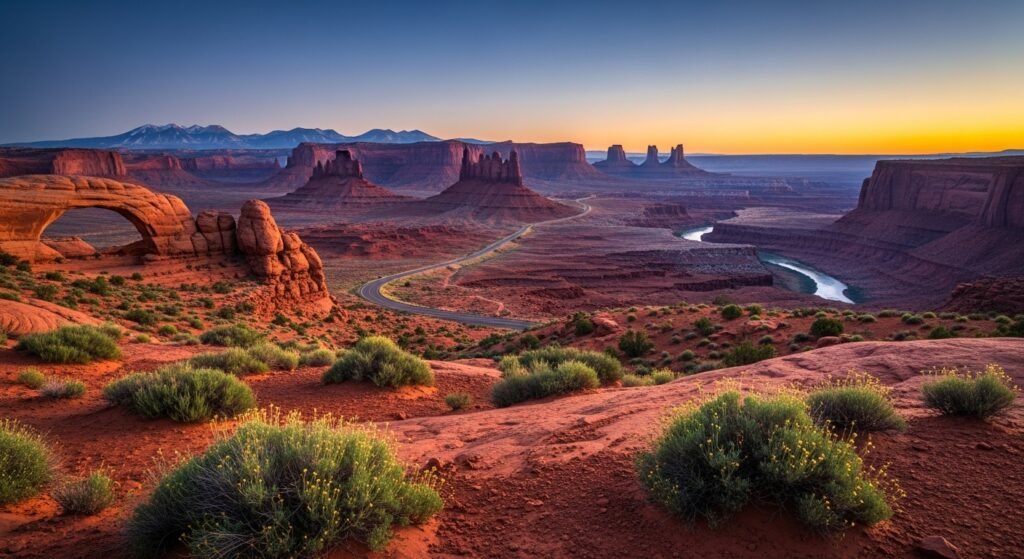
Southern Utah is like another planet with its red rocks and giant cliffs. You will see things that look like they belong in a movie. The canyons are so big they have smaller canyons inside of them. You can see tall mountains and huge flat mesas everywhere you look. It is one of the best places for a family road trip. You will never run out of amazing things to do in southern utah.
The desert here is full of bright colors and massive stone shapes. Everything in this state feels way bigger than real life. Your eyes might get tired from looking at so much beauty. It is a place where you can truly feel small in the wilderness. Grab your gear and get ready for a wild ride through the red rock country.
Monument Valley and the Navajo Nation
Monument Valley sits right on the line between Utah and Arizona. This area belongs to the Navajo Nation territory. It is famous for its tall red sandstone buttes that poke out of the flat ground. Seeing these rocks for the first time might make you feel a bit emotional. It is a remote place that takes some work to reach.
The views here are world-famous and very sacred to the local people. You will feel like you stepped into an old cowboy movie. The sand is a deep red color that glows in the sun. It is a must-see stop on any Utah road trip.
Forest Gump Hill

One of the coolest things to do in southern utah is visiting Forest Gump Hill. You can find this iconic spot at mile marker 13 on Highway 163. It is the exact place where the movie character stopped his long run. You will see many cars parked on the side of the road here. People love to stand in the middle of the road for the perfect photo.
- Watch for cars because people often stay in the road too long for pictures.
- Use a tripod to get a great family shot with the monuments in the back.
- Check both sides of the road for dirt pull-offs to park your vehicle safely.
- Time your photo for gaps in traffic so you do not get in anyone’s way.
The 17-Mile Loop Drive
The main way to see the valley is by driving the 17-mile dirt loop. This road is very bumpy and can be a challenge for some drivers. The hill leading down into the valley is especially rough and sandy. Most people say you should drive it at your own risk. You can use your own car or pay for a guided tour.
- Entry fees are about eight dollars per person to enter the park.
- Kids under six usually get to enter the park for free.
- Card payments are often the only way to pay at the toll booth.
- Take your time at the scenic view locations to enjoy the vast landscape.
Ford Point and Spirit the Horse
John Ford Point is named after a famous movie director. It is one of the best spots for taking pictures in the valley. You can often find a local guide there with a horse named Spirit. Spirit has a very calm personality and is great with tourists. It is a great place to channel your inner cowboy.
- Pay ten dollars to take a picture with the horse at the cliff edge.
- Look for Jaythor who is the local guide that takes care of Spirit.
- Respect the horse by letting him take breaks when the owner says so.
- Check the GPS location if you want to find Spirit’s specific spot.
Goulding’s Lodge and Museum
Goulding’s is a very cool place to stay near Monument Valley. The hotel is actually backed up against a massive sandstone rock. It looks like the building is part of the stone itself. The rooms are clean and the staff is very friendly. You can even visit a museum on the property to learn about film history.
- Private balconies give you an unspoiled view of the valley monuments.
- Watch the sunset from your room while enjoying a quiet evening.
- Visit the pool if you need a break from the desert heat.
- Eat at the restaurant which serves hungry travelers all day long.
Hidden Gems and Small Towns of the Border Region
The area around the state line has some quirky and fun stops. These small towns show off the unique personality of the desert. You might find some of your favorite memories in these tiny places. They are perfect for quick breaks during a long drive.
Mexican Hat
Mexican Hat is a very tiny town with only 31 people living there. It gets its name from a rock formation that looks like a sombrero. You can see this rock on the northeast side of the town. It is a fun place to pass through and snap a quick photo. Even though it is small, it is hard to miss.
4 Corners Monument
At the 4 Corners Monument, you can stand in four states at the same time. These states are Utah, Arizona, New Mexico, and Colorado. The monument is located on Navajo Nation land and was rebuilt in 2010. It is a very popular spot for families to visit. You should expect long lines during the busy summer months.
- Pay eight dollars per person to enter the monument area.
- Bring a card because the entry booth does not take cash.
- Stay hydrated if you are waiting in the long summer lines.
- Try fry bread from the local vendors for a tasty lunch.
- Buy a souvenir like a painted sandstone bear from the Native American artists.
Valley of the Gods and Natural Wonders
Valley of the Gods is like a smaller version of Monument Valley. It has similar red rocks and tall mesas. The main difference is that it is much more quiet and remote. It is managed by the Bureau of Land Management. This means there are no fees to enter and explore.
The Valley of the Gods Drive
The only way to see this place is a 17-mile gravel road. The road winds around huge sandstone shapes and mushroom rocks. It is a bumpy ride with some steep areas. You should probably use a vehicle with four-wheel drive. It feels like a place that has never been touched by humans.
- No services are available in the valley, so bring everything you need.
- No fees are required to drive through this beautiful area.
- Dispersed camping is allowed if you want to stay under the stars.
- No campfires are permitted to protect the dry desert landscape.
Natural Bridges National Monument
Natural Bridges became Utah’s first National Monument in 1908. It is a place where water has carved giant holes through stone. There are three main bridges to see here. Each one has its own unique shape and story. It is a great spot for both hikers and casual viewers.
Kachina, Owachimo, and Sipapu Bridges
The three bridges are named Kachina, Owachimo, and Sipapu. You can see them all from viewing platforms if you do not want to hike. If you love hiking, there is a long loop that connects them all. The desert sun can be very intense here. Make sure you are prepared before you head out on the trails.
- Take extra water because the desert will dry you out fast.
- Wear sunscreen to protect your skin from the bright Utah sun.
- Try the 9.8-mile loop if you want to see all three bridges on foot.
- Pick a single hike if you want a shorter adventure for the kids.
The Wonders of Page and Kanab Area
The region around Page and Kanab is full of world-famous sights. Many of these places are very popular on social media. You need to plan ahead to see some of these spots. It is an area where water and wind have created art in the stone. You will find some of the best things to do in southern utah right here.
Antelope Canyon

Antelope Canyon is a famous slot canyon on Navajo land. You must buy a tour ticket and go with a guide to see it. The way water carved the walls over thousands of years is amazing. It is one of the most photographed places in the entire world. The canyon might feel smaller in person than it looks in pictures.
- Book early because tour spots for the canyon fill up very fast.
- Visit midday if you want to see the famous light beams hitting the floor.
- Listen to your guide for tips on how to take the best photos.
- Bring the kids because they will love exploring the narrow wavy walls.
Horseshoe Bend and Lake Powell

Horseshoe Bend is a giant curve in the Colorado River. It is a short drive from the Grand Canyon. You have to walk a wide gravel path for about three-quarters of a mile. The view from the edge is absolutely breathtaking. There is now a big parking lot and a kiosk for visitors.
- Pay for parking at the entrance before you start your walk.
- Use the railing at the main viewing area for safety.
- Walk to the right if you want to find a spot with fewer people.
- Visit Lake Powell nearby to see the massive dam and visitor center.
The Wave and the Nautilus Trail
The Wave is a famous rock formation with colorful swirls. You need a special permit from a lottery to go there. Only a few people win the lottery each day. If you do not win, do not let it get you down. There are other amazing trails nearby that do not need a permit.
- Apply for permits online or via the mobile app while in the area.
- Check the odds which can be as low as four percent during busy months.
- Hike the Nautilus as a great second choice with no permit needed.
- Visit the contact station for maps and info on other cool hikes.
Kanab: “Little Hollywood” and Surroundings
Kanab has a classic old western feel. It is surrounded by beautiful red cliffs. The town is famous for being a place where many movies were filmed. You can find plenty of places to eat and stay here. It is a great home base for exploring the region.
Moqui Cave
Moqui Cave is a natural cave that was once a tavern. It used to be a hidden spot during the prohibition days. Now it is a museum full of interesting artifacts. You can see things like dinosaur tracks and ancient tools. It is a great place to stop and cool off for a bit.
- Entry is five dollars for a quick tour of the cave’s history.
- See dinosaur tracks that are preserved in the sandstone rocks.
- Look at minerals and fossils like giant shark teeth inside.
- Relax in the shade of the cave when the sun is too hot.
Little Hollywood Land
Little Hollywood Land is a fun museum in Kanab. It features old movie sets from famous western films. You can walk through old buildings like a bank and a jail. It is a perfect place for kids to play cowboys. The wooden buildings look very weathered and authentic.
- Take many photos in the various movie sets on the property.
- Visit the gift shop for Native American pottery and western books.
- Learn about John Wayne and other stars who filmed in the area.
- Explore the barn and homestead sets from classic movies.
Kanab Caves and Toadstool Hoodoos
There are many cool rock shapes just outside of Kanab. The Kanab Caves are found right off Highway 89. You have to find your own way up to them because there is no trail. Further east, you can find the Toadstool Hoodoo Trail. This is an easy walk that leads to a massive rock mushroom.
- Find your own way up to the Kanab Caves for a great view.
- Hike 1.8 miles on the Toadstool trail to see the giant hoodoo.
- Look at the layers of red and white stone in the formations.
- Take water along even for these shorter walks near the road.
Coral Pink Sand Dunes State Park
This park has giant dunes of bright pink sand. It is a beautiful place for photography and playing. You can even rent sandboards to slide down the hills. The sand is very soft and fun to roll in. It is a great spot to spend a few hours in the sun.
- Rent a sandboard from the shop to try sliding down the dunes.
- Get a drone permit if you want to fly your camera over the park.
- Watch for buggies that drive over the sand in certain areas.
- Look for the rare beetle that only lives in these specific dunes.
Capitol Reef National Park and the Fruita District
Capitol Reef is a park full of white stone domes. These domes look like the top of the U.S. Capitol building. The park is massive and has many hidden corners. It is one of the most sensational places in the state. You can see everything from ancient art to fruit trees.
The Scenic Drive and Fruita Barn
The park has a beautiful 7.9-mile scenic drive. You can also visit the Fruita area where there are many fruit trees. There is a famous old barn that looks great in photos. You can explore some parts of this park for free. It is a very peaceful and quiet place compared to other parks.
- See petroglyphs carved into the rock by ancient people.
- Watch for flash floods in the canyons when it looks like rain.
- Visit the barn at sunset for the best possible lighting.
- Explore the arches and bridges that are easy to reach by foot.
Dining in Torrey
Torrey is the small town right outside of Capitol Reef. It is a great place to find a good meal after a day of hiking. One of the most popular spots is the Wild Rabbit Cafe. It is a friendly place with a very relaxed vibe. Travelers love to stop here for a break.
- Eat breakfast all day which is a favorite for many visitors.
- Try the coffee which some say is the best in the area.
- Get a fresh pastry from their bakery for a quick snack.
The Scenic Byway 12: Boulder to Escalante
Highway 12 is often called the most beautiful road in Utah. It runs between the towns of Boulder and Escalante. The road is paved but can be very scary to drive. It has narrow ledges with huge drops on both sides. You will see some of the best views of your life from your car window.
The Burr Trail and Singing Canyon
The Burr Trail is a famous backroad that starts in Boulder. About 11 miles down, you can find a hidden spot called Singing Canyon. It is a small slot canyon that is easy to walk into. Locals gave it that name because it sounds great when you sing inside. It is a very magical and quiet place.
- Park on the left when you see the small walking path.
- Sing a song to hear the amazing acoustics of the stone walls.
- Enjoy the shade inside the canyon which stays cool all day.
Hell’s Backbone Road
Hell’s Backbone is a 44-mile gravel road. It was built in 1933 to connect two remote towns. It is a very lonely road where you might not see another car. You will cross a high bridge with deep wilderness all around. It is a great drive for people who want to feel adventurous.
Wander Camp Glamping
If you want a unique place to sleep, try Wander Camp. It is a glamping site with large canvas tents. The tents are waterproof and have comfortable beds inside. It is a great way to experience the outdoors without sleeping on the ground. You will feel very cozy in the middle of the desert.
- Enjoy the plush feel of a real bed inside a big tent.
- Watch the stars from right outside your tent door at night.
- Stay in Tropic which is a great central spot for nearby parks.
Bryce Canyon National Park

Bryce Canyon is not actually a canyon at all. It is a giant bowl full of strange rock towers. These towers are called hoodoos. They come in many shades of orange, red, and white. It is one of the most striking landscapes you will ever see.
The Hoodoos and Spires
The hoodoos at Bryce are shaped by wind and ice. You can walk down among them on many different trails. Some of the rock shapes have funny names like Thor’s Hammer. The views from the top are just as good as the views from the bottom. One day is usually enough to see the main highlights.
- Hike the Navajo Loop to walk through the narrow “Wall Street” area.
- Visit Inspiration Point for a view of thousands of hoodoos at once.
- Drive the main road and stop at all the different overlooks.
- Take a shuttle if the park is too busy for private cars.
Zion National Park

Zion is a park of massive sandstone cliffs and deep canyons. It is famous for its bright red and white rocks. The Virgin River flows through the bottom of the main canyon. It is a place that feels very lush and green in some spots. It is one of the most popular parks in the country.
Navigating the Zion Canyon
Zion can get very crowded, so they use a shuttle bus. During the busy season, you cannot drive your own car into the main canyon. You have to park at the visitor center and ride the bus. This helps protect the park and makes it easier to get around. If you go in the off-season, you might be able to drive yourself.
- Check the shuttle dates before you go so you know the rules.
- Plan for crowds if you are visiting during the summer months.
- Hike The Narrows by walking right in the river through a slot canyon.
- Visit the tunnel to see the windows cut right into the mountain side.
Relaxing at Mystic Hot Springs
After all that hiking, you might need a place to rest. Mystic Hot Springs is a unique spot in the town of Monroe. People have been coming here to soak since the late 1800s. The water is full of minerals and is very warm. It is a very peaceful and funky place to end your trip.
- Soak in iron tubs that are built right into the colorful rock.
- Buy passes online to make sure you have a spot to soak.
- Watch the steam rise from the water on a cool morning.
- Be careful with kids because the water can be very hot at the source.
Southern Utah Travel Essentials
Southern Utah is a place of endless adventure. You will see things that stay in your memory forever. Whether you are hiking deep canyons or driving scenic roads, there is always something new. It is a place that everyone should visit at least once.
- Eat local BBQ in the town of Tropic for a hearty dinner.
- Stay in a lodge or try camping under the bright desert stars.
- Keep your tank full because gas stations can be far apart.
- Bring a camera to capture the amazing colors of the red rocks.
| Location | Top Sight | Difficulty |
| Monument Valley | Forrest Gump Hill | Easy |
| Arches | Delicate Arch | Moderate |
| Bryce Canyon | Thor’s Hammer | Moderate |
| Zion | The Narrows | Hard |
| Kanab | Moqui Cave | Easy |
A Perfect 7-Day Itinerary for Things to Do in Southern Utah
Planning a trip to this massive region can feel overwhelming because there is just so much to see. This seven-day plan helps you hit the most famous spots while leaving room for some hidden gems. It follows a loop that starts and ends near major travel hubs. You will spend your days exploring red rocks and your nights under the brightest stars in the country.
Day 1: Arches and the Moab Desert

Your adventure begins in the town of Moab, which is the perfect base for exploring Arches National Park. You should head into the park as early as possible to beat the morning crowds at the entrance. Start with the shorter trails to get your legs moving and see the red sand up close. It is a great way to introduce the family to the unique geology of the area.
- Hike to Delicate Arch in the late afternoon to see the stone glow as the sun sets.
- Visit Sand Dune Arch where the deep sand feels like a giant playground for kids.
- Check out the Windows Section to see four massive arches with very little walking.
- Grab dinner in Moab at one of the local breweries or food truck parks.
Day 2: Canyonlands and the Journey South
On the second day, you will visit the Island in the Sky district of Canyonlands National Park. This park offers views that make you feel like you are standing on the edge of the world. After a morning of breathtaking overlooks, you will start your drive south toward the town of Monticello or Blanding. This drive takes you through some of the most remote parts of the state.
- Photograph Mesa Arch which is famous for the way the sun hits the bottom of the span.
- Stop at Grand View Point to see the vast “White Rim” canyon carved into the earth.
- Visit Newspaper Rock on your way south to see hundreds of ancient petroglyphs.
- Explore the Edge of the Cedars museum in Blanding to see ancient pottery and ruins.
Day 3: Monument Valley and the Navajo Nation
Today is all about the iconic landscape of the American West. You will drive down Highway 163 and see the famous monuments rise from the flat desert floor. This area is full of history and culture that belongs to the Navajo people. It is a day for slow driving and taking a lot of photos of the massive red buttes.
- Stop at Forest Gump Point for the classic photo looking back at the valley.
- Drive the 17-mile loop inside the Tribal Park to see the monuments up close.
- Take a photo with Spirit the Horse at the famous John Ford Point overlook.
- Stay at Goulding’s Lodge and watch the moonlight hit the sandstone cliffs.
Day 4: Natural Bridges and the Scenic Byway 12
Leaving the valley, you will head toward the high desert and the town of Boulder. This day features some of the best driving roads in the world. You will pass through Natural Bridges National Monument before starting the climb onto the Colorado Plateau. The views change from red desert to high mountain forests very quickly.
- Walk to Owachimo Bridge which is the thinnest and most fragile of the three bridges.
- Drive over the Hogback on Highway 12 where the road has steep drops on both sides.
- Explore Singing Canyon off the Burr Trail for a quiet and magical experience.
- Eat at Hell’s Backbone Grill for a world-class meal made with local farm ingredients.
Day 5: Capitol Reef and the Fruita Orchards
Day five takes you into the heart of the Waterpocket Fold at Capitol Reef National Park. This park is much quieter than the others but just as beautiful. You can spend the morning hiking through narrow washes and the afternoon relaxing under fruit trees. It is one of the most peaceful things to do in southern utah.
- Pick fruit in the orchards if you are visiting during the harvest season.
- Hike to Hickman Bridge for a great view of the white sandstone domes.
- Explore the Grand Wash trail where the canyon walls tower high above you.
- Visit the Gifford House for a fresh fruit pie and homemade ice cream.
Day 6: Bryce Canyon and the Land of Hoodoos
You will drive south through the mountains to reach Bryce Canyon National Park. Because the elevation is high, it will be much cooler here than in the desert below. The park is famous for its orange spires that look like a stone forest. You can see the entire amphitheater from the rim or hike down into the maze.
- Watch the sunrise at Bryce Point to see the hoodoos light up like fire.
- Hike the Navajo Loop to experience the towering walls of Wall Street.
- Drive to Rainbow Point at the end of the park road for a view of the entire region.
- Go stargazing at night because Bryce is one of the darkest places in the country.
Day 7: Zion Canyon and the Virgin River
Your final day is spent in the majestic Zion National Park. The scale of the vertical cliffs here is unlike anything else on the trip. You will ride the park shuttle into the canyon and explore the banks of the Virgin River. It is a spectacular way to finish your journey through the red rock country.
- Walk the Riverside Walk which leads to the entrance of the famous Narrows.
- See the Weeping Rock where water trickles down the face of a massive cliff.
- Hike to the Lower Emerald Pools to see waterfalls and lush hanging gardens.
- Drive through the Zion-Mt. Carmel Tunnel to see the windows cut into the rock.
Summary of Southern Utah Destinations and Activities
To help you plan your trip at a glance, the following table summarizes the primary locations mentioned in this guide, along with the top things to do and the specific attractions found at each stop.
| Location | Key Things to Do | Top Attractions & Landmarks |
| Monument Valley | Scenic driving, photography, guided Navajo tours, and horseback riding. | The Mittens, Merrick Butte, John Ford Point, and Spirit the Horse. |
| Hwy 163 / Border | Roadside photography and visiting unique small-town landmarks. | Forest Gump Hill, Mexican Hat Rock, and 4 Corners Monument. |
| Arches National Park | Hiking to natural spans, viewing rock art, and sunset photography. | Delicate Arch, The Windows, Sand Dune Arch, and Ute Rock Art. |
| Bryce Canyon | Hiking among stone spires, stargazing, and rim-view sightseeing. | Thor’s Hammer, Wall Street, Navajo Loop, and Inspiration Point. |
| Zion National Park | River hiking, exploring slot canyons, and scenic shuttle tours. | The Narrows, Angel’s Landing, Weeping Rock, and Mt. Carmel Tunnel. |
| Capitol Reef | Orchard fruit picking, historical exploration, and canyon driving. | Fruita Barn, Hickman Bridge, Cassidy Arch, and Ancient Petroglyphs. |
| Kanab Area | Exploring film history, cave hiking, and sandboarding. | Little Hollywood Land, Moqui Cave, Coral Pink Sand Dunes, and Kanab Caves. |
| Page / Border Area | Guided slot canyon tours and river overlook walks. | Antelope Canyon, Horseshoe Bend, and Lake Powell Visitor Center. |
| Scenic Byway 12 | High-altitude driving, acoustic singing, and backcountry trekking. | The Hogback, Singing Canyon, Hell’s Backbone, and Burr Trail. |
| Escalante / Grand Staircase | Wilderness hiking and finding unique geological shapes. | The Nautilus Trail, Toadstool Hoodoos, and Paria Contact Station. |
| Natural Bridges | Viewing massive stone bridges and hiking deep desert loops. | Kachina Bridge, Owachimo Bridge, and Sipapu Bridge. |
| Valley of the Gods | Primitive driving, dispersed camping, and rock formation viewing. | Mushroom Rocks, Red Mesas, and the 17-Mile Gravel Loop. |
| Monroe / Torrey | Thermal soaking, coffee tasting, and relaxing after hikes. | Mystic Hot Springs, Wild Rabbit Cafe, and Boulder Mountain views. |
FAQs About Things to Do in Southern Utah
Traveling through the desert can be tricky if you are not prepared. There are many small details about the weather, gear, and local rules that can change your trip. Here are some of the most common questions people ask when planning their adventure.
Do I need to worry about cell phone service in the desert?
You should expect to lose service as soon as you leave the main towns. The deep canyons and remote plateaus block signals for most providers. It is very important to download your maps for offline use before you leave your hotel. You might go hours without a bar of service while driving between parks.
Is the water in the streams safe to drink?
You should never drink water from the rivers or streams without a high-quality filter. Even clear water can have bacteria from wildlife or cattle. In some areas, like Zion, there can be toxic algae in the water that filters cannot even remove. Always carry plenty of bottled water in your car for every person.
What should I do if I see a rattlesnake on the trail?
If you see a snake, just stop and give it plenty of space. Do not try to move it or throw rocks at it to make it go away. Most snakes will leave you alone if you stay back at least ten feet. Always keep an eye on where you step, especially when walking near bushes or rocks.
Are there many places to charge an electric vehicle?
Charging stations are becoming more common in towns like Moab, Kanab, and St. George. However, the long stretches of road between these towns are still very empty. If you are driving an EV, you must plan your route carefully around available chargers. Some hotels now offer charging, but you should call ahead to confirm.
Can I bring my dog into the National Parks?
Most National Parks in Utah are not very dog-friendly on the trails. Dogs are usually only allowed on paved roads and in parking lots or campgrounds. If you want to hike with your pet, you should visit State Parks or BLM land. Those areas usually have much more relaxed rules for furry travelers.
Do I need to worry about scorpions at night?
Scorpions do live in the southern desert, but they are mostly active at night. If you are camping, it is a good idea to shake out your boots before putting them on in the morning. You can buy a cheap blacklight to see them glow in the dark around your campsite. They generally want to avoid humans as much as possible.
Is it okay to touch the rock art and petroglyphs?
You should never touch the ancient drawings on the rocks. The oils from your skin can damage the art and make it fade away forever. It is also illegal to carve your own name into the stone or remove any artifacts. Please respect these sites so that people can enjoy them for years to come.
What is the best way to avoid getting a heat stroke?
The best way is to hike very early in the morning before the sun gets high. By noon, the desert heat can become very dangerous for even fit hikers. Wear a wide-brimmed hat and lightweight clothing that covers your skin. If you start to feel dizzy or stop sweating, find shade and drink water immediately.
Are there any mosquitoes in the desert?
Mosquitoes are usually only a problem near the rivers or in the early summer. If you are hiking near the Virgin River in Zion or the Colorado River in Moab, you might want some bug spray. In the higher and drier areas like Bryce Canyon, bugs are rarely an issue. Gnats can be annoying in the late spring, so come prepared.
Do I need a permit for photography or drones?
You do not need a permit for personal photos with a regular camera. However, drones are strictly banned in all National Parks. Some State Parks allow them if you pay for a special permit at the visitor center. Always check the local signs before launching your drone into the sky.
What kind of shoes are best for hiking in Utah?
You need shoes with a very good grip because the sandstone can be slippery. Hiking boots with ankle support are great for rocky trails like Delicate Arch. If you are hiking in water, like at The Narrows, you should use special water shoes. Avoid wearing flip-flops or smooth-soled sneakers on steep rock faces.
Is there a lot of traffic inside the parks?
During the spring and fall breaks, the parks can become very crowded. You might have to wait in a long line just to get through the entrance gate. It is best to arrive before 7 AM to find a parking spot at the popular trailheads. Using the park shuttles is often faster than trying to drive yourself.
Can I find groceries and supplies easily?
Main towns like Moab, Kanab, and Cedar City have large grocery stores with everything you need. Once you get into smaller towns like Tropic or Boulder, the selection becomes much smaller. Prices in these remote areas are also much higher than in the cities. It is a good idea to stock up on snacks and water in the bigger towns.
Are the roads in Southern Utah safe in the winter?
The high-elevation roads like Highway 12 can become very icy and dangerous in the winter. Snow is common in Bryce Canyon and on the way to Cedar Breaks. If you are visiting in the winter, make sure your car has good tires. Some mountain passes might even close during heavy snowstorms.
What is cryptobiotic soil and why can’t I step on it?
This is the dark, bumpy crust on the sand that is actually alive. It is made of tiny organisms that help prevent erosion and keep the desert healthy. If you step on it, it can take decades for the crust to grow back. Always stay on the marked trails or walk in dry sandy washes.
Do the National Parks have places to buy food?
Most parks have very limited food options inside the gates. Zion has a lodge with a restaurant, and Bryce has a general store near the rim. However, it is always better to bring your own lunch and snacks. This saves you money and keeps you from having to leave the park when you get hungry.
Is it safe to hike alone in the desert?
It is much safer to hike with a partner in case someone gets hurt. If you are alone, always tell someone exactly where you are going and when you will be back. Carry a satellite messenger device since your cell phone will likely not work. The desert is a very unforgiving place if you get lost or injured.
Are there any poisonous plants I should avoid?
You should watch out for Poison Ivy, which grows near water sources in canyons. Some cactus plants have very tiny needles that are hard to see but hurt a lot. It is a good rule to never touch a plant if you do not know what it is. Staying on the trail is the best way to avoid itchy or painful plants.
Do I need to worry about altitude sickness?
Some parts of Southern Utah, like Bryce Canyon, are over 8,000 feet high. If you are coming from sea level, you might feel short of breath or get a headache. Drink plenty of water and take it easy for your first day at high elevation. Your body will usually adjust after a day or two of being in the mountains.
How do I find out about flash flood risks?
You should always check the weather forecast at the visitor center before entering a canyon. Even if it is not raining where you are, a storm miles away can send a wall of water down a wash. If the sky looks dark or you hear thunder, stay out of narrow canyons. Your life depends on being aware of the sky.