 Skip to content

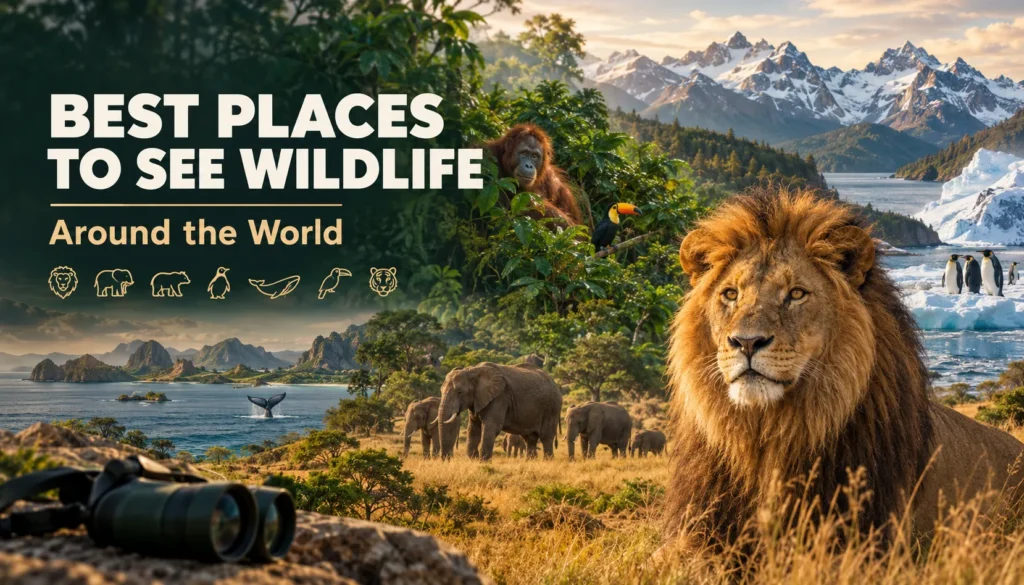
If you want to see wildlife in its natural habitat, the destination matters as much as the animal. The best places to see wildlife range from African savannas and tropical rainforests to national parks, islands, wetlands and polar regions.
I would not choose a wildlife destination based on a simple ranking. A better approach is to start with the animals you want to see, the type of trip you prefer, and the time of year you can travel.
For example, the Serengeti is a strong choice for the Great Migration, India is one of the best choices for wild tigers, the Galápagos Islands stand out for unusual and endemic animals, and the Pantanal is especially interesting for jaguar watching. Yellowstone offers a very different experience, with bison, wolves, bears and other North American wildlife.
Quick Answer: What Are the Best Places to See Wildlife?

Some of the best wildlife destinations in the world include the Serengeti in Tanzania, Maasai Mara in Kenya, Okavango Delta in Botswana, Kruger National Park in South Africa, Galápagos Islands in Ecuador, Costa Rica, the Pantanal in Brazil, Yellowstone National Park in the USA, Alaska, India, Borneo, Antarctica and Svalbard.
There is no single best destination for everyone. I would choose based on the wildlife you want to see and the type of experience you want.
| Destination | Best for | Wildlife highlights | Main experience |
| Serengeti, Tanzania | Great Migration | Wildebeest, lions, cheetahs, zebras | Safari |
| Maasai Mara, Kenya | Big cats and migration | Lions, cheetahs, leopards, wildebeest | Safari |
| Okavango Delta, Botswana | Wetland safari | Elephants, lions, hippos, wild dogs | Boat and land safari |
| Kruger, South Africa | First safari | Big Five and many other species | Game drives |
| Galápagos, Ecuador | Unique wildlife | Giant tortoises, marine iguanas, sea lions | Island and marine trips |
| Costa Rica | Rainforest wildlife | Sloths, monkeys, birds, frogs, turtles | Hiking and guided tours |
| Pantanal, Brazil | Jaguars | Jaguars, giant otters, caimans, birds | Boat and land wildlife trips |
| Yellowstone, USA | North American wildlife | Bison, wolves, bears, elk | Road trips and wildlife viewing |
| Alaska, USA | Bears and marine life | Brown bears, whales, moose, sea otters | Guided tours and cruises |
| India | Tigers | Bengal tigers, leopards, elephants, rhinos | Jeep safari |
| Borneo | Orangutans | Orangutans, proboscis monkeys, elephants | Rainforest trips |
| Antarctica | Penguins | Penguins, seals, whales | Expedition cruise |
| Svalbard, Norway | Arctic wildlife | Polar bears, walruses, Arctic foxes | Expedition trips |
The best choice can change depending on the season. Wildlife follows food, water, migration routes and breeding cycles, so timing can have a major effect on what you see.
1. Serengeti, Tanzania — Best for the Great Migration

The Serengeti is one of the first places I would consider for a classic African wildlife safari.
The ecosystem is famous for its huge herds of wildebeest, zebras and gazelles, followed by predators such as lions, cheetahs and hyenas. The annual migration is one of the world’s major wildlife spectacles, although the exact location of the herds changes throughout the year.
What wildlife can you see?
The Serengeti is known for:
- Wildebeest
- Zebras
- Thomson’s gazelles
- Lions
- Cheetahs
- Leopards
- Elephants
- Giraffes
- Hippos
- Hyenas
- African wild dogs
- Black rhinos
The wider ecosystem also supports a large variety of birds and smaller animals.
Why visit the Serengeti?
The biggest reason is the scale of the ecosystem. You are not traveling to see one particular enclosure or attraction. Wildlife moves across a huge natural landscape.
I would choose the Serengeti if your main goal is to experience a traditional safari with large herds and African predators.
When should you go?
The best period depends on the part of the migration you want to follow. Calving, movement across the plains and river crossings occur at different times and locations.
That makes it better to plan around a specific wildlife event rather than simply asking for the single “best month.”
2. Maasai Mara, Kenya — Best for Big Cats and Migration
Kenya’s Maasai Mara is another excellent choice for travelers interested in African wildlife.
The reserve is particularly known for lions, cheetahs, leopards and large herbivore populations. It also forms part of the larger Serengeti-Mara ecosystem.
What wildlife can you see?
Common wildlife includes:
- Lions
- Leopards
- Cheetahs
- Elephants
- Wildebeest
- Zebras
- Giraffes
- Buffalo
- Hippos
- Hyenas
The Mara is especially attractive if big cats are high on your wildlife list.
Who should choose the Maasai Mara?
I would put it high on the list for someone who wants a classic game-drive safari with a strong focus on predators.
It can also work well as part of a wider Kenya itinerary, especially if you want to combine wildlife with other Kenyan landscapes and destinations.
3. Okavango Delta, Botswana — Best for Water-Based Wildlife
The Okavango Delta gives you a different type of safari.
Instead of focusing only on dry savanna, the landscape includes waterways, lagoons, floodplains and islands. Depending on conditions and location, wildlife viewing can include both traditional game drives and water-based experiences.
Wildlife highlights
Look for:
- Elephants
- Lions
- Leopards
- African wild dogs
- Hippos
- Buffalo
- Giraffes
- Zebras
- Antelope
- Crocodiles
- Hundreds of bird species
The area is especially interesting for people who want to combine land and water wildlife watching.
Why I would choose the Okavango Delta
The setting itself makes this destination different from a standard safari.
You can explore parts of the delta by boat or traditional mokoro, alongside land-based wildlife activities. The best experience depends heavily on seasonal water levels.
4. Kruger National Park, South Africa — Best for a First Safari
Kruger National Park is one of the most practical choices for someone planning a first African safari.
The park supports a wide range of wildlife and offers different ways to explore the area, including guided game drives and self-drive options in suitable areas.
Wildlife you may see
Kruger is known for the African Big Five:
- Lion
- Leopard
- Elephant
- Rhinoceros
- Buffalo
You can also see giraffes, zebras, hippos, wild dogs, cheetahs, antelope, crocodiles and many bird species.
Why choose Kruger?
I would consider Kruger if you want a wildlife trip with several planning options.
It can also work well for travelers who want to combine a safari with other parts of South Africa.
5. Galápagos Islands, Ecuador — Best for Unique Wildlife
The Galápagos Islands are one of my top choices for travelers who want something different from a traditional African safari.
The islands are famous for species that developed in isolation, including giant tortoises, marine iguanas and blue-footed boobies. Wildlife watching also continues below the water, where travelers can encounter sea lions, penguins, turtles and other marine life.
Wildlife highlights
You may see:
- Giant tortoises
- Marine iguanas
- Sea lions
- Blue-footed boobies
- Galápagos penguins
- Flightless cormorants
- Sea turtles
- Frigatebirds
- Whales
- Dolphins
Why is the Galápagos different?
The experience is less about spotting large predators and more about observing animals that are closely linked to unusual island ecosystems.
That makes the Galápagos a strong choice for photographers, birdwatchers, marine-life enthusiasts and travelers who want to see species that are difficult to find elsewhere.
6. Costa Rica — Best for Rainforest Wildlife

Costa Rica is one of the strongest wildlife destinations for travelers who want biodiversity without planning a traditional safari.
The country has rainforests, cloud forests, wetlands, beaches and marine habitats. Recent wildlife guides highlight areas such as Corcovado for tapirs and possible jaguar sightings, Manuel Antonio for sloths and monkeys, Monteverde for hummingbirds, and coastal areas for whales, dolphins and sea turtles.
Wildlife highlights
Costa Rica is known for:
- Sloths
- Howler monkeys
- Spider monkeys
- Capuchin monkeys
- Toucans
- Hummingbirds
- Tree frogs
- Crocodiles
- Tapirs
- Sea turtles
- Humpback whales
- Dolphins
Why I would recommend Costa Rica
It offers several types of wildlife experiences in one relatively compact country.
You can combine rainforest walks, birdwatching, beaches and marine wildlife without building the entire trip around a safari lodge.
7. Pantanal, Brazil — Best for Jaguars
If seeing a jaguar is your main goal, the Pantanal deserves serious attention.
The Pantanal is a huge tropical wetland in South America and supports jaguars, giant river otters, caimans, capybaras, tapirs and a large variety of birds. Current wildlife travel coverage highlights the region as one of the strongest places for wild jaguar viewing.
What can you see?
Key species include:
- Jaguars
- Giant river otters
- Capybaras
- Caimans
- Tapirs
- Anacondas
- Hyacinth macaws
- Herons
- Storks
- Other wetland birds
When should you visit?
The drier months are often preferred for jaguar-focused trips because animals can become easier to locate around waterways.
I would still plan around local conditions and the exact region you intend to visit rather than treating one season as guaranteed.
8. Amazon Rainforest — Best for Tropical Biodiversity
The Amazon is less about ticking off a short list of famous animals and more about entering one of the world’s richest ecosystems.
Depending on the country and region, wildlife trips can involve river excursions, forest walks, canopy observation and guided night tours.
Wildlife highlights
Possible sightings include:
- Jaguars
- Sloths
- Monkeys
- Macaws
- Toucans
- River dolphins
- Caimans
- Giant otters
- Frogs
- Anacondas
The Amazon is huge, so I would choose the specific region first. A wildlife trip in Peru, Brazil, Ecuador or another Amazonian country can feel very different.
9. Yellowstone National Park, USA — Best for North American Wildlife
You do not need to travel overseas for an excellent wildlife trip.
Yellowstone is one of the best places to see large North American animals in a natural setting. It is especially known for bison, wolves, bears, elk and other wildlife.
Wildlife highlights
Look for:
- American bison
- Gray wolves
- Grizzly bears
- Black bears
- Elk
- Moose
- Pronghorn
- Bighorn sheep
- Coyotes
- Bald eagles
Why choose Yellowstone?
The park works well for travelers who prefer road trips and national parks over guided African safaris.
Wildlife viewing also changes with the seasons, so the animals you hope to see should influence when you visit.
10. Alaska, USA — Best for Bears and Marine Wildlife
Alaska offers some of the most varied wildlife experiences in North America.
Different regions provide opportunities to see bears, whales, moose, sea otters, seals and bald eagles.
Wildlife highlights
Depending on the region and season, you may see:
- Brown bears
- Black bears
- Polar bears
- Moose
- Caribou
- Bald eagles
- Humpback whales
- Orcas
- Sea otters
- Seals
- Dall sheep
Who should choose Alaska?
I would consider Alaska if you want wildlife combined with mountains, glaciers, forests and coastal scenery.
It is also a strong option for photographers because the landscapes are part of the experience.
11. India — Best for Tigers
India should be high on the list for anyone whose main wildlife goal is seeing a Bengal tiger.
National parks and reserves across the country offer different wildlife experiences. Ranthambore is particularly well known for tiger safaris, while other areas offer opportunities to see elephants, rhinos, leopards and other species. Recent travel coverage continues to highlight Ranthambore as a major tiger-viewing destination.
Wildlife highlights
India can offer:
- Bengal tigers
- Leopards
- Asian elephants
- One-horned rhinoceroses
- Sloth bears
- Gaur
- Deer
- Crocodiles
- Hundreds of bird species
Why choose India?
The country gives you a chance to focus on one of the world’s most recognizable big cats while also seeing a much wider range of Asian wildlife.
I would choose the specific national park based on the animal you want to see rather than assuming every park offers the same experience.
12. Borneo — Best for Orangutans
Borneo is one of the best places to look for orangutans in the wild.
The island’s forests also support proboscis monkeys, pygmy elephants, hornbills, gibbons, reptiles and many other rainforest species.
Wildlife highlights
Look for:
- Orangutans
- Proboscis monkeys
- Bornean pygmy elephants
- Gibbons
- Hornbills
- Crocodiles
- Clouded leopards
- Sun bears
- Numerous insects and reptiles
Why visit Borneo?
Borneo is a strong choice if primates and rainforest biodiversity interest you more than traditional safari animals.
It also gives you the chance to explore forest ecosystems that are very different from Africa’s savannas.
13. Antarctica — Best for Penguins and Marine Wildlife
Antarctica offers one of the most unusual wildlife trips on this list.
The main focus is marine and coastal wildlife, with penguins, seals and whales forming the center of many expedition trips.
Wildlife highlights
Depending on location and season, you may see:
- Emperor penguins
- Adélie penguins
- Gentoo penguins
- Chinstrap penguins
- Leopard seals
- Weddell seals
- Fur seals
- Humpback whales
- Orcas
- Albatrosses
Who should visit Antarctica?
I would choose Antarctica if the remote setting is part of what attracts you.
It is very different from a national park or safari. Most visitors experience the region through an expedition cruise, with wildlife excursions made from the ship.
14. Svalbard, Norway — Best for Arctic Wildlife
Svalbard is one of the most interesting choices for Arctic wildlife.
The archipelago offers opportunities to see polar bears, walruses, Arctic foxes, reindeer, seals and seabirds.
Wildlife highlights
You may see:
- Polar bears
- Walruses
- Arctic foxes
- Reindeer
- Seals
- Whales
- Seabirds
Why choose Svalbard?
I would put Svalbard high on the list for travelers who want an Arctic expedition rather than a conventional wildlife holiday.
The environment is remote, cold and highly seasonal, so trip planning needs more care than a typical national park visit.
15. Bwindi and Rwanda — Best for Mountain Gorillas
Mountain gorilla trekking is very different from a safari.
Instead of sitting in a vehicle and covering large areas, you travel on foot through forest habitat with trained guides and trackers.
Rwanda and Uganda are two of the best-known destinations for this experience. Recent wildlife-travel coverage continues to place mountain gorilla trekking among the world’s standout wildlife encounters.
What makes gorilla trekking special?
The focus is one species and one carefully managed encounter.
You can also find other primates and forest wildlife in the region, depending on the park and trek.
Who should choose it?
I would choose gorilla trekking if you want a focused wildlife experience rather than a broad safari covering dozens of species.
Best Wildlife Destinations by Animal

Sometimes the easiest way to choose a wildlife trip is to start with the animal.
| Animal | Destinations to consider |
| Lions | Serengeti, Maasai Mara, Kruger, Okavango |
| Tigers | India |
| Gorillas | Rwanda, Uganda |
| Orangutans | Borneo, Sumatra |
| Jaguars | Pantanal, Amazon |
| Polar bears | Svalbard, Arctic Canada, Alaska |
| Brown bears | Alaska, Yellowstone, Canada |
| Elephants | Botswana, Kenya, Tanzania, India, Sri Lanka |
| Penguins | Antarctica, Galápagos, southern Africa |
| Whales | Alaska, Antarctica, Costa Rica, Norway |
| Sloths | Costa Rica, Amazon |
| Rhinos | India, South Africa, Kenya, Namibia |
| Cheetahs | Serengeti, Maasai Mara, parts of southern Africa |
| African wild dogs | Botswana, Tanzania, South Africa |
| Sea turtles | Costa Rica, Galápagos and other tropical coasts |
| Giant tortoises | Galápagos |
I would use this table as a starting point rather than a guarantee. Wild animals move freely, and sightings always depend on location, season, weather and luck.
Best Wildlife Destinations by Experience
Best for a first safari
I would look at Kruger, Maasai Mara or Serengeti.
Kruger can be particularly appealing if you want several ways to experience the park, while the Serengeti and Maasai Mara are strong choices for classic East African safari scenery and migration.
Best for the Great Migration
The Serengeti and Maasai Mara are the obvious choices.
The important point is timing. The migration moves through the ecosystem, so the right destination depends on which stage you want to see.
Best for unique wildlife
The Galápagos Islands are difficult to beat for unusual and endemic species.
Best for rainforest wildlife
Costa Rica, the Amazon and Borneo are excellent choices.
Costa Rica is particularly useful for travelers who want several ecosystems within one trip.
Best for jaguars
The Pantanal is one of the strongest choices.
Its waterways and dry-season conditions can make wildlife viewing more focused, although sightings are never guaranteed.
Best for tigers
India is the clear choice for a tiger-focused wildlife trip.
Best for orangutans
Borneo is one of the first places I would consider.
Best for gorillas
Uganda and Rwanda are the main choices for mountain gorilla trekking.
Best for North American wildlife
Yellowstone and Alaska offer very different experiences.
Yellowstone is particularly good for bison, wolves, elk and bears, while Alaska offers a wider range of large mammals and marine wildlife across its huge landscapes.
Best for polar wildlife
Antarctica and Svalbard are two of the strongest choices, but they offer very different animals and experiences.
When Is the Best Time to See Wildlife?

There is no universal wildlife season.
I would plan the trip around the species and destination rather than choosing a month first.
Dry seasons
In some African safari destinations, dry conditions can make animals easier to locate because water becomes concentrated in fewer places.
This does not mean every dry-season trip is automatically better. The best period depends on the ecosystem and the animals you want to see.
Migration seasons
Migration-based trips need more precise planning.
The Great Migration changes location throughout the year, so choosing Tanzania or Kenya without considering the timing can lead to a very different experience.
Whale seasons
Whale watching varies by species and coastline.
Some destinations have seasonal migrations, while resident populations can be seen during longer periods.
Bear viewing seasons
Bear activity is closely linked to food availability and seasonal behavior.
This is why Alaska, Canada and other bear destinations can have specific viewing windows.
Polar wildlife seasons
Antarctica and Svalbard have short travel seasons because of extreme winter conditions and limited access.
If polar wildlife is your main goal, check the exact expedition dates and target species before booking.
How to Choose the Right Wildlife Destination
I would use five simple questions.
1. Which animal do you want to see?
Start with the animal.
If your answer is tiger, look at India. If it is orangutan, look at Borneo. If it is jaguar, research the Pantanal.
This simple step can remove dozens of destinations from your list.
2. Do you want a safari?
If yes, consider destinations such as Serengeti, Maasai Mara, Okavango and Kruger.
If no, Costa Rica, Galápagos, Yellowstone, Borneo and Antarctica offer very different wildlife experiences.
3. How much time do you have?
A short trip may suit a national park or compact wildlife destination.
A remote expedition or multi-region safari needs more travel time.
4. What season can you travel?
This can change the answer completely.
I would check migration patterns, breeding seasons, rainfall, animal activity and park access before choosing dates.
5. What type of experience do you want?
Ask yourself whether you prefer:
- Safari vehicles
- Walking tours
- Boat trips
- Expedition cruises
- Rainforest hikes
- Birdwatching
- Wildlife photography
- Snorkeling
- Guided trekking
The best wildlife destination is the one that fits the experience you actually want.
How to Watch Wildlife Responsibly

Wildlife watching should leave animals with as little disturbance as possible.
I would follow these basic rules:
- Keep a safe distance from animals.
- Never feed wild animals.
- Do not touch wildlife.
- Do not chase animals for photographs.
- Follow park and guide instructions.
- Stay on permitted trails and roads.
- Never block an animal’s path.
- Avoid using flash around sensitive wildlife.
- Choose responsible wildlife operators.
- Avoid attractions that allow direct contact with wild animals without a clear conservation reason.
- Respect nesting, breeding and resting areas.
- Take all rubbish with you.
Responsible wildlife tourism can support protected areas, local communities and conservation work when it is managed properly.
Wildlife Safety Tips

Wild animals are unpredictable, even when they appear calm.
I would always follow the rules of the park or reserve you are visiting.
Never approach an animal simply because it appears relaxed. Keep your distance, stay inside a vehicle where required, and listen to your guide.
Do not try to get closer for a better photograph. A telephoto lens or binoculars is a much better solution.
Extra care is needed around animals with young, predators feeding on a carcass, large herbivores and animals that may feel trapped.
What Should You Pack for a Wildlife Trip?

Your packing list will depend on the destination, but a few items are useful for most wildlife holidays.
Binoculars
A good pair of binoculars can make distant animals much easier to identify.
Camera with a suitable lens
A telephoto lens is useful for wildlife photography because it lets you photograph animals without approaching them.
Comfortable outdoor clothing
Choose clothing based on the climate and activities rather than relying on one universal safari outfit.
Sun protection
A hat, sunscreen and sunglasses can be useful in exposed environments.
Insect protection
This can be important in tropical forests and wetland destinations.
Comfortable walking shoes
Even safari trips can involve short walks, while rainforest and gorilla trips may involve much more time on foot.
Reusable water bottle
Staying hydrated matters during long wildlife-viewing days.
Small day bag
A simple day bag can hold binoculars, water, camera equipment, snacks and other essentials.
Best Places to See Wildlife for Families
Families should look for destinations that combine wildlife with manageable travel logistics.
I would consider Yellowstone, Costa Rica and some South African safari options for families, depending on the children’s ages and the style of trip.
Costa Rica can be particularly appealing because wildlife viewing can be combined with beaches, forests and other outdoor activities.
A safari can also work well for families, but check age restrictions before booking guided activities.
Best Places to See Wildlife for Photographers

Wildlife photography is less about finding the destination with the most species and more about getting good opportunities in the right conditions.
I would consider:
- Serengeti for large mammals and predators
- Pantanal for jaguars
- Galápagos for unusual species
- Alaska for bears and marine wildlife
- Yellowstone for North American mammals
- Costa Rica for birds and rainforest wildlife
- Borneo for primates and rainforest scenes
- Antarctica for penguins and marine wildlife
The best choice depends on the species you want to photograph.
Are Wildlife Safaris Worth It?
For the right traveler, yes.
A safari gives you the chance to observe animals in natural habitats rather than seeing them in a controlled environment.
The cost can vary widely, though. Your final price depends on the country, accommodation, transport, length of stay, guides, park fees and activities.
I would compare the complete trip cost rather than judging a destination by the nightly accommodation price alone.
Can You See Wildlife Without Going on Safari?
Absolutely.
A safari is just one type of wildlife travel.
You can see wild animals through:
- Rainforest tours
- National park trips
- Wildlife cruises
- Whale-watching excursions
- Birdwatching tours
- Gorilla trekking
- Snorkeling trips
- Arctic expeditions
- Guided nature walks
- Self-drive national park trips
This is why I would not limit a search for the best wildlife destinations to Africa.
Why Wildlife Sightings Are Never Guaranteed
One of the biggest mistakes in wildlife travel is expecting animals to appear on schedule.
Wild animals do not follow an itinerary.
A destination can have an excellent population of a particular species and you can still miss it. Weather, vegetation, animal behavior, season, time of day and simple luck all matter.
I prefer to think about wildlife trips in terms of good opportunities, not guaranteed sightings.
That mindset makes the experience more realistic and usually more enjoyable.
How Far in Advance Should You Plan a Wildlife Trip?
The answer depends on the destination.
Popular safari lodges, gorilla trekking permits, polar expeditions and peak wildlife seasons can require substantial advance planning.
For simpler national park trips, you may have more flexibility.
If your trip depends on a particular animal, migration event or limited permit, I would plan much earlier than I would for a normal city break.
Final Take
The best places to see wildlife are spread across the globe, and I would not choose one destination simply because a list ranks it first.
Start with the animal you want to see. Then consider the ecosystem, season, travel style, budget and level of adventure you want.
For a classic African safari, I would look at the Serengeti, Maasai Mara, Okavango Delta or Kruger. For rainforest wildlife, Costa Rica, the Amazon and Borneo stand out. For unique species, the Galápagos are hard to ignore. For North American wildlife, Yellowstone and Alaska offer very different but excellent options. For more remote experiences, Antarctica and Svalbard bring you into polar environments that few other destinations can match.
The key is to choose the destination for the wildlife experience it does best, rather than trying to find one place that does everything.
Frequently Asked Questions About the Best Places to See Wildlife
What is the best place to see wildlife in the world?
There is no single answer. The Serengeti is one of the strongest choices for African wildlife and migration, while destinations such as the Galápagos, Costa Rica, Pantanal, Yellowstone and Borneo offer very different wildlife experiences.
Which country is best for wildlife?
Tanzania, Kenya, South Africa, Botswana, Costa Rica, India, Brazil, Ecuador and several other countries can be excellent depending on the species you want to see.
Where can I see the most wild animals?
Large ecosystems such as the Serengeti, Okavango, Amazon, Pantanal and some major African parks offer high wildlife diversity. However, the number of species is less useful than choosing a destination that matches your target animals.
Where is the best place to see lions?
The Serengeti, Maasai Mara, Kruger and Okavango are strong choices for wild lions.
Where is the best place to see tigers?
India is one of the world’s leading destinations for seeing Bengal tigers in the wild.
Where is the best place to see gorillas?
Rwanda and Uganda are the main destinations for mountain gorilla trekking.
Where is the best place to see orangutans?
Borneo is one of the best-known destinations for seeing wild orangutans.
Where is the best place to see jaguars?
Brazil’s Pantanal is one of the strongest destinations for jaguar-focused wildlife trips.
Where can I see polar bears?
Svalbard, Arctic Canada and parts of Alaska are among the destinations associated with polar bear viewing.
What is the best wildlife destination for a first-time traveler?
I would consider Costa Rica, Kruger or Yellowstone depending on the type of trip you want. They offer different levels of wildlife viewing without requiring every traveler to start with a remote expedition.
What is the best time of year to see wildlife?
It depends on the destination and species. Migration, dry seasons, breeding periods and animal food sources can all affect sightings.
Is wildlife tourism ethical?
It can be, provided visitors and operators follow responsible practices. Keep your distance, avoid feeding or touching wild animals, follow local rules and choose operators that respect animal welfare and conservation.