 Skip to content

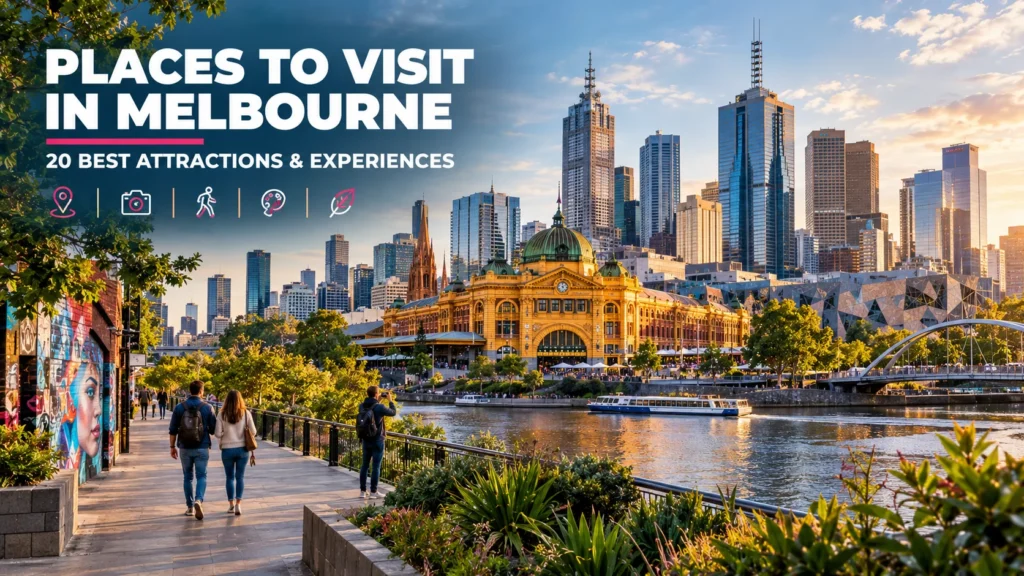
Melbourne is one of those cities where the best places to visit are not all in one type of attraction. You can see famous landmarks in the morning, explore street art and laneways in the afternoon, then finish the day beside the Yarra River.
If I were planning a first visit, I would mix Melbourne’s famous attractions with its markets, gardens, galleries, beaches and neighbourhoods. That gives you a much better feel for the city than spending your whole trip inside traditional tourist attractions.
The list below covers the best places to visit in Melbourne, including free attractions, family-friendly spots, cultural sites and places that work well for a short trip.
Quick Answer: Best Places to Visit in Melbourne

If you have limited time, I would start with these Melbourne attractions:
- Federation Square and Flinders Street Station
- Melbourne’s laneways and Hosier Lane
- Queen Victoria Market
- Royal Botanic Gardens
- National Gallery of Victoria
- Melbourne Cricket Ground
- Southbank and the Yarra River
- St Kilda
- Melbourne Skydeck
- Shrine of Remembrance
- State Library of Victoria
- Melbourne Museum and Carlton Gardens
- Fitzroy and Brunswick
- Old Melbourne Gaol
- Brighton Beach
- Melbourne Zoo
- Chinatown
- Melbourne’s historic arcades
- SEA LIFE Melbourne Aquarium
- Arts Centre Melbourne
You do not need to visit all of them. I prefer choosing a few places that fit together geographically, especially if I only have two or three days.
1. Federation Square and Flinders Street Station
Federation Square is one of the easiest places to start exploring Melbourne. It sits across from the famous Flinders Street Station and beside the Yarra River, putting several attractions within walking distance.
The square has galleries, cultural venues, restaurants and public spaces. It is also a good starting point for exploring central Melbourne.
From here, you can walk to several other attractions without needing transport.
What to see nearby
- Flinders Street Station
- Federation Square
- St Paul’s Cathedral
- ACMI
- Hosier Lane
- Yarra River
- Southbank
I would give this area at least an hour if you want to walk around and see the nearby sights.
2. Melbourne’s Laneways and Hosier Lane

Melbourne’s laneways are one of the city’s most recognizable features. They are filled with street art, small cafés, restaurants, shops and hidden corners.
Hosier Lane is the best-known example, but it is worth walking beyond one street. The surrounding lanes and arcades show a different side of Melbourne.
I like this part of the city because you can explore it without following a strict sightseeing plan. Walk slowly, look around and stop when you find a café or piece of street art that catches your attention.
The laneways also work well with Federation Square and Flinders Street Station because they are close together.
3. Queen Victoria Market

Queen Victoria Market is one of the best places to visit in Melbourne if you want to experience the city’s food and market culture.
You can browse fresh produce, food stalls, specialty products, souvenirs and other goods. It is also a useful place to stop for a casual meal or snack.
I would check the market’s opening days before visiting because market schedules can change.
If you enjoy food, shopping and local atmosphere, give yourself enough time to walk through the different sections rather than rushing through.
4. Royal Botanic Gardens

The Royal Botanic Gardens Melbourne gives you a peaceful break from the city centre.
The gardens cover a large area near the CBD and include lawns, trees, lakes, plant collections and walking paths. They are also close to several other major Melbourne attractions.
This is one of the places I would recommend even if you are not especially interested in gardening. You can simply walk, sit by the water, enjoy a picnic or take a break from busy city streets.
The gardens are also a good choice for families and travellers looking for a free place to visit.
5. National Gallery of Victoria

The National Gallery of Victoria, usually called NGV, is one of Melbourne’s main cultural attractions.
It is a good choice for art lovers, but you do not need to be an art expert to enjoy a visit. The collection covers many styles and periods, and the building itself is worth seeing.
I would put NGV high on the list if the weather is wet or cold. It gives you a useful indoor option while still letting you experience an important part of Melbourne’s culture.
You can also combine it with the Royal Botanic Gardens, Shrine of Remembrance and Southbank.
6. Melbourne Cricket Ground

The Melbourne Cricket Ground, or MCG, is a major part of Melbourne’s sporting culture.
If you follow Australian rules football or cricket, this is an obvious stop. Even if you are not a sports fan, the stadium can still be interesting because of its place in Melbourne’s history.
You can attend a sporting event when one is taking place or look into stadium tours.
I would choose the MCG based on your interests rather than treating it as a must-see for every traveller.
7. Southbank and the Yarra River

Southbank is a popular area for walking, dining and enjoying views across the city.
The Yarra River runs through the centre of Melbourne, and the riverside paths make it easy to connect several parts of the city on foot.
I like this area as an evening option. You can walk along the river, stop for food and enjoy the city lights without planning a complicated activity.
Southbank also connects well with Federation Square, Flinders Street Station, Arts Centre Melbourne and Melbourne Skydeck.
8. Melbourne Skydeck

For a different view of the city, head to Melbourne Skydeck.
The observation deck sits high above the Melbourne CBD and gives you a wide view across the city and surrounding areas.
This is one of the better choices if you enjoy city photography or want to see how Melbourne’s streets, river and suburbs fit together.
I would visit on a clear day if possible. Clouds and poor visibility can make a major difference to the view.
9. Shrine of Remembrance
The Shrine of Remembrance is an important memorial and one of Melbourne’s best-known historic buildings.
It sits near the Royal Botanic Gardens, so it makes sense to visit both on the same outing.
The site offers a quieter experience than some of Melbourne’s busier attractions. It is also useful for visitors who want to learn more about Australia’s military history.
Because of its location, I would combine it with the gardens and nearby cultural attractions rather than making a separate trip just for the Shrine.
10. State Library of Victoria
The State Library of Victoria is one of the best free places to visit in Melbourne.
The building is impressive, but the reading rooms are a major reason to visit. The library also offers a quiet break from the busy streets outside.
This is another good rainy-day attraction.
I would also combine it with Melbourne Central, the historic arcades and nearby laneways because they are all within easy reach.
11. Melbourne Museum and Carlton Gardens
Melbourne Museum is a good choice for families, curious travellers and anyone who wants to learn more about Victoria.
The museum covers areas such as natural history, science, culture and local history.
Right beside it, Carlton Gardens gives you an outdoor space to explore.
This combination works especially well with children because you can switch between an indoor museum and an open garden area.
12. Fitzroy and Brunswick
If you want to see Melbourne beyond the main tourist attractions, spend some time in Fitzroy and Brunswick.
These neighbourhoods are known for cafés, restaurants, independent shops, bars, street art and a strong local character.
You do not need a strict sightseeing list here. I would simply choose a street or area, walk around and stop at places that interest you.
Fitzroy is also useful for travellers who want to experience Melbourne’s food and coffee culture.
13. St Kilda

St Kilda gives you a different side of Melbourne with its beach, foreshore, cafés and famous pier.
You can walk along the waterfront, spend time on the beach or explore the surrounding streets.
St Kilda is especially useful when you want a break from the CBD.
If you enjoy sunsets, I would consider visiting later in the day and staying around the foreshore into the evening.
14. Old Melbourne Gaol
Old Melbourne Gaol is one of the city’s most interesting historic attractions.
The former prison gives visitors a look at Melbourne’s early criminal justice system and the history surrounding some of Australia’s most famous prisoners.
I would choose this attraction if you enjoy history and unusual city experiences.
It also sits close to other central attractions, so it can fit easily into a day exploring Melbourne’s CBD.
15. Brighton Beach
Brighton Beach is best known for its colourful bathing boxes along the coast.
The beach is a good option if you want photographs, fresh air and a break from museums and city streets.
You can combine a visit with a wider bayside outing rather than travelling there only to take a few pictures.
For photographers, the bathing boxes are the main attraction. For everyone else, the beach and coastal walk make the trip worthwhile.
16. Melbourne Zoo
Melbourne Zoo is a useful option for families and wildlife lovers.
The zoo gives visitors a chance to see a wide range of animals while spending time outdoors.
I would keep several hours free for a zoo visit rather than trying to fit it between several central attractions.
It is also a good alternative when you have already seen the main CBD sights and want something different.
17. Chinatown Melbourne
Melbourne’s Chinatown is a good place to explore if food and culture are high on your list.
The area has restaurants, cafés, shops and historic streets close to the central business district.
You can combine Chinatown with the laneways, State Library, Melbourne Central and other CBD attractions.
I would visit around a meal so the area becomes part of your food experience rather than just another place to walk through.
18. Melbourne’s Historic Arcades
Melbourne’s historic shopping arcades are easy to overlook if you focus only on major tourist attractions.
The arcades offer a different way to see the city, with older architecture, small shops, cafés and decorative interiors.
They are particularly useful on rainy days because you can explore them without spending all your time outdoors.
Combine them with the laneways and central Melbourne for an easy walking route.
19. SEA LIFE Melbourne Aquarium
SEA LIFE Melbourne Aquarium is another good choice for families and rainy days.
It gives you an indoor wildlife experience in the centre of the city, close to Southbank and the Yarra River.
I would choose this over another museum if you are travelling with younger children who may enjoy seeing marine animals.
It also fits well into a Southbank day because several other attractions are nearby.
20. Arts Centre Melbourne
Arts Centre Melbourne is one of the city’s major cultural landmarks.
The complex hosts performances and cultural events, so what you can see depends on the date of your visit.
Even if you are not attending a show, the area is worth including in a walk around Melbourne’s arts precinct.
You can combine it with the National Gallery of Victoria, Royal Botanic Gardens, Shrine of Remembrance and Southbank.
Best Free Places to Visit in Melbourne

Melbourne has plenty of places you can enjoy without paying an entry fee.
Some of my top choices are:
- Royal Botanic Gardens
- Shrine of Remembrance
- State Library of Victoria
- Federation Square
- Melbourne’s laneways
- Carlton Gardens
- Yarra River walks
- St Kilda Foreshore
- Selected permanent gallery spaces at NGV
Free does not mean you need to treat these as second-rate attractions. Some of the city’s most memorable experiences come from simply walking through its streets, gardens and public spaces.
Best Places to Visit in Melbourne With Kids

If you are travelling with children, I would choose attractions that give you a mix of indoor and outdoor activities.
Good choices include:
- Melbourne Zoo
- Melbourne Museum
- SEA LIFE Melbourne Aquarium
- Royal Botanic Gardens
- St Kilda
- Queen Victoria Market
- Carlton Gardens
- Federation Square
For younger children, avoid filling every day with museums and historic buildings. A garden, market, beach or wildlife attraction can make the trip easier and more enjoyable.
Best Places to Visit in Melbourne for First-Time Visitors
If this is your first trip, you do not need to see everything.
I would prioritise:
- Federation Square and Flinders Street Station
- Melbourne laneways and Hosier Lane
- Queen Victoria Market
- Royal Botanic Gardens
- National Gallery of Victoria
- Southbank and the Yarra River
- St Kilda
- Melbourne Cricket Ground
- Melbourne Skydeck
- Shrine of Remembrance
This gives you a mix of landmarks, culture, food, nature, sport and city views.
How to Group Melbourne Attractions

One of the easiest ways to save time is to visit nearby attractions together.
Central Melbourne
You can combine:
- Flinders Street Station
- Federation Square
- Hosier Lane
- Melbourne’s arcades
- State Library
- Chinatown
This is a good area for walking.
Arts and Gardens
A second group can include:
- National Gallery of Victoria
- Royal Botanic Gardens
- Shrine of Remembrance
- Arts Centre Melbourne
These attractions are close enough to combine into one day.
Southbank and the River
You can combine:
- Southbank
- Yarra River
- Melbourne Skydeck
- Arts Centre Melbourne
- nearby restaurants
This works especially well later in the day.
Bayside Melbourne
For a different experience, combine:
- St Kilda
- St Kilda Beach
- St Kilda Pier
- Brighton Beach
You can spend less time in the CBD and see more of Melbourne’s coastal side.
What to See in Melbourne in One Day
If you only have one day, I would keep your plans close together.
Start around Federation Square and Flinders Street Station. Walk through the laneways and visit Hosier Lane before continuing towards the Yarra River.
After lunch, choose either the National Gallery of Victoria and Royal Botanic Gardens or another attraction that matches your interests.
Finish the day around Southbank and the river.
I would not try to squeeze ten major attractions into one day. You will spend too much time moving between places and not enough time enjoying them.
What to See in Melbourne in Two Days
With two days, you can slow down.
Day 1
Focus on central Melbourne:
- Federation Square
- Flinders Street Station
- Hosier Lane
- Queen Victoria Market
- State Library
- Chinatown
- Southbank
Day 2
Explore the southern and cultural side:
- Royal Botanic Gardens
- Shrine of Remembrance
- National Gallery of Victoria
- Melbourne Cricket Ground
- St Kilda
You can change the order based on opening hours, events and weather.
What to See in Melbourne in Three Days

Three days gives you much more breathing room.
I would use the first two days for the main city attractions and reserve the third for an area that matches your interests.
You could choose:
- Fitzroy and Brunswick for food and local culture
- Melbourne Zoo for wildlife
- Brighton and St Kilda for the coast
- Melbourne Museum and Carlton for culture
- A day trip outside the city
This is a better approach than adding more and more attractions to the same CBD itinerary.
Best Day Trips From Melbourne

Melbourne is also a useful base for exploring other parts of Victoria.
Some of the most popular choices include:
- Great Ocean Road
- Phillip Island
- Yarra Valley
- Dandenong Ranges and Puffing Billy
- Mornington Peninsula
I would treat these as separate travel plans rather than trying to fit them into a short Melbourne sightseeing trip.
The Great Ocean Road, for example, needs much more time than a quick visit to a city attraction. Phillip Island is also better treated as a full outing rather than a quick stop.
What to Do in Melbourne When It Rains

Melbourne weather can change, so I would keep a few indoor options in your plan.
Good rainy-day choices include:
- National Gallery of Victoria
- Melbourne Museum
- State Library of Victoria
- ACMI
- Old Melbourne Gaol
- SEA LIFE Melbourne Aquarium
- Melbourne’s historic arcades
- Queen Victoria Market when operating
You can also spend time in cafés, restaurants and shopping areas instead of trying to walk around the city in heavy rain.
Tips for Visiting Melbourne
Use public transport for longer trips
Melbourne has an extensive public transport network, including trams, trains and buses.
For central attractions, walking can often be easier than changing between different forms of transport.
Check opening days before visiting
Markets, galleries, events and attractions can have different opening times.
I would check the schedule before building your daily plan, especially if you have only one or two days.
Group nearby attractions
This is one of the easiest ways to make better use of your time.
Instead of travelling across Melbourne several times a day, choose one area and explore several nearby places.
Keep your plans flexible
You do not need to schedule every hour.
Leave some space for a café, market, street-art walk or neighbourhood that you discover along the way.
Prepare for changing weather
Melbourne’s weather can change during the day. Light layers are useful, and an umbrella can be helpful when rain is in the forecast.
Final Take
The best places to visit in Melbourne are not limited to famous landmarks. The city is at its best when you mix major attractions with laneways, markets, gardens, neighbourhoods and time beside the Yarra River.
If I were planning a first trip, I would start with central Melbourne, then add the Royal Botanic Gardens, St Kilda and one or two attractions that match my interests.
Most importantly, do not try to see everything. Choose the places that fit your time, group nearby attractions together and leave room to enjoy Melbourne at a slower pace.
Frequently Asked Questions
What are the best places to visit in Melbourne for first-time visitors?
Federation Square, Flinders Street Station, the laneways, Queen Victoria Market, Royal Botanic Gardens, NGV, Southbank, St Kilda and the MCG are strong choices for a first visit.
How many days do you need in Melbourne?
I would allow at least two days for the main Melbourne attractions. Three days gives you more time for neighbourhoods, beaches, museums or a slower sightseeing pace.
What are the best free places to visit in Melbourne?
Royal Botanic Gardens, Shrine of Remembrance, State Library of Victoria, Federation Square, Carlton Gardens, many laneways and parts of NGV are good free options.
Is Melbourne good for families?
Yes. Melbourne has plenty of family-friendly attractions, including Melbourne Zoo, Melbourne Museum, SEA LIFE, Royal Botanic Gardens and St Kilda.
What is Melbourne best known for?
Melbourne is known for its laneways, street art, coffee culture, food, arts, sport, gardens and multicultural neighbourhoods.
What should I not miss in Melbourne?
If you have limited time, I would focus on the CBD laneways, Federation Square, Queen Victoria Market, Royal Botanic Gardens, NGV, Southbank and St Kilda.
Can you visit Melbourne without a car?
Yes. Many of the main places to visit in Melbourne are connected by walking routes and public transport. A car becomes more useful if you plan several day trips outside the city.