 Skip to content
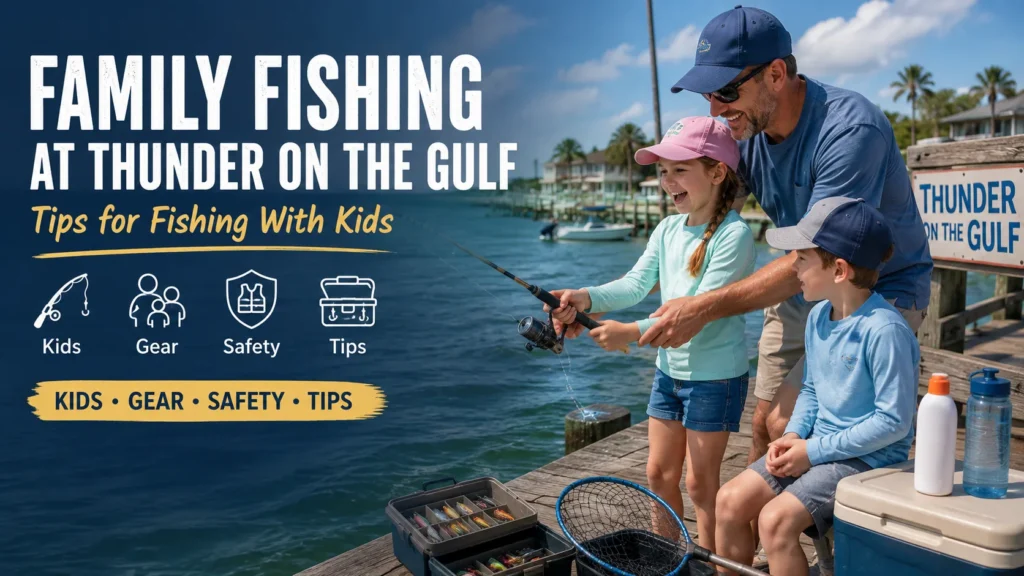
If you are planning family fishing at Thunder on the Gulf, I would plan the day around your children first and the fishing second. The best family trip is usually simple: choose an easy fishing location, use basic gear, prepare for sun and weather, and give kids enough freedom to learn and enjoy themselves.
Thunder on the Gulf is associated with offshore powerboat racing in the Gulf Shores and Orange Beach area. Families visiting the event can also enjoy the area’s wider fishing options, including piers, shore fishing, lagoons, and family-friendly inshore trips.
Quick Answer
Family fishing at Thunder on the Gulf can work well for children if you choose a fishing option that matches their age and experience. I would start with simple shore or pier fishing for younger kids and consider a short inshore trip for families who want to fish from a boat. Keep the gear simple, plan breaks, bring water and snacks, and make the day about enjoying the experience rather than catching a certain number of fish.
What Makes Fishing With Kids Different?
Fishing with children needs a different approach from fishing with experienced anglers.
Adults may be happy to wait quietly for a bite, but younger kids often need more activity. They may enjoy helping with bait, watching the line, spotting fish, looking for birds, or learning how to use a fishing rod just as much as catching something.
That is why I would avoid planning a family fishing trip around one big catch.
A better goal is to give children a chance to learn a few basic fishing skills while enjoying time outdoors. If they catch a fish, that is a bonus.
The Gulf Shores and Orange Beach area has several fishing options that can work for families, including the Gulf State Park Fishing & Education Pier, Lake Shelby, surf fishing, Little Lagoon, and inshore family fishing charters.
What Age Is Best for a First Fishing Trip?
There is no single age that works for every child. A child’s interest, attention span, comfort around water, and ability to follow basic safety instructions matter just as much.
Younger Children
Very young children may enjoy a short fishing session rather than a full-day trip.
They can watch the water, look for birds, hold a fishing rod with supervision, or help with simple tasks. At this age, I would keep the outing short and focus more on the experience than teaching a lot of fishing skills.
School-Age Children
School-age kids can usually take a more active role.
They can learn how to hold a rod, cast with help, watch a bobber or fishing line, and reel in a fish when appropriate. They may also enjoy learning to identify fish and other wildlife.
Older Kids and Teens
Older children may want more independence.
You can give them more responsibility with simple tackle, casting, bait, and fish handling while still supervising anything that could cause an injury.
If they already enjoy fishing, you can also introduce ideas such as tides, weather, bait selection, and different fishing techniques.
The main point is to match the activity to the child. A short and enjoyable first trip can be better than a long trip that leaves them tired.
Choose the Right Fishing Option for Your Kids

The fishing location can make a big difference to how much children enjoy the day.
I would consider the child’s age, experience, attention span, comfort around water, and how long you want to stay before choosing where to fish.
Shore Fishing With Kids
Shore fishing is one of the easiest ways to give children a short introduction to fishing.
You do not have to commit to a boat trip, and you can take a break or leave if the kids lose interest. It also gives parents more control over the length of the outing.
Before choosing a shoreline location, check the access, water conditions, space for casting, and whether children can stay a safe distance from the water.
Pier Fishing With Kids
A fishing pier can be a good choice for families who want a more structured fishing experience.
The Gulf State Park Fishing & Education Pier is one example in the area. It provides fishing access, and families can rent rods and tackle at the pier’s bait shop. The pier also offers fishing instruction through its Angler Academy.
Facilities can also make a family outing easier. Restrooms, parking, nearby food options, and places to take a break can matter just as much as the fishing itself.
Inshore Fishing With Kids
If your children want to fish from a boat, I would consider an inshore trip before choosing a longer offshore outing.
Inshore fishing can give beginners a chance to fish in more protected waters without spending the entire day on a boat. Local charter options also include inshore and back-bay trips that can suit families and beginners.
When booking, tell the captain that you are bringing children. Ask about the trip length, boat facilities, safety equipment, and what fishing gear is included.
Fishing Charters for Families
A family fishing charter can make things easier for parents who do not know the area or want help with fishing equipment.
Many charter operators provide rods, reels, bait, tackle, and guidance, although the exact package varies by operator.
I would choose a trip based on your children’s comfort rather than simply choosing the trip that targets the biggest fish.
For a first family outing, a shorter trip can be a better fit than spending most of the day offshore.
Questions to Ask Before Booking a Family Fishing Charter
If you are considering a family fishing charter, I would ask a few questions before paying for the trip.
Ask the charter operator:
- What is the minimum age for children?
- How long is the trip?
- Is the trip suitable for first-time anglers?
- Are children’s life jackets available?
- Is fishing gear included?
- Is bait included?
- Is there a restroom on the boat?
- Is there shade or an enclosed area?
- What happens if bad weather affects the trip?
- Is the fishing inshore, nearshore, or offshore?
- What should children bring?
- Are there any special safety rules for young children?
These questions can help you avoid booking a trip that is too long or demanding for your family.
I would also tell the captain that you are bringing children before you book. A crew that regularly works with families may be able to suggest a better trip length or fishing setup.
Start With One Simple Fishing Skill

Children do not need to learn everything on their first fishing trip.
I would start with one simple skill and let them build from there.
For example, you can teach a child to:
- Hold the fishing rod correctly.
- Watch the line or bobber.
- Recognize when something is pulling on the line.
- Reel slowly when instructed.
- Keep the rod pointed in a safe direction.
Casting can also become part of the lesson, but younger children may need plenty of practice before they can cast on their own.
The goal is to let children participate without making the trip feel like a class.
If you handle every part of the fishing yourself, your child may feel like a passenger. If you give them small tasks they can manage, they become part of the experience.
Keep the Fishing Gear Simple

Children do not need a large collection of fishing equipment.
For a basic family fishing trip, I would focus on:
- A simple fishing rod and reel
- Easy-to-use tackle
- Suitable bait
- Extra fishing line
- Hooks appropriate for the fishing setup
- A bobber or float if suitable for the method
- Sunscreen
- A hat
- Sunglasses
- Drinking water
- Snacks
- Comfortable clothing
- Towels
- A change of clothes
- Basic safety equipment
If you use a charter, check what comes with the trip before buying equipment.
Some local family fishing charters provide rods, reels, bait, tackle, and other equipment, so bringing a full collection of gear may be unnecessary.
For children, simple equipment is usually easier to handle than complicated tackle.
Teach Kids Fishing Safety Before the First Cast

Fishing with children requires close supervision.
Hooks, sharp tackle, fishing line, slippery surfaces, and water can all create risks.
Before fishing starts, I would explain a few basic rules:
- Look around before casting.
- Never swing a rod near another person.
- Keep hooks away from hands and faces.
- Do not run while carrying fishing equipment.
- Stay within the agreed safe area.
- Follow boat and crew instructions.
- Wear required safety equipment.
- Drink water regularly.
- Take breaks from direct sun.
- Stop the outing if weather or water conditions become unsafe.
On a boat, children should follow the captain’s safety instructions.
If you are booking a charter, ask about child-sized safety equipment before the trip.
What Should Kids Wear Fishing?

The right clothing can make a family fishing trip much more comfortable.
For a warm Gulf Coast day, I would focus on clothing that protects children from the sun without making them too hot.
Depending on the weather, this can include:
- Lightweight clothing
- A wide-brim or suitable sun hat
- Sunglasses
- Sunscreen
- Comfortable shoes with good grip
- A light layer if the weather calls for it
- Extra clothes
- A towel
For boat trips, footwear matters because wet surfaces can become slippery.
I would also bring an extra change of clothes for younger children. Water, bait, fish, and spilled drinks can make clean clothes useful before the trip is over.
How to Keep Kids Interested While Fishing

This may be the biggest challenge for parents.
Fishing includes plenty of waiting. If children have nothing to do between bites, they can lose interest quickly.
I would give kids small jobs instead of asking them to sit and wait.
For example, they can:
- Watch the fishing line
- Help prepare simple bait
- Hold the rod with supervision
- Count the fish they see
- Identify different fish
- Look for birds and other wildlife
- Help organize basic gear
- Take pictures
- Watch how other anglers fish
- Help measure a catch when appropriate
You can also turn the trip into a simple nature activity.
Ask your child what they can see in the water. Look for birds, shells, small fish, crabs, or other coastal wildlife.
That keeps the day interesting even when the fish are not biting.
What If Your Child Gets Bored?
It is normal.
I would not force a child to keep fishing after they have clearly lost interest. That can turn a fun family activity into something they do not want to repeat.
Instead, take a short break.
You can have a snack, walk around, look for wildlife, take pictures, or simply sit somewhere comfortable for a while.
If the child still wants to leave, ending the fishing session is fine.
A short trip that leaves a child excited about fishing again can be more valuable than a long trip that leaves them frustrated.
Do Not Make Catching Fish the Only Goal
This is one of the biggest changes I would make to a family fishing plan.
Children can have a great time without catching a large fish.
For a young angler, success might mean:
- Learning how to hold a rod
- Making their first cast
- Watching a bobber
- Seeing a fish up close
- Helping with bait
- Learning a fish name
- Spotting wildlife
- Spending time with family
The Gulf Coast also offers different types of fishing, so families can choose an experience based on the child’s interests rather than chasing one particular species.
The type of fish you encounter can also vary by location, season, and fishing method. I would avoid promising children that they will catch a specific fish. It is better to focus on giving them a good fishing experience.
Teach Kids to Respect the Water
A family fishing trip is also a good chance to teach children how to care for the places they visit.
I would keep these lessons simple.
Teach children to:
- Take fishing line and other trash with them.
- Keep hooks and tackle stored safely.
- Avoid disturbing wildlife.
- Handle fish carefully when appropriate.
- Follow local fishing rules.
- Release fish properly when required.
- Leave the fishing area clean.
These habits can become part of the fishing experience rather than feeling like a separate lesson.
For children, even a simple reminder to pick up a piece of discarded fishing line can show them that taking care of the water is part of being a responsible angler.
Plan for Sun, Heat, Food and Breaks
Comfort matters a lot during a family fishing trip.
I would pack more water than you think you need for a warm day and bring easy snacks that children will actually eat.
Sun protection also deserves attention. Hats, sunscreen, sunglasses, and suitable clothing can make a long outdoor activity much easier.
If possible, choose a location where children can get out of direct sun and take breaks.
I would also check whether the fishing location has restrooms and easy access before taking young children there.
These details may seem small, but they can change the whole experience for a family.
Check the Weather Before You Go
Fishing conditions and family comfort are closely connected.
Before leaving, check the weather and pay attention to:
- Heat
- Wind
- Rain
- Thunderstorms
- Water conditions
- Sun exposure
- Changes in the forecast
I would be willing to change the plan if the weather becomes unsuitable.
A family fishing trip should be enjoyable. There is no reason to stay out simply because you already made a plan.
This is especially important with children who may struggle with heat, rough water, or long periods outdoors.
How Long Should a Family Fishing Trip Last?
There is no perfect length for every child.
The right amount of time depends on age, experience, weather, fishing activity, travel time, and the child’s attention span.
For younger children, I would start with a shorter outing rather than planning an entire day of fishing.
If they enjoy it, you can always stay longer.
If you are booking a charter, ask about shorter family-friendly options before choosing a longer trip.
What to Pack for Family Fishing

A simple packing list can prevent many small problems.
Fishing gear
- Rod and reel
- Basic tackle
- Bait
- Extra line
- Small tackle container
- Bobber or float when appropriate
Personal items
- Water
- Snacks
- Sunscreen
- Hat
- Sunglasses
- Comfortable clothes
- Extra clothes
- Towels
Safety items
- Appropriate life jackets for boat trips
- Basic first-aid supplies
- Phone in a suitable protective case
- Any required fishing license or documentation
Do not assume that every fishing location provides the same equipment or facilities. Check before you leave.
Common Mistakes Parents Make When Fishing With Kids
Making the trip too long
A child may enjoy fishing for an hour but become tired after several more hours.
Start with a realistic plan.
Bringing complicated gear
Children usually learn faster when they have simple equipment they can handle.
Expecting a big catch
Fish do not follow a schedule.
If catching fish is the only measure of success, children can become disappointed quickly.
Ignoring the weather
Heat, rain, wind, and rough water can make a family outing uncomfortable or unsafe.
Forgetting snacks and water
Hungry or thirsty children are unlikely to enjoy sitting beside the water waiting for a bite.
Giving too many instructions
Keep lessons short.
Show the child what to do, let them try, then correct small mistakes as they learn.
Choosing a fishing trip that is too demanding
A long offshore trip may be a poor first choice for a young or inexperienced child.
A pier, shoreline location, or shorter inshore trip may be a better starting point.
A Simple Way to Plan Your Family Fishing Day
I would use this basic process:
1. Choose the fishing format.
Decide between shore fishing, a pier, an inshore trip, or a charter.
2. Consider the children first.
Think about their age, experience, comfort around water, and attention span.
3. Check the conditions.
Look at the weather and make sure the planned location suits the conditions.
4. Keep the equipment simple.
Bring only what you need for the fishing method you choose.
5. Pack for comfort.
Take water, snacks, sun protection, suitable clothing, and safety equipment.
6. Set expectations.
Tell children that catching fish is possible but not guaranteed.
7. Plan breaks.
Give children time to eat, rest, explore, or do something different.
8. Be ready to finish early.
If the children are tired or the conditions change, there is nothing wrong with ending the fishing session.
Final Take
For family fishing at Thunder on the Gulf, I would keep the plan simple and flexible. Choose a fishing location that suits your children, bring easy-to-use gear, prepare for sun and changing weather, and give kids plenty of chances to take part.
Most importantly, do not judge the day by the size or number of fish you catch. If your children enjoy the experience, learn something new, and finish the day wanting to fish again, you have already achieved what a family fishing trip should do.
FAQs About Family Fishing at Thunder on the Gulf
Is family fishing at Thunder on the Gulf good for kids?
It can be, especially if you choose a fishing option that matches your children’s age and experience. Shore fishing, piers, and shorter inshore trips can give families more flexibility than a long offshore outing.
What age is good for a child’s first fishing trip?
There is no universal age. Younger children may do better with a short shore or pier outing, while older kids may be ready for longer fishing sessions or an inshore charter. Interest, attention span, and comfort around water also matter.
What is the easiest type of fishing for kids?
Simple shore or pier fishing can be a good starting point because families can take breaks and leave when needed. A short inshore fishing trip can also work for children who want to experience fishing from a boat.
Should kids have their own fishing rods?
They can. A simple rod and reel that a child can comfortably hold may make it easier for them to take part instead of watching an adult do everything.
How do you teach a child to fish?
Start with one simple skill at a time. Show the child how to hold the rod, watch the line or bobber, and reel when needed. Keep instructions short and let them practice with supervision.
What should kids wear fishing?
Lightweight clothing, sun protection, comfortable footwear, sunglasses, and a hat are useful for warm coastal conditions. I would also bring an extra set of clothes, especially for younger children.
What should I bring for a family fishing trip?
Bring basic fishing equipment, water, snacks, sunscreen, hats, sunglasses, suitable clothing, towels, and appropriate safety equipment. If you are using a charter, check what the operator already provides.
What should I ask before booking a family fishing charter?
Ask about the minimum age, trip length, fishing location, included equipment, bait, life jackets, restroom access, shade, and what happens if weather affects the trip. These details can help you choose a trip that fits your children.
What if my child gets bored?
Take a break and give them another activity. Looking for wildlife, taking pictures, having a snack, or exploring the area can keep the day enjoyable without forcing them to keep fishing.
Is an inshore fishing charter good for children?
An inshore charter can be a good option for families who want to fish from a boat without committing to a long offshore trip. Check the trip length, boat facilities, safety equipment, age requirements, and included gear before booking.
What if we do not catch any fish?
The trip can still be successful. Children can learn to cast, identify fish, watch wildlife, handle simple equipment, and enjoy time with family even when the fish are not biting.