 Skip to content
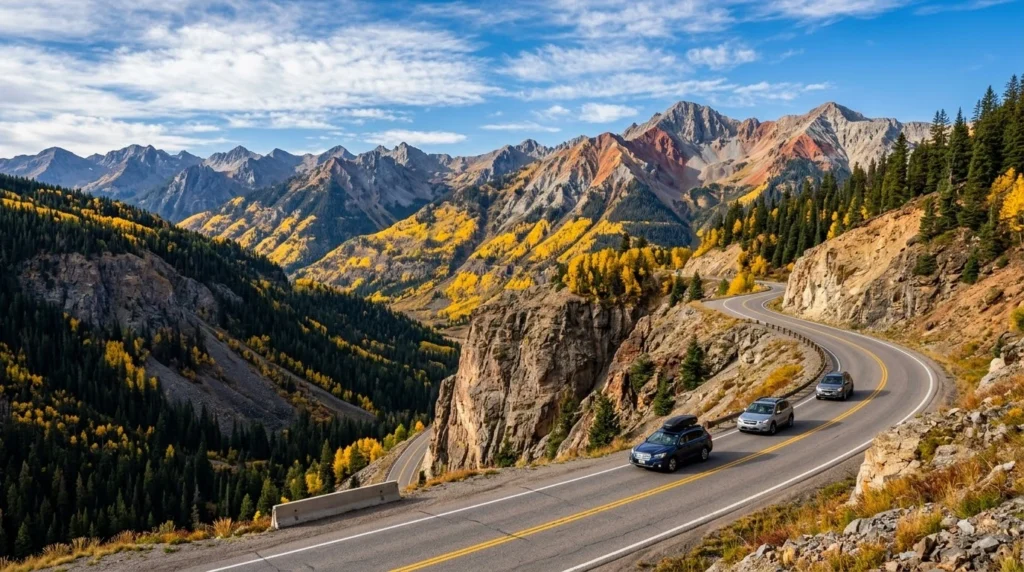
If you’re planning a Colorado road trip, you’ve probably heard about the Million Dollar Highway. Before my first drive, I had the same questions many travelers ask. Is it really dangerous? Which direction has the best views? How much time should I allow? After researching official travel guidance and planning carefully, I found that this famous stretch of highway is much more than a thrilling mountain road. It’s one of the most scenic drives in the United States.
This guide brings together everything you need in one place. Whether you’re visiting in summer for wildflowers, autumn for golden aspens, or winter for snowy mountain views, I’ll help you plan a safer, more enjoyable trip. Along the way, you’ll also learn about the area’s mining history, breathtaking overlooks, and practical travel tips that many guides leave out.
Quick Answer
The Million Dollar Highway is a 25-mile section of U.S. Highway 550 between Ouray and Silverton in southwest Colorado. It passes through the spectacular San Juan Mountains, climbs over Red Mountain Pass, and offers dramatic mountain scenery, waterfalls, historic mining sites, and steep cliffside roads. While the drive demands attention, most travelers can complete it safely by following Colorado Department of Transportation (CDOT) guidance, checking weather conditions before departure, and driving carefully.
Million Dollar Highway Quick Facts
| Feature | Details |
| Location | Southwest Colorado, USA |
| Highway | U.S. Highway 550 |
| Famous Section | Ouray to Silverton |
| Length | Approximately 25 miles (40 km) |
| Entire US 550 Route | Albuquerque, New Mexico to Montrose, Colorado |
| Highest Point | Red Mountain Pass (about 11,018 feet / 3,358 meters) |
| Average Driving Time | About 45 minutes without stops |
| Recommended Visit | Half day to full day |
| Best Seasons | Summer and fall |
| Winter Driving | Possible, but weather can change quickly |
| Known For | Scenic mountain views, mining history, waterfalls, alpine landscapes, and dramatic cliffside driving |
What Is the Million Dollar Highway?

The Million Dollar Highway is one of the most famous scenic drives in Colorado and a highlight of the larger San Juan Skyway Scenic and Historic Byway. This remarkable stretch of U.S. Highway 550 connects the mountain towns of Ouray and Silverton, crossing rugged peaks, deep valleys, and historic mining areas.
Although the road itself is only about 25 miles long, it delivers an unforgettable experience. You’ll pass colorful mountain slopes, waterfalls flowing beside the road, abandoned mining structures, and sweeping views of the San Juan Mountains. Every season offers something different, from lush green forests in summer to brilliant golden aspens in fall and snow-covered peaks during winter.
One reason this route stands out is how close you are to the landscape. In many places, the road follows steep mountainsides with sharp curves and dramatic drop-offs. While these features often make headlines, they are also part of what makes this drive so memorable.
The Million Dollar Highway is popular with:
- Road trip travelers
- Photographers
- Motorcycle riders
- Nature lovers
- History enthusiasts
- Families exploring Colorado
- Travelers driving the San Juan Skyway
If you’re visiting Colorado for the first time, many people consider this drive a must-see because it combines natural beauty, mountain history, and adventure in just a short distance.
Why Is It Called the Million Dollar Highway?

One of the biggest questions travelers ask is why this road has such an unusual name. Interestingly, no one knows the exact answer, and several stories have been shared over the years.
One popular explanation is that building this section of the highway cost around one million dollars per mile, an enormous amount when the road was constructed through steep mountain terrain.
Another theory says the fill material used during construction contained valuable gold ore from nearby mines, making the road literally worth millions of dollars.
Some local stories even suggest the views are worth a million dollars because of the incredible scenery you’ll experience around every turn.
While these stories differ, they all reflect the area’s rich mining history and the engineering challenge of building a highway through the rugged San Juan Mountains. Historic mining activity played a major role in developing this region, and you’ll still see reminders of that past during your drive.
Where Does the Million Dollar Highway Start and End?
The most famous section begins in Ouray, often called the “Switzerland of America,” and ends in Silverton, a historic mining town surrounded by towering peaks.
Many visitors continue south to Durango, creating one of Colorado’s classic road trips.
Route Overview
- Starting Point: Ouray
- Ending Point: Silverton
- Extension: Continue to Durango via U.S. Highway 550
- Mountain Pass: Red Mountain Pass
- Part of: San Juan Skyway Scenic and Historic Byway
Although the drive itself is relatively short, I always recommend giving yourself much more time than the estimated driving time. There are countless places where you’ll want to stop for photos, admire waterfalls, or simply enjoy the mountain scenery.
Route Map Overview
Before you begin, it’s helpful to understand how the route fits into southwest Colorado.
The drive starts in Ouray, where the road immediately begins climbing into the mountains. From there, it winds through the historic Uncompahgre Gorge, reaches Red Mountain Pass, passes old mining sites near Ironton, and eventually descends into Silverton.
If you continue south, you’ll cross Molas Pass and Coal Bank Pass before arriving in Durango.
Understanding this layout makes it much easier to plan fuel stops, meal breaks, and sightseeing along the way.
Major Locations Along the Route
| Location | Why It’s Worth Visiting |
| Ouray | Historic mountain town, hot springs, restaurants, waterfalls |
| Uncompahgre Gorge | Dramatic canyon scenery and steep mountain walls |
| Red Mountain Pass | Highest point of the route with spectacular alpine views |
| Ironton | Historic mining area with scenic pull-offs |
| Silverton | Historic mining town, museums, shops, and train rides |
| Molas Pass | Beautiful mountain vistas and hiking access |
| Coal Bank Pass | Forested mountain landscapes and scenic overlooks |
| Durango | Historic downtown, restaurants, outdoor recreation, and the famous narrow-gauge railroad |
Why So Many Travelers Add It to Their Colorado Road Trip
I’ve noticed that many people initially plan to drive the Million Dollar Highway simply because they’ve heard it’s beautiful. Once they learn what’s along the route, it often becomes one of the highlights of their entire Colorado vacation.
In just a few hours, you can experience:
- High mountain passes
- Historic mining communities
- Alpine forests
- Waterfalls
- Scenic overlooks
- Colorful wildflowers in summer
- Brilliant fall foliage
- Snow-covered peaks during colder months
Very few roads in the United States offer this much variety in such a short distance.
At the same time, it’s important to remember that mountain driving requires preparation. Weather can change quickly, traffic conditions vary by season, and some sections demand your full attention. I know this road can seem intimidating before your first drive, but proper planning makes a huge difference. Checking current road conditions, allowing plenty of time, and avoiding unnecessary risks will help you enjoy the journey instead of worrying about it.
Ouray to Durango vs. Durango to Ouray: Which Direction Is Better?
One of the first decisions you’ll make is which direction to drive. The good news is that there isn’t a wrong answer. Both routes take you through the same spectacular section of U.S. Highway 550, but the driving experience feels different depending on which town you start from.
If you’re driving the Million Dollar Highway for the first time, I suggest choosing the direction that matches your confidence behind the wheel rather than chasing a specific viewpoint. The scenery is outstanding in both directions.
| Factor | Ouray → Durango | Durango → Ouray |
| Driving experience | More dramatic climb early in the drive | Gradual climb before reaching the highest elevations |
| Best for beginners | Moderate | Excellent |
| Scenic pull-offs | Easy to access when heading south | Some stops may require extra caution when rejoining traffic |
| Photography | Beautiful morning light on many overlooks | Excellent afternoon lighting in several locations |
| Road feel | More exposed mountain driving near the beginning | Builds gradually into the mountain scenery |
| Trip ending | Durango offers more hotels and restaurants | Ouray is perfect for relaxing in the hot springs |
Driving from Ouray to Durango
Starting in Ouray means you’ll climb into the mountains almost immediately. The road winds through the Uncompahgre Gorge before reaching Red Mountain Pass, one of the highest points on the route.
Many travelers enjoy this direction because the scenery becomes dramatic very quickly. Waterfalls, historic mining remains, colorful mountainsides, and sweeping overlooks appear within the first several miles. If you like stopping often for photos, this route makes it easy to build those stops into your day.
The trade-off is that this section can feel intimidating if you’ve never driven mountain roads before. Staying patient, reducing your speed before curves, and using designated pull-offs whenever you want to admire the scenery will make the drive much more enjoyable.
Driving from Durango to Ouray
Driving north from Durango creates a gentler introduction to the highway. The road gradually climbs through forests before reaching the higher mountain passes.
I often recommend this direction to first-time visitors who feel nervous about mountain driving. The elevation changes feel more gradual, giving you time to adjust before reaching the most dramatic sections near Red Mountain Pass.
Ending your drive in Ouray also gives you the chance to explore the historic downtown, enjoy local restaurants, or relax in the town’s famous hot springs after a day on the road.
Which Direction Do I Recommend?
For most first-time visitors, Durango to Ouray feels slightly less stressful.
If you’ve driven mountain roads before and want dramatic scenery almost immediately, Ouray to Durango is an excellent choice.
No matter which direction you choose, allow far more time than your navigation app suggests. The drive itself may take less than an hour without stopping, but you’ll likely spend several hours exploring overlooks, waterfalls, and historic sites.
Is the Million Dollar Highway Difficult to Drive?
The Million Dollar Highway is challenging but manageable for most drivers. Steep grades, sharp curves, changing weather, and high elevations require extra attention, but careful drivers who prepare properly complete the route safely every year.
The highway has earned a reputation for being one of America’s most challenging scenic drives. While that reputation isn’t completely undeserved, it can also make the road sound more frightening than it really is.
From my experience planning mountain road trips, preparation matters much more than confidence. Drivers who respect the conditions, stay alert, and avoid rushing usually find the drive exciting rather than overwhelming.
Several factors make this road different from a typical highway.
Steep Mountain Grades
Some sections climb or descend quickly. On downhill stretches, use a lower gear to help control your speed instead of relying only on your brakes. This is especially important for heavier vehicles and RVs.
Sharp Curves
Many corners have reduced speed limits for a reason. Slow down before entering each curve, maintain a steady speed through it, and accelerate gently as the road straightens.
High Elevation
The highway crosses Red Mountain Pass, reaching an elevation of about 11,018 feet (3,358 meters). At this height, temperatures are usually cooler than nearby towns, and weather can change quickly.
If you’re visiting from sea level, you may also notice the thinner air. Drinking plenty of water and avoiding strenuous activity immediately after arrival can help your body adjust to the elevation.
Narrow Shoulders
Unlike many modern highways, some sections have narrow shoulders with steep slopes beyond the pavement. Keeping your full attention on the road is much more important than trying to admire every view while driving.
Whenever you want to take photos or enjoy the scenery, wait until you reach a designated pull-off.
Is the Million Dollar Highway Dangerous?
Yes, the Million Dollar Highway deserves respect, but it is not unsafe for prepared drivers. Most problems happen because of poor weather, excessive speed, distracted driving, or inadequate vehicle preparation rather than the road itself.
Many articles focus almost entirely on the highway’s reputation without explaining why.
The Million Dollar Highway includes several features that naturally demand careful driving:
- Steep drop-offs in some areas
- Tight mountain curves
- High elevations
- Rapid weather changes
- Occasional rockfall zones
- Heavy tourist traffic during peak seasons
These conditions are common on mountain highways throughout Colorado. They don’t mean you should avoid the drive. They simply mean you should plan ahead and drive responsibly.
The Colorado Department of Transportation (CDOT) actively monitors and maintains this section of U.S. Highway 550 throughout the year. During winter, crews remove snow, monitor avalanche-prone areas, and temporarily close the highway if conditions become unsafe. Before starting your trip, always check current road conditions and any travel alerts through CDOT’s official resources.
Safety Tips for Driving the Million Dollar Highway
A little preparation goes a long way on this road. Before every mountain drive, I like to treat safety planning as part of the trip rather than an afterthought.
Before You Leave
- Check the latest road conditions and closures through CDOT.
- Review the weather forecast for Ouray, Silverton, and Red Mountain Pass.
- Fill your fuel tank before entering the mountain section.
- Download offline maps in case cell service becomes limited.
- Make sure your tires, brakes, lights, and windshield wipers are in good condition.
While You’re Driving
- Obey posted speed limits.
- Keep both hands on the steering wheel.
- Increase your following distance behind other vehicles.
- Stay focused and avoid using your phone while driving.
- Use designated pull-offs instead of stopping along the roadway.
- Watch for cyclists, motorcycles, wildlife, and slow-moving vehicles around blind curves.
During Rain, Fog, or Snow
Mountain weather can change surprisingly fast. If visibility becomes poor, slow down, turn on your headlights, and increase the distance between you and the vehicle ahead.
If conditions become severe, it’s usually safer to wait at a nearby town or safe parking area until visibility improves than to continue driving.
Road Conditions by Season

The Million Dollar Highway offers a completely different experience throughout the year. Knowing what to expect each season helps you choose the right time for your trip.
Spring (March to May)
Spring is a season of transition. Snow may still cover higher elevations while valleys begin turning green. Melting snow feeds waterfalls, making this one of the best seasons to enjoy rushing streams and dramatic scenery.
Weather can change quickly, so check forecasts before leaving.
Summer (June to August)
Summer is the busiest and most popular time to visit. Roads are generally clear, hiking trails are open, and wildflowers brighten the mountain landscape.
Afternoon thunderstorms are common in the San Juan Mountains, so morning drives often provide the clearest weather.
Fall (September to October)
If someone asked me to recommend only one season, I would choose early to mid-September through early October.
Golden aspens cover the mountainsides, temperatures are comfortable, and the combination of colorful forests and rugged peaks creates unforgettable views.
Because this is also one of the busiest seasons, starting early in the morning gives you a better chance of finding parking at popular overlooks.
Winter (November to February)
Winter transforms the Million Dollar Highway into a beautiful alpine drive, but it also requires the most preparation.
Snow, ice, blowing snow, and reduced visibility are all possible. Temporary road closures may occur during severe storms or avalanche control operations.
Drivers should monitor both weather forecasts and CDOT travel updates before beginning the trip.
Month-by-Month Travel Planning
| Month | Typical Road Conditions | Crowds | Photography | Planning Tips |
| January | Snow and ice possible | Low | Snow-covered peaks | Check CDOT before departure |
| February | Winter driving continues | Low | Excellent winter scenery | Carry emergency supplies |
| March | Mixed conditions | Low | Waterfalls begin increasing | Expect changing weather |
| April | Improving roads | Low | Fresh spring landscapes | Snow is still possible at higher elevations |
| May | Mostly clear | Moderate | Green valleys and waterfalls | Great shoulder season |
| June | Clear roads | High | Wildflowers begin blooming | Long daylight hours |
| July | Generally excellent | High | Lush mountain scenery | Afternoon storms possible |
| August | Clear | High | Alpine landscapes | Arrive early for popular stops |
| September | Excellent | Moderate | Peak fall colors begin | One of the best months to visit |
| October | Good with occasional early snow | Moderate | Outstanding autumn photography | Monitor forecasts closely |
| November | Variable | Low | Snow-dusted mountains | Prepare for winter driving |
| December | Winter conditions | Low | Dramatic snowy landscapes | Allow extra travel time |
When Is the Best Time to Visit?
The best time to drive the Million Dollar Highway depends on the kind of experience you want.
For pleasant weather, colorful scenery, and comfortable driving conditions, September is hard to beat. The mountains come alive with brilliant shades of gold, daytime temperatures are comfortable, and visibility is often excellent.
If hiking and outdoor activities are your priority, June through August offers the longest days and the easiest access to trails and scenic overlooks.
Travelers looking for fewer crowds may prefer late spring or early fall, while experienced winter drivers can enjoy a quieter and completely different mountain landscape during the colder months.
No matter when you visit, checking current road conditions, weather forecasts, and any travel advisories before leaving will help you enjoy one of Colorado’s most memorable scenic drives with greater confidence.
Mile-by-Mile Driving Guide: Ouray to Silverton
Although the Million Dollar Highway is only about 25 miles long, it’s packed with scenic overlooks, waterfalls, historic mining sites, and unforgettable mountain views. If you simply drive from Ouray to Silverton without stopping, you’ll miss much of what makes this route so special.
I always recommend setting aside at least half a day. That gives you enough time to stop safely, take photos, and enjoy the scenery without feeling rushed.
Travel Tip: Pull over only at designated parking areas or scenic overlooks. Stopping on narrow sections of the highway can create dangerous situations for you and other drivers.
Mile 0: Ouray
Your journey begins in the historic mountain town of Ouray, often called the “Switzerland of America.” Surrounded by steep peaks, Ouray is a great place to fuel up, grab breakfast, and check road conditions before heading into the mountains.
Before leaving town, consider visiting:
- Ouray Visitor Center
- Historic Main Street
- Ouray Hot Springs Pool
- Local cafés and bakeries
If you’re starting early, this is also a good place to download offline maps and make one final weather check.
Miles 2–5: Uncompahgre Gorge
Soon after leaving Ouray, the highway begins climbing through the impressive Uncompahgre Gorge.
The canyon walls rise sharply beside the road, and you’ll notice several waterfalls flowing down the mountains after snowmelt or seasonal rain.
This stretch introduces the mountain driving you’ll experience throughout the route. Curves become tighter, elevations increase, and the scenery grows more dramatic with every mile.
Miles 6–10: Bear Creek Falls Area
One of the first major highlights is Bear Creek Falls, where water tumbles down the mountainside beside the highway.
Depending on recent rainfall and snowmelt, the waterfall may range from a gentle cascade to a powerful rush of water.
Several nearby pull-offs provide excellent opportunities for photography. During busy summer weekends, parking can fill quickly, so arriving earlier in the day improves your chances of finding a space.
Miles 10–15: Red Mountain Mining District
As you continue climbing, the landscape changes noticeably.
The mountains display striking shades of red, orange, and brown because of mineral-rich rock formations that helped give Red Mountain its name.
This area was once one of Colorado’s busiest mining districts. Although the mines are no longer operating, you’ll still see historic buildings, abandoned structures, and remnants of the region’s mining past.
Please remember that many old mining structures are unstable and located on private or protected land. Admire them from a safe distance rather than attempting to explore inside.
Mile 15: Red Mountain Pass

At approximately 11,018 feet, Red Mountain Pass is the highest point along the Million Dollar Highway.
Standing here, you’ll enjoy sweeping views of rugged peaks stretching across the San Juan Mountains.
Weather often changes quickly at this elevation. Even during summer, temperatures may be noticeably cooler than in Ouray or Silverton.
Take a few minutes to enjoy the scenery, but keep an eye on changing clouds. Afternoon storms can develop quickly during the warmer months.
Miles 16–20: Historic Ironton
As the highway descends toward Silverton, you’ll pass the historic community of Ironton.
During Colorado’s mining boom, Ironton served as an important settlement supporting nearby mines. Today, only scattered remains are visible, creating a fascinating glimpse into the area’s history.
This section also offers several wide-open views across alpine valleys, making it one of my favorite places to stop for landscape photography.
Miles 21–25: Arrival in Silverton
The final miles become less steep as you approach Silverton, a charming mountain town surrounded by towering peaks.
Silverton still preserves much of its mining heritage through historic buildings, museums, local businesses, and the famous Durango & Silverton Narrow Gauge Railroad.
Many visitors spend several hours exploring before continuing toward Durango.
Best Scenic Overlooks Along the Million Dollar Highway

Nearly every mile offers incredible scenery, but a few locations consistently stand out for their panoramic views.
| Scenic Stop | Why Visit | Average Stop Time |
| Bear Creek Falls Pull-off | Waterfall photography | 10–20 minutes |
| Red Mountain Pass | Mountain panoramas | 20–30 minutes |
| Red Mountain Overlooks | Colorful alpine scenery | 15–20 minutes |
| Ironton Valley | Historic mining landscape | 15–30 minutes |
| South of Silverton | Broad valley views | 10–15 minutes |
These overlooks become especially popular during summer and fall, so arriving early often means easier parking and fewer crowds.
Hidden Viewpoints Worth Stopping For
Some of my favorite moments on the Million Dollar Highway happen away from the busiest overlooks.
As you drive, you’ll find several smaller pull-offs that provide peaceful views without large crowds. These unofficial scenic stops often overlook alpine meadows, mountain streams, or quiet valleys.
Rather than trying to stop at every turnout, choose a few that safely allow you to enjoy the landscape. Spending ten relaxed minutes at one beautiful viewpoint is usually more rewarding than rushing through ten different stops.
Waterfalls Along the Route

Waterfalls add another layer of beauty to the drive, especially during spring and early summer.
Bear Creek Falls
This is the best-known waterfall along the highway. Its easy visibility from the road makes it a favorite stop for nearly every visitor.
Seasonal Cascades
Depending on recent snowmelt and rainfall, you’ll notice numerous temporary waterfalls flowing down cliffs throughout the route.
Spring usually offers the strongest water flow, while late summer may bring smaller cascades.
Always admire waterfalls from designated viewing areas. Wet rocks near mountain streams can become slippery without warning.
Historic Mining Towns and Colorado’s Mining Heritage

The Million Dollar Highway tells an important part of Colorado’s mining story.
During the late 1800s, rich deposits of gold, silver, copper, and other minerals attracted thousands of miners to the San Juan Mountains. Communities quickly grew around these mining operations, creating towns that supported workers and their families.
Today, several of those communities remain important stops for travelers.
Ouray
Originally established as a mining town, Ouray has transformed into one of Colorado’s most popular mountain destinations while preserving much of its historic character.
Ironton
Although largely abandoned today, Ironton reminds visitors of the boom-and-bust cycle that shaped many mining communities across the American West.
Silverton
Silverton remains one of Colorado’s best-preserved historic mining towns. Walking through downtown feels like stepping back in time, with restored buildings, museums, and local businesses celebrating the area’s heritage.
Understanding this history gives the drive much more meaning than simply enjoying beautiful scenery.
Wildlife You May Encounter
The San Juan Mountains support a wide variety of wildlife.
While sightings are never guaranteed, you may see:
- Mule deer
- Elk
- Yellow-bellied marmots
- Mountain goats on higher slopes
- Red foxes
- Golden eagles
- Hawks
- Black bears, although sightings are less common
Early morning and late evening often provide the best opportunities for wildlife viewing.
If you do see animals, stay inside your vehicle or observe from a safe distance. Feeding wildlife is both unsafe and illegal in many public lands.
Photography Guide
Photographers can easily spend an entire day exploring the Million Dollar Highway.
The changing light, colorful mountains, waterfalls, and historic sites provide endless opportunities for memorable images.
Best Time for Photography
Sunrise
Morning light creates soft shadows across the eastern mountain slopes and usually brings calmer weather.
Late Afternoon
As the sun lowers, warm light enhances the rich colors of Red Mountain and surrounding peaks.
Best Seasons
| Season | Photography Highlights |
| Spring | Waterfalls, green valleys, snow-covered peaks |
| Summer | Wildflowers, blue skies, alpine scenery |
| Fall | Golden aspens, colorful mountainsides |
| Winter | Snow-covered landscapes and dramatic mountain views |
Photography Tips
- Bring a wide-angle lens for mountain landscapes.
- A telephoto lens works well for wildlife and distant peaks.
- A tripod helps during sunrise and sunset photography.
- Keep spare batteries, as cooler mountain temperatures can reduce battery life.
- Clean your camera lens regularly because mountain dust can build up quickly.
If you’re using a smartphone, many viewpoints still provide outstanding photo opportunities. The key is to stop safely, take your time, and enjoy the changing scenery instead of rushing from one location to another.
The Million Dollar Highway rewards travelers who slow down. Every curve reveals another view, another piece of Colorado’s mining history, or another reminder of how beautiful the San Juan Mountains can be when you give yourself enough time to appreciate them.
Vehicle Guide: Can You Drive the Million Dollar Highway in Your Vehicle?
One of the questions I hear most often is whether a certain type of vehicle can safely drive the Million Dollar Highway. The answer is yes for most vehicles, but your experience depends on road conditions, your driving skills, and how well your vehicle is prepared.
Before starting the drive, check your tire pressure, brakes, lights, windshield wipers, and fluid levels. A well-maintained vehicle makes mountain driving much safer and more enjoyable.
| Vehicle | Suitable? | Things to Know |
| Sedan | Yes | Drive carefully on steep grades and sharp curves. |
| SUV | Yes | Excellent choice because of higher ground clearance and stability. |
| Pickup Truck | Yes | Watch your speed on downhill sections, especially if carrying a heavy load. |
| Motorcycle | Yes | Popular route, but changing weather and gravel near pull-offs require extra caution. |
| RV | Yes, with experience | Larger vehicles should allow extra time and use lower gears on descents. |
| Electric Vehicle (EV) | Yes | Plan charging stops before entering the mountain section. |
| Vehicle with Trailer | Possible | Suitable only for experienced mountain drivers. Check your brakes and towing capacity before the trip. |
Driving a Sedan
A standard passenger car is perfectly capable of completing the drive during normal road conditions. Thousands of visitors use sedans every year without problems.
The most important advice is to avoid excessive speed and stay alert through curves. During winter, snow tires or chains may be necessary depending on weather and Colorado traction requirements.
Driving an SUV
If I had to recommend one vehicle type for first-time visitors, it would be an SUV.
The higher driving position improves visibility, and many SUVs offer extra confidence during changing weather. Four-wheel drive can help in snowy conditions, but remember that it does not shorten your stopping distance on ice.
Driving an RV
The Million Dollar Highway is open to RVs, but this isn’t a drive to rush.
Large vehicles require wider turns, longer stopping distances, and more attention on downhill grades. If you’re new to mountain driving in an RV, consider practicing on less demanding roads before attempting this route.
Use lower gears when descending long grades to reduce brake wear and overheating.
Driving a Motorcycle
The Million Dollar Highway is considered one of the best motorcycle rides in the United States.
Smooth pavement, mountain scenery, and sweeping curves attract riders from around the country.
Weather, however, changes quickly in the San Juan Mountains. Carry waterproof gear, wear proper protective equipment, and slow down if rain leaves the pavement wet.
Driving an Electric Vehicle
Electric vehicles continue to become more common on Colorado’s scenic highways.
The route itself is short, but mountain driving affects battery consumption differently than flat highways. Climbing uses more energy, while descending allows many EVs to recover some battery through regenerative braking.
Before leaving, locate available charging stations in nearby towns rather than depending on finding one unexpectedly.
Fuel Stations, EV Charging, Food, and Rest Stops
The Million Dollar Highway has very few services between Ouray and Silverton, so planning ahead is important.
Fuel Stations
Fuel is available in both Ouray and Silverton, with additional services in Durango and Montrose.
I always recommend filling your tank before beginning the drive, even if your fuel gauge shows plenty of range. Mountain driving often uses more fuel than expected because of steep climbs and frequent elevation changes.
EV Charging
Electric vehicle charging continues to improve across southwest Colorado, but charging locations remain much more limited than fuel stations.
Before your trip:
- Check your vehicle’s navigation system.
- Confirm charger availability and operating status.
- Avoid beginning the drive with a low battery.
Food Stops
If you’re planning a relaxed day, consider eating in one of the nearby mountain towns.
Popular meal stops include:
- Breakfast in Ouray before the drive.
- Lunch in Silverton after exploring downtown.
- Dinner in Durango if you’re continuing south.
Packing snacks and drinking water is also a good idea, especially if you expect to stop frequently for sightseeing.
Public Restrooms
Public restrooms are available in the towns along the route, but facilities are limited between them.
Whenever you’re in Ouray or Silverton, take advantage of the available services before continuing your trip.
Cell Phone Coverage and Offline Navigation
One thing that surprises many first-time visitors is that cell phone coverage isn’t consistent throughout the San Juan Mountains.
Coverage varies depending on your mobile provider, terrain, and weather. Some sections have reliable service, while others have little or no signal.
Before leaving town, I recommend:
- Downloading offline maps.
- Saving hotel confirmations and reservation details.
- Taking screenshots of important directions.
- Sharing your travel plans with someone if you’ll be driving alone.
Offline navigation apps can continue guiding you even when your phone temporarily loses signal.
Packing Checklist

Mountain weather changes quickly, even during summer. Carrying a few extra items can make your trip much more comfortable.
| Item | Why Bring It? |
| Drinking water | Stay hydrated, especially at high elevations. |
| Snacks | Limited services between towns. |
| Light jacket | Temperatures drop at higher elevations. |
| Rain jacket | Afternoon showers are common during summer. |
| Sunglasses | Bright mountain sunlight can reduce visibility. |
| Sunscreen | UV exposure increases at higher elevations. |
| First-aid kit | Helpful for minor injuries. |
| Flashlight | Useful during emergencies or unexpected delays. |
| Phone charger or power bank | Keeps your phone available for navigation and emergencies. |
| Printed map | Helpful if electronic devices fail. |
| Camera | You’ll likely use it throughout the trip. |
Winter Packing
If you’re traveling during winter, add:
- Warm blanket
- Gloves
- Hat
- Ice scraper
- Snow brush
- Extra food and water
- Emergency flashlight with spare batteries
These items become especially valuable if weather temporarily delays travel.
Budget Planning
The Million Dollar Highway itself is free to drive, making it one of Colorado’s best-value scenic road trips. Your total cost depends on how long you stay, where you eat, and whether you spend the night.
The table below provides general planning estimates. Actual costs vary depending on travel season, accommodation type, and personal preferences.
| Expense | Budget Traveler | Mid-Range Traveler |
| Fuel | $20–$50 | $30–$70 |
| Meals | $20–$40 | $40–$80 |
| Hotel | $100–$180 | $180–$350+ |
| Snacks and Drinks | $10–$20 | $20–$40 |
| Souvenirs | Optional | Optional |
If you’re visiting during fall color season or summer holidays, expect hotel prices to increase because of higher demand.
How Much Time Should You Budget?
Although the drive itself takes less than an hour without stopping, that’s rarely the best way to experience it.
| Trip Style | Recommended Time |
| Scenic drive only | About 1 hour |
| Scenic drive with a few photo stops | 2–3 hours |
| Relaxed sightseeing | Half day |
| Photography-focused trip | Full day |
| Exploring Ouray, Silverton, and Durango | Weekend |
From my experience, the biggest mistake travelers make is underestimating how often they’ll want to stop. Nearly every few miles presents another mountain view, historic site, or scenic overlook.
Building extra time into your schedule lets you enjoy the drive without watching the clock. Instead of rushing from one destination to the next, you’ll have the freedom to experience what makes the Million Dollar Highway one of Colorado’s most unforgettable road trips.
Vehicle Guide: Can You Drive the Million Dollar Highway in Your Vehicle?
One of the questions I hear most often is whether a certain type of vehicle can safely drive the Million Dollar Highway. The answer is yes for most vehicles, but your experience depends on road conditions, your driving skills, and how well your vehicle is prepared.
Before starting the drive, check your tire pressure, brakes, lights, windshield wipers, and fluid levels. A well-maintained vehicle makes mountain driving much safer and more enjoyable.
| Vehicle | Suitable? | Things to Know |
| Sedan | Yes | Drive carefully on steep grades and sharp curves. |
| SUV | Yes | Excellent choice because of higher ground clearance and stability. |
| Pickup Truck | Yes | Watch your speed on downhill sections, especially if carrying a heavy load. |
| Motorcycle | Yes | Popular route, but changing weather and gravel near pull-offs require extra caution. |
| RV | Yes, with experience | Larger vehicles should allow extra time and use lower gears on descents. |
| Electric Vehicle (EV) | Yes | Plan charging stops before entering the mountain section. |
| Vehicle with Trailer | Possible | Suitable only for experienced mountain drivers. Check your brakes and towing capacity before the trip. |
Driving a Sedan
A standard passenger car is perfectly capable of completing the drive during normal road conditions. Thousands of visitors use sedans every year without problems.
The most important advice is to avoid excessive speed and stay alert through curves. During winter, snow tires or chains may be necessary depending on weather and Colorado traction requirements.
Driving an SUV
If I had to recommend one vehicle type for first-time visitors, it would be an SUV.
The higher driving position improves visibility, and many SUVs offer extra confidence during changing weather. Four-wheel drive can help in snowy conditions, but remember that it does not shorten your stopping distance on ice.
Driving an RV
The Million Dollar Highway is open to RVs, but this isn’t a drive to rush.
Large vehicles require wider turns, longer stopping distances, and more attention on downhill grades. If you’re new to mountain driving in an RV, consider practicing on less demanding roads before attempting this route.
Use lower gears when descending long grades to reduce brake wear and overheating.
Driving a Motorcycle
The Million Dollar Highway is considered one of the best motorcycle rides in the United States.
Smooth pavement, mountain scenery, and sweeping curves attract riders from around the country.
Weather, however, changes quickly in the San Juan Mountains. Carry waterproof gear, wear proper protective equipment, and slow down if rain leaves the pavement wet.
Driving an Electric Vehicle
Electric vehicles continue to become more common on Colorado’s scenic highways.
The route itself is short, but mountain driving affects battery consumption differently than flat highways. Climbing uses more energy, while descending allows many EVs to recover some battery through regenerative braking.
Before leaving, locate available charging stations in nearby towns rather than depending on finding one unexpectedly.
Fuel Stations, EV Charging, Food, and Rest Stops
The Million Dollar Highway has very few services between Ouray and Silverton, so planning ahead is important.
Fuel Stations
Fuel is available in both Ouray and Silverton, with additional services in Durango and Montrose.
I always recommend filling your tank before beginning the drive, even if your fuel gauge shows plenty of range. Mountain driving often uses more fuel than expected because of steep climbs and frequent elevation changes.
EV Charging
Electric vehicle charging continues to improve across southwest Colorado, but charging locations remain much more limited than fuel stations.
Before your trip:
- Check your vehicle’s navigation system.
- Confirm charger availability and operating status.
- Avoid beginning the drive with a low battery.
Food Stops
If you’re planning a relaxed day, consider eating in one of the nearby mountain towns.
Popular meal stops include:
- Breakfast in Ouray before the drive.
- Lunch in Silverton after exploring downtown.
- Dinner in Durango if you’re continuing south.
Packing snacks and drinking water is also a good idea, especially if you expect to stop frequently for sightseeing.
Public Restrooms
Public restrooms are available in the towns along the route, but facilities are limited between them.
Whenever you’re in Ouray or Silverton, take advantage of the available services before continuing your trip.
Cell Phone Coverage and Offline Navigation
One thing that surprises many first-time visitors is that cell phone coverage isn’t consistent throughout the San Juan Mountains.
Coverage varies depending on your mobile provider, terrain, and weather. Some sections have reliable service, while others have little or no signal.
Before leaving town, I recommend:
- Downloading offline maps.
- Saving hotel confirmations and reservation details.
- Taking screenshots of important directions.
- Sharing your travel plans with someone if you’ll be driving alone.
Offline navigation apps can continue guiding you even when your phone temporarily loses signal.
Packing Checklist
Mountain weather changes quickly, even during summer. Carrying a few extra items can make your trip much more comfortable.
| Item | Why Bring It? |
| Drinking water | Stay hydrated, especially at high elevations. |
| Snacks | Limited services between towns. |
| Light jacket | Temperatures drop at higher elevations. |
| Rain jacket | Afternoon showers are common during summer. |
| Sunglasses | Bright mountain sunlight can reduce visibility. |
| Sunscreen | UV exposure increases at higher elevations. |
| First-aid kit | Helpful for minor injuries. |
| Flashlight | Useful during emergencies or unexpected delays. |
| Phone charger or power bank | Keeps your phone available for navigation and emergencies. |
| Printed map | Helpful if electronic devices fail. |
| Camera | You’ll likely use it throughout the trip. |
Winter Packing
If you’re traveling during winter, add:
- Warm blanket
- Gloves
- Hat
- Ice scraper
- Snow brush
- Extra food and water
- Emergency flashlight with spare batteries
These items become especially valuable if weather temporarily delays travel.
Budget Planning
The Million Dollar Highway itself is free to drive, making it one of Colorado’s best-value scenic road trips. Your total cost depends on how long you stay, where you eat, and whether you spend the night.
The table below provides general planning estimates. Actual costs vary depending on travel season, accommodation type, and personal preferences.
| Expense | Budget Traveler | Mid-Range Traveler |
| Fuel | $20–$50 | $30–$70 |
| Meals | $20–$40 | $40–$80 |
| Hotel | $100–$180 | $180–$350+ |
| Snacks and Drinks | $10–$20 | $20–$40 |
| Souvenirs | Optional | Optional |
If you’re visiting during fall color season or summer holidays, expect hotel prices to increase because of higher demand.
How Much Time Should You Budget?
Although the drive itself takes less than an hour without stopping, that’s rarely the best way to experience it.
| Trip Style | Recommended Time |
| Scenic drive only | About 1 hour |
| Scenic drive with a few photo stops | 2–3 hours |
| Relaxed sightseeing | Half day |
| Photography-focused trip | Full day |
| Exploring Ouray, Silverton, and Durango | Weekend |
From my experience, the biggest mistake travelers make is underestimating how often they’ll want to stop. Nearly every few miles presents another mountain view, historic site, or scenic overlook.
Building extra time into your schedule lets you enjoy the drive without watching the clock. Instead of rushing from one destination to the next, you’ll have the freedom to experience what makes the Million Dollar Highway one of Colorado’s most unforgettable road trips.
Suggested Million Dollar Highway Itineraries
The Million Dollar Highway can fit into almost any Colorado vacation. Whether you have just a couple of hours or an entire weekend, planning your time in advance helps you enjoy the drive without feeling rushed.
2-Hour Scenic Drive
This option is ideal if you’re traveling between destinations and want to experience the highlights.
Recommended plan:
- Start in Ouray or Silverton.
- Stop at Bear Creek Falls.
- Visit Red Mountain Pass.
- Enjoy one or two scenic overlooks.
- Continue to your destination.
This itinerary focuses on the drive itself and works well if your schedule is limited.
Half-Day Itinerary
A half-day trip gives you enough time to enjoy the scenery without spending the entire day on the road.
Suggested stops include:
- Breakfast in Ouray
- Bear Creek Falls
- Red Mountain Pass
- Historic Ironton
- Lunch in Silverton
This is the itinerary I recommend to most first-time visitors.
Full-Day Road Trip
If photography, history, and sightseeing are your priorities, dedicate a full day to the highway.
A full-day visit allows you to:
- Stop at multiple overlooks.
- Explore Silverton.
- Visit local museums.
- Take short walks near scenic viewpoints.
- Enjoy local restaurants.
- Spend time photographing the changing light throughout the day.
Instead of rushing between stops, you’ll have plenty of time to enjoy each location.
Weekend Itinerary
A weekend gives you the opportunity to experience much more than the highway itself.
Day 1
- Explore Ouray.
- Visit the hot springs.
- Drive the Million Dollar Highway.
- Stay overnight in Silverton.
Day 2
- Explore Silverton.
- Continue to Durango.
- Ride the Durango & Silverton Narrow Gauge Railroad if it fits your schedule.
- Return through another scenic Colorado route if time allows.
Family Travel Tips
The Million Dollar Highway isn’t only for adventure travelers. Families can enjoy it too with a little planning.
Children often enjoy:
- Watching waterfalls.
- Looking for old mining buildings.
- Spotting wildlife.
- Taking photos from scenic overlooks.
To make the trip more comfortable:
- Bring snacks and drinks.
- Plan restroom stops before leaving town.
- Allow plenty of time for breaks.
- Let children stretch their legs at safe stopping areas.
If anyone in your family gets motion sickness, consider bringing appropriate medication after speaking with a healthcare professional. Mountain roads include many curves, and frequent stops can also help.
Traveling with Older Adults
Many scenic overlooks require little or no walking, making this drive suitable for many older travelers.
For a more comfortable trip:
- Take frequent breaks.
- Stay hydrated.
- Dress in layers because temperatures change with elevation.
- Allow extra time so there’s no pressure to hurry.
Higher elevations may affect some visitors differently. If someone begins feeling unwell, descend to a lower elevation and seek medical advice if symptoms become severe.
Traveling with Pets
Many travelers bring dogs on their Colorado road trips.
If your pet joins you:
- Carry plenty of water.
- Keep them on a leash where required.
- Never leave them inside a parked vehicle.
- Clean up after them.
- Respect wildlife and other visitors.
Always check pet rules before visiting trails or public lands.
Accessibility Information
Many travelers wonder whether they can still enjoy the Million Dollar Highway if they have limited mobility.
While several hiking trails and historic mining areas involve uneven terrain, many scenic viewpoints can be enjoyed directly from roadside pull-offs or nearby parking areas.
| Experience | Accessibility |
| Scenic driving | Excellent |
| Mountain views | Many available from roadside overlooks |
| Photography | Good accessibility at many pull-offs |
| Historic downtown Ouray | Mostly walkable, though some streets have slopes |
| Historic downtown Silverton | Accessible to many visitors, with some uneven sidewalks |
| Hiking trails | Accessibility varies by trail |
Accessibility features continue to improve in many Colorado destinations. Checking local visitor information before your trip can help you choose attractions that best match your needs.
Emergency Planning
Mountain roads require a little extra preparation. Fortunately, a few simple steps can help you handle unexpected situations with confidence.
If Your Vehicle Breaks Down
If your vehicle develops a problem:
- Pull completely off the roadway if possible.
- Turn on your hazard lights.
- Stay inside your vehicle if traffic makes it unsafe to stand outside.
- Contact roadside assistance when you have phone service.
If You Encounter Severe Weather
Mountain weather changes quickly.
If heavy snow, fog, rain, or strong winds reduce visibility:
- Slow down.
- Turn on your headlights.
- Increase your following distance.
- Stop at a safe location if conditions become unsafe.
Patience is often the safest decision in the mountains.
Road Closures
Occasionally, portions of U.S. Highway 550 close because of:
- Heavy snowfall
- Avalanche control
- Rockfall
- Road maintenance
- Traffic incidents
Before leaving, check current road conditions through the Colorado Department of Transportation (CDOT). If a closure occurs during your trip, follow instructions from transportation officials and never attempt to drive around barricades.
Common Mistakes Travelers Make
Most visitors finish the drive safely and have an amazing experience. The problems I see most often are completely avoidable.
Rushing the Drive
Navigation apps may estimate less than an hour, but treating the Million Dollar Highway like an ordinary highway means missing its best scenery.
Allow several hours instead.
Ignoring the Weather
Sunny conditions in Ouray don’t guarantee sunny conditions at Red Mountain Pass.
Always check forecasts before leaving and stay aware of changing conditions during your drive.
Running Low on Fuel
Fuel stations are available in nearby towns, but services between them are limited.
Starting with a full tank removes one unnecessary concern.
Stopping in Unsafe Areas
Never stop in traffic lanes or narrow shoulders simply to take a photograph.
Wait for designated pull-offs where you can park safely.
Looking at the Scenery Instead of the Road
This sounds obvious, but it’s surprisingly common.
If a beautiful view catches your attention, continue driving until you reach a safe overlook. You’ll enjoy the scenery much more when you’re parked.
Driving Too Fast Downhill
Long mountain descents place extra strain on your brakes.
Use lower gears when appropriate and maintain a steady speed rather than braking continuously.
Starting Too Late
Many travelers begin their drive late in the afternoon and end up driving mountain roads after dark.
An early start gives you better lighting, more stopping opportunities, and extra flexibility if weather changes.
Responsible Travel Tips
The San Juan Mountains are one of Colorado’s most treasured landscapes. Every visitor can help protect them.
You can travel responsibly by:
- Staying on marked roads and trails.
- Packing out all trash.
- Respecting wildlife.
- Avoiding damage to historic mining structures.
- Following posted signs and local regulations.
- Supporting local businesses in Ouray, Silverton, and Durango.
Small choices from every traveler help preserve these mountains for future generations.
By the time you reach the end of the Million Dollar Highway, you’ll understand why so many people consider it one of the finest scenic drives in North America. With thoughtful planning, realistic expectations, and a little extra time for unexpected stops, the journey becomes just as rewarding as the destination.
Final Thoughts
The Million Dollar Highway is much more than a scenic road between Ouray and Silverton. It’s a journey through the heart of Colorado’s San Juan Mountains, where every curve reveals another mountain peak, historic mining site, waterfall, or unforgettable viewpoint.
Before planning this guide, I understood why people were excited about driving it. After researching the route in depth and studying official travel guidance, I also understood why preparation matters just as much as the scenery. The road deserves respect, but it shouldn’t prevent you from experiencing one of Colorado’s greatest drives.
If I could offer one piece of advice, it would be this: don’t treat the Million Dollar Highway as a road to get through. Treat it as the destination itself.
Start early, allow extra time, stop often at safe overlooks, support local businesses in Ouray, Silverton, and Durango, and let the mountains set the pace. Those unexpected moments often become the memories you’ll talk about long after your trip ends.
Share Your Experience

Have you driven the Million Dollar Highway?
I’d love to hear about your experience.
- Which scenic overlook was your favorite?
- Did you visit during summer, fall, or winter?
- Was there a hidden viewpoint or local stop you discovered?
- Do you have a helpful tip for first-time visitors?
Share your experience in the comments. Your advice could help another traveler plan a safer and more memorable road trip through Colorado’s beautiful San Juan Mountains.
Frequently Asked Questions About the Million Dollar Highway
Where is the Million Dollar Highway?
The Million Dollar Highway is a famous section of U.S. Highway 550 in southwest Colorado. It stretches between the historic mountain towns of Ouray and Silverton and forms part of the San Juan Skyway Scenic and Historic Byway.
How long is the Million Dollar Highway?
The Million Dollar Highway is approximately 25 miles (40 kilometers) long between Ouray and Silverton. Without stopping, the drive usually takes about 45 minutes to one hour. Most visitors spend several hours because of the scenic overlooks and attractions along the route.
Why is it called the Million Dollar Highway?
There is no officially confirmed explanation. Popular theories suggest the road cost about one million dollars per mile to build, contains valuable ore beneath the roadway, or earned its name because the scenery is worth a million dollars.
Is the Million Dollar Highway dangerous?
The highway has steep grades, sharp curves, high elevations, and sections without guardrails. However, careful drivers who follow speed limits, monitor weather conditions, and prepare their vehicles can complete the drive safely.
Is the Million Dollar Highway worth driving?
Yes. It is widely considered one of the most scenic drives in Colorado and one of the most beautiful mountain highways in the United States. Travelers enjoy panoramic mountain views, waterfalls, historic mining sites, and charming mountain towns along the route.
What is the best time to drive the Million Dollar Highway?
For most visitors, September offers the best balance of pleasant weather, colorful scenery, and comfortable driving conditions. Summer is excellent for hiking and sightseeing, while winter offers dramatic snow-covered landscapes for experienced mountain drivers.
Can beginners drive the Million Dollar Highway?
Yes. First-time mountain drivers can safely enjoy the route by driving slowly, avoiding distractions, allowing extra travel time, and checking weather and road conditions before leaving.
Is the Million Dollar Highway open year-round?
Yes, U.S. Highway 550 is generally open throughout the year. Temporary closures can happen during severe winter storms, avalanche control work, rockfall, or road maintenance. Always check the latest travel information from the Colorado Department of Transportation before beginning your trip.
Are there guardrails on the Million Dollar Highway?
Some sections have guardrails, while others do not. The highway follows steep mountain terrain, so drivers should remain alert, stay within their lane, and avoid unnecessary distractions.
Can RVs drive the Million Dollar Highway?
Yes. Many RVs travel the highway every year. Drivers should be comfortable with mountain roads, use lower gears on downhill sections, and allow extra space when navigating curves.
Can motorcycles use the Million Dollar Highway?
Absolutely. The highway is one of Colorado’s most popular motorcycle routes because of its mountain scenery and winding roads. Riders should always monitor weather conditions and wear proper safety gear.
Are there fuel stations on the highway?
Fuel is available in Ouray, Silverton, Durango, and other nearby communities. Services between Ouray and Silverton are limited, so filling your tank before entering the mountain section is a smart choice.
Is there cell phone service?
Cell phone coverage varies throughout the San Juan Mountains. Some sections have reliable service, while others have limited or no signal. Downloading offline maps before your trip is strongly recommended.
Can I drive the Million Dollar Highway in winter?
Yes, but winter driving requires extra preparation. Snow, ice, blowing snow, and changing weather can affect road conditions. Winter tires or traction devices may be necessary depending on conditions and Colorado traction requirements.
Are there restrooms along the route?
Public restrooms are available in towns such as Ouray and Silverton. Facilities are limited between communities, so it’s a good idea to plan restroom stops before leaving town.
Can I stop anywhere to take photos?
No. Always use designated pull-offs or parking areas. Stopping on narrow shoulders or in travel lanes creates unnecessary risks for you and other drivers.
How high is Red Mountain Pass?
Red Mountain Pass reaches approximately 11,018 feet (3,358 meters) above sea level, making it one of the highest paved mountain passes on U.S. Highway 550.
Are there waterfalls on the Million Dollar Highway?
Yes. Bear Creek Falls is the best-known waterfall along the route. During spring and early summer, snowmelt also creates many temporary waterfalls flowing down the surrounding mountainsides.
Can I complete the drive in one day?
Yes. Most visitors complete the drive comfortably in a half day or full day, depending on how often they stop for sightseeing, photography, and exploring nearby towns.
How This Article Was Created
This guide was created using information from trusted transportation agencies, official tourism resources, public land management organizations, and established travel guidance related to the Million Dollar Highway and southwest Colorado. Road safety recommendations, seasonal travel advice, and planning information are based on resources from organizations such as the Colorado Department of Transportation (CDOT), the Colorado Tourism Office, the U.S. Forest Service, the National Weather Service, and other official public sources where applicable.
Travel conditions can change because of weather, construction, wildfires, rockfall, avalanches, or other unexpected events. Before beginning your trip, always check the latest official road conditions, weather forecasts, and travel advisories so you have the most current information for a safe and enjoyable journey.