
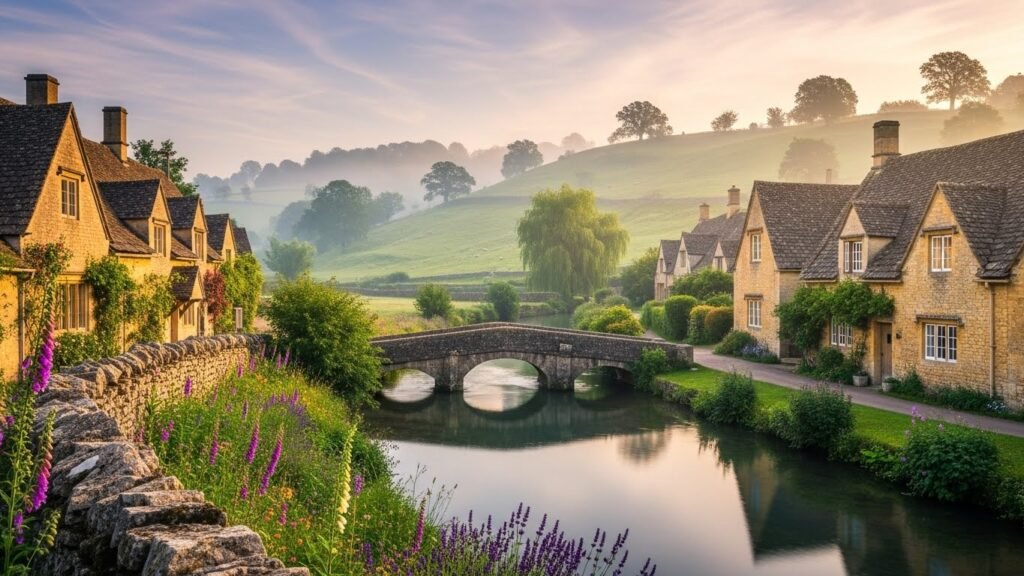
Are you looking for the most amazing road trip in England? Then you need to check out the cotswold villages. This area is famous for its rolling hills and honey-colored stone houses. It feels like stepping into a movie set from the Middle Ages. People come from all over the world to see these picturesque streets. It is an Area of Outstanding Natural Beauty that stretches across several counties. You will find it in South West England, mostly in Gloucestershire and Oxfordshire. There is something truly special about the golden brick used in these rural towns. This guide will show you everything you need to see. Get ready for some serious travel photography in the English countryside. It is the perfect spot for a staycation or a bank holiday trip.
Introduction to the Cotswold Villages
The Cotswolds is a famous region in the UK known as an Area of Outstanding Natural Beauty, stretching across counties like Gloucestershire and Oxfordshire. This heart of England is celebrated for its rolling hills, hidden valleys, and peaceful river paths that make visitors feel as if time has stopped. The landscape is defined by its iconic honey-colored limestone, which was taken from local quarries centuries ago to build every cottage, church, and bridge. This unique golden stone gives the entire area a warm, cozy glow and a historic look that is protected from modern development.
The area’s rich history is deeply tied to the medieval wool trade, which brought great wealth to the region through high-quality sheep farming. This prosperity funded the grand “wool churches” and elegant manor houses that still stand today, with many villages originally serving as busy centers for weaving and spinning. Whether you are exploring the tranquil waterways of the Windrush and Coln rivers or hiking across the vast green ridges, the scenery offers a perfect mix of nature and heritage. It remains a diverse destination where you can enjoy both the quiet of the countryside and the charm of historic village life.
Castle Combe: The Quintessential English Village
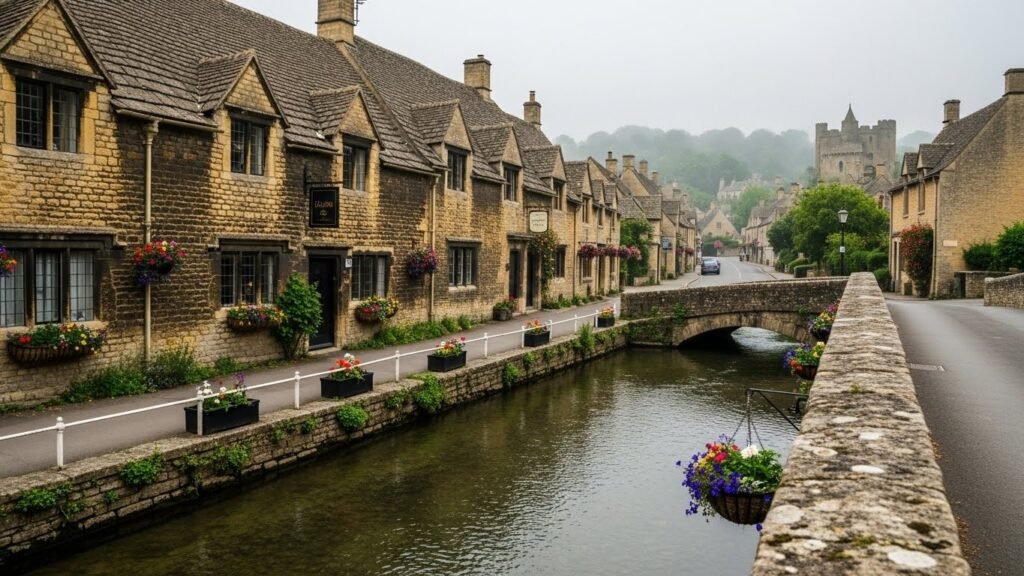
Castle Combe is often called the prettiest village in all of England. It is located in the southern part of the region in Wiltshire. The village has a very old and quiet feel to it. There are no new houses here since the 1600s. This makes it a perfect example of historic architecture. You can see how people lived hundreds of years ago. The village is small, so you can walk through it in a short time. It is a must-see stop on any cotswold villages itinerary.
The Beauty of the Main Street
The main street in Castle Combe is famous for its visual appeal. It starts at the top of a hill and rolls down to a bridge. You will see the 14th-century Market Cross in the middle of the village. This was where people used to trade goods in the old days. The houses along the street have beautiful thatched roofs and stone walls. Every garden is full of flowers in the summer. It feels very peaceful because there are no streetlights or TV dishes. This keeps the village looking exactly like it did in the past.
Iconic Photographic Spots
The bridge over the River Bybrook is the best place for a photo. If you stand on the bridge and look back, you get the classic view. You will see the row of cottages reflecting in the water. This is one of the most Instagrammable spots in the UK. Because it is so popular, it gets very crowded during the day. It is a smart idea to arrive by 7:00 AM to get the best shots. Early morning light makes the honey-colored stone look amazing. You can enjoy the empty streets before the tour buses show up.
History and Pop Culture
Castle Combe has a deep history as a weaving town. In the Middle Ages, it was a busy hub for making cloth. You can still see the weavers’ cottages along the river. These days, it is more famous as a filming location for Hollywood. Many big movies have been shot on these picturesque streets. You might recognize it from the movie Stardust or War Horse. Even the old Dr. Dolittle movie used this village as a set. It is a favorite spot for directors who want an authentic English look.
Key Landmarks and Amenities
- The Manor House is a luxury hotel with stunning gardens and a golf course.
- Castle Combe Circuit is a nearby track for fans of motor racing and fast cars.
- The White Hart is a traditional pub where you can get a good meal and a drink.
- The Castle Inn offers a cozy place to stay right in the heart of the village.
- St. Andrew’s Church houses a faceless clock that is one of the oldest in the country.
Bibury: A National Treasure
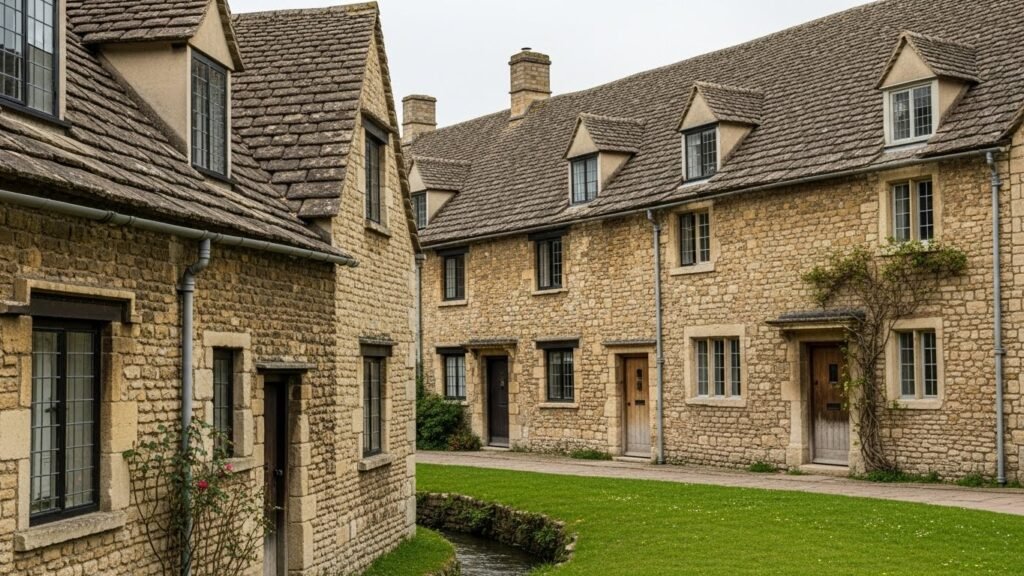
Bibury is a tiny village that packs a huge punch. It sits right on the River Coln in Gloucestershire. Many people consider it a national treasure because it is so beautiful. It is very popular with tourists who want to see the “real” England. The village is split into two parts by the river. It is a quiet place that feels very rural and charming. You should definitely include it when exploring cotswold villages.
Arlington Row
Arlington Row is probably the most famous street in the whole region. It is a row of 17th-century weavers’ cottages made of stone. They were originally built as a monastic wool store in the 1300s. Later, they were turned into homes for people who made cloth. The National Trust now looks after these iconic buildings. You might have seen them on the inside cover of the British passport. This row also appeared in the fantasy film Stardust. It is a perfect example of ancient architecture that still stands today.
Natural and Wildlife Highlights
The River Coln is a highlight of the village because it is so clear. You can often see fish swimming in the water as you walk along the bank. Next to the river is Rack Isle, which is a protected water meadow. This area provides a great habitat for water voles and rare plants. It is called Rack Isle because wool was once hung there on racks to dry. You can also visit the Bibury Trout Farm nearby. It is one of the oldest working trout farms in Britain. It is a fun place to learn about local nature and history.
Architectural Landmarks
- The Swan Hotel is a famous landmark with a beautiful ivy-covered facade.
- St. Mary’s Church is a Saxon church with some parts dating back over a thousand years.
- The Court is a grand house that shows the wealth of the old wool merchants.
- The Bridge offers a great view of the river and the ducks that live there.
Bourton-on-the-Water: The Venice of the Cotswolds
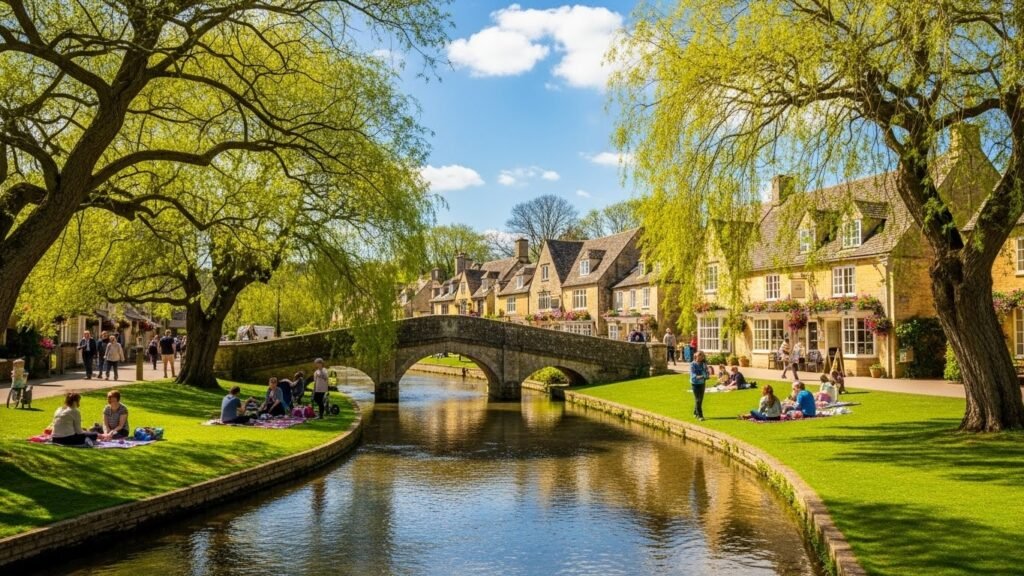
Bourton-on-the-Water is a very unique town in the region. It is often called the Venice of the Cotswolds. This is because the River Windrush runs right through the center. It is a very busy place with lots of things to do for families. The town has a very lively and friendly vibe. It is a great spot to stop for lunch or a full day of fun. You will find plenty of shops and cafes to explore.
The River Windrush and Its Bridges
The river is the main attraction because it is very shallow and clear. There are five low stone bridges that cross the water. These bridges were built between 1654 and 1911. During the summer, people love to sit on the green riverbanks. Some people even paddle in the water to cool off. The combination of the stone bridges and the water is very pretty. It creates a relaxing atmosphere even when the town is crowded. It is a great place for a picnic with the family.
Family-Friendly Attractions
There are many fun things to do in this town. The Model Village is a precise 1/9th scale replica of Bourton-on-the-Water. It is very cool because it even includes a model of the model village! You can also visit the Cotswold Motoring Museum. This is the home of the famous TV car named Brum. If you like animals, Birdland Park and Gardens is a must-visit. They have exotic birds, penguins, and even some dinosaur statues. There is also a fun maze called the Dragonfly Maze that kids love.
Shopping and Dining
- The High Street is full of independent tea rooms and ice cream parlors.
- The Cotswold Perfumery creates unique scents right in the heart of the town.
- Traditional Bakeries sell local treats like scones and clotted cream.
- Craft Shops offer handmade goods that make perfect souvenirs.
The Slaughters: Lower and Upper Slaughter
The names of these two villages might sound scary, but they are not. They are actually some of the most peaceful spots in the area. They are located very close to each other along the River Eye. You can easily walk between them on a pretty countryside path. These villages have stayed very unspoiled over the years. They are perfect for anyone who wants to escape the busy tourist sites.
Etymology and History
The name “Slaughter” does not come from anything violent. It comes from the Old English word “slohtre,” which means a muddy place. Today, the villages are very clean and tidy, not muddy at all. Upper Slaughter is special because it is a “Doubly Thankful” village. This means all the men who went to fight in both World Wars came home safely. There are very few villages in England that have this honor. It adds a sense of peace and gratitude to the local history.
Lower Slaughter: The Old Mill
Lower Slaughter is famous for its Old Mill, which sits at the end of the village. The mill was used for grinding flour for hundreds of years. Today, it is a museum, a gift shop, and an organic ice cream parlor. You can see the large water wheel still turning in the river. The walk along the River Eye is very relaxing and picturesque. You will see stone cottages with tiny bridges over the stream. It is a very quiet and tranquil place to spend an afternoon.
Upper Slaughter: Peace and Seclusion
Upper Slaughter is even quieter than its neighbor. There are no shops or cafes here to attract big crowds. This keeps the village feeling very secluded and private. You can visit the historic church and see the grand manor house. The architecture is very consistent with the honey-colored stone. It is a great place to see how a small rural community looks today. If you want a break from the noise, this is the spot for you.
Broadway: The Jewel of the Cotswolds
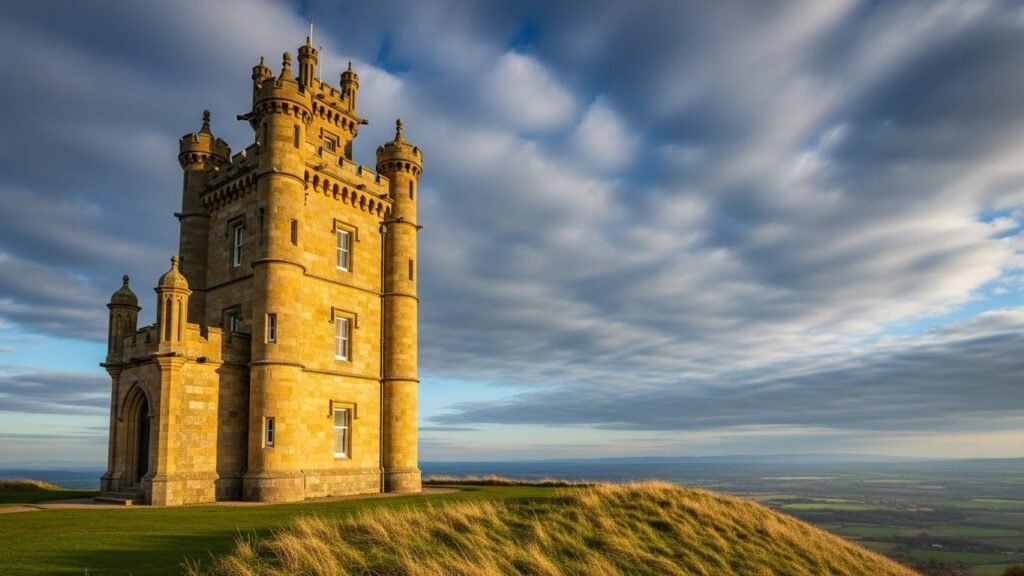
Broadway is a large and beautiful village in Worcestershire. It is often called the Jewel of the Cotswolds because it is so grand. The village has a very rich and elegant feel to it. It has been a popular place for artists and writers for a long time. The streets are wider than in most other cotswold villages. This gives the town its name and a very open atmosphere. It is a great place for shopping and exploring local history.
The High Street
The High Street in Broadway is very impressive and long. It is lined with red chestnut trees and beautiful stone buildings. You will find many fine art galleries and expensive antique shops here. The Broadway Deli is a famous spot to pick up some tasty local food. Another historic landmark is The Lygon Arms inn. This hotel is very old and has hosted famous people like Charles I. It is a great street to just walk up and down while enjoying the view.
Broadway Tower
Broadway Tower is a famous folly tower sitting high on a hill. It was built in the 18th century for Lady Coventry. From the top of the tower, you can see for miles in every direction. On a clear day, you can see up to 13 different counties! You can hike up to the tower from the village center using the Cotswold Way. It is a steep walk but the views are totally worth it. The tower also has a nice cafe and a shop at the bottom.
The Nuclear Bunker
- The Cold War History is hidden right beneath the tower grounds.
- Guided Tours take you inside a former Royal Observer Corps bunker.
- The Plotting Room shows how people would have tracked nuclear strikes.
- Restored Equipment gives you a real feel for life during the Cold War.
Chipping Campden: The Historic Wool Town
Chipping Campden is one of the best-preserved towns in the region. It was a major center for the wool trade in the Middle Ages. The word “Chipping” means market, so this was a busy trading spot. The town has a very grand and wealthy look to it. You can see this in the large houses and the impressive church. It is a very historic place that feels like a living museum. It is a great town to explore on foot.
Architectural Preservation
The town has done a great job of keeping its historic look. The High Street is a continuous terrace of golden stone buildings. One of the most iconic structures is the Market Hall, built in 1627. It has a beautiful stone roof and open sides. This was used by farmers to sell cheese, butter, and poultry. You can also see the Grevel House, which is the oldest house in the town. Every building tells a story of the town’s rich past.
The Start of the Journey
Chipping Campden is the official starting point of the Cotswold Way. This is a 100-mile long-distance footpath that goes all the way to Bath. Many hikers start their journey right here in the town center. There is a stone marker that shows the start of the trail. Even if you don’t walk the whole way, you can try a short section. The trail offers some amazing views of the surrounding countryside. It is a popular spot for people who love the outdoors.
Notable Sites
- St. James’ Church is known as a “Wool Church” because it was built with wool money.
- The Alms Houses were built centuries ago to help the poor people of the town.
- The Silk Mill shows the history of local industry after the wool trade slowed down.
- The Cotswold Olimpick Games are held nearby and feature weird sports like shin-kicking.
Stow-on-the-Wold: The High Point
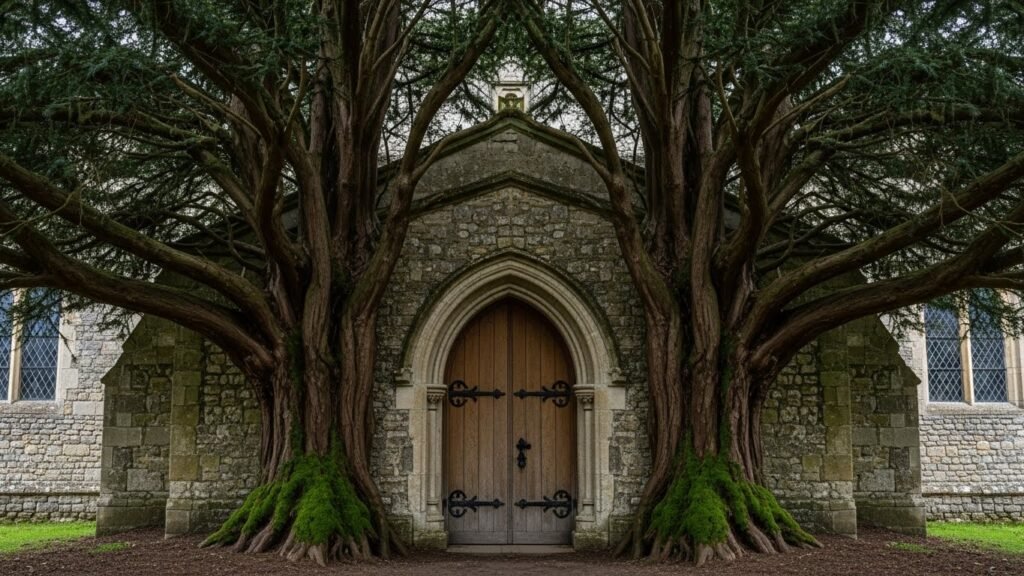
Stow-on-the-Wold is the highest town in the Cotswolds. It sits about 800 feet above sea level on a hill. Because of its location, seven different roads meet here. This made it a very important market town for many years. It has a large and busy market square in the center. The town has a very strong and sturdy feeling to it. It is a popular hub for tourists and locals alike.
Market Square History
The Market Square is the heart of the town and has a long history. In the old days, huge sheep fairs were held here. It is said that 20,000 sheep were once sold in a single day! You can still see the narrow alleys, called “tures,” leading into the square. These were used to herd the sheep into the market. Today, the square is surrounded by cozy cafes and nice shops. It is a great place to sit and watch the world go by.
The Fairytale Door
One of the most famous spots in town is at St. Edward’s Church. The north door of the church is framed by two ancient yew trees. It looks like something straight out of a fairytale book. Many people believe this door inspired J.R.R. Tolkien when he wrote about Middle-earth. It is a very popular spot for photography because it looks so magical. The church itself is also very beautiful and worth a visit. You should definitely stop by if you are in town.
Antiques and Art
- The Antique Dealers in Stow are some of the best in the country.
- Art Boutiques showcase work from local painters and sculptors.
- Vintage Shops offer a chance to find unique treasures from the past.
- The Chocolate Shop is a great place to get a sweet treat after shopping.
Cirencester: The Roman Capital
Cirencester is often called the Capital of the Cotswolds. It is the largest town in the region and has a very long history. Back in Roman times, it was called Corinium. It was the second-largest city in Britain after London. Today, it is a bustling market town with a mix of old and new. It is a great place to stay if you want to explore the whole region. There are many interesting things to see and do here.
Roman Heritage and the Corinium Museum
You can learn all about the town’s Roman past at the Corinium Museum. They have an amazing collection of mosaics and artifacts found nearby. It is a great place for kids to learn about history in a fun way. You can also see the remains of a Roman amphitheater on the edge of town. It shows just how important this place was thousands of years ago. The town is very proud of its ancient roots. It adds a unique layer to the local culture.
The Cathedral of the Cotswolds
The Church of St. John the Baptist is a massive building in the town center. It is so big that people call it the Cathedral of the Cotswolds. It has a unique three-story porch that looks very grand. The church was built with money from the wool trade in the 12th century. Inside, you can see beautiful stained glass and old monuments. It is one of the most impressive churches in the whole country. It dominates the skyline of the town.
Modern Town Life
- Cirencester Park is a huge green space that is part of the Bathurst Estate.
- Cecily Hill is a street with beautiful colorful houses leading to the park.
- The Market Place hosts regular markets selling local crafts and food.
- The Brewery Arts Centre is a great spot to see local artists at work.
Painswick: The Queen of the Cotswolds
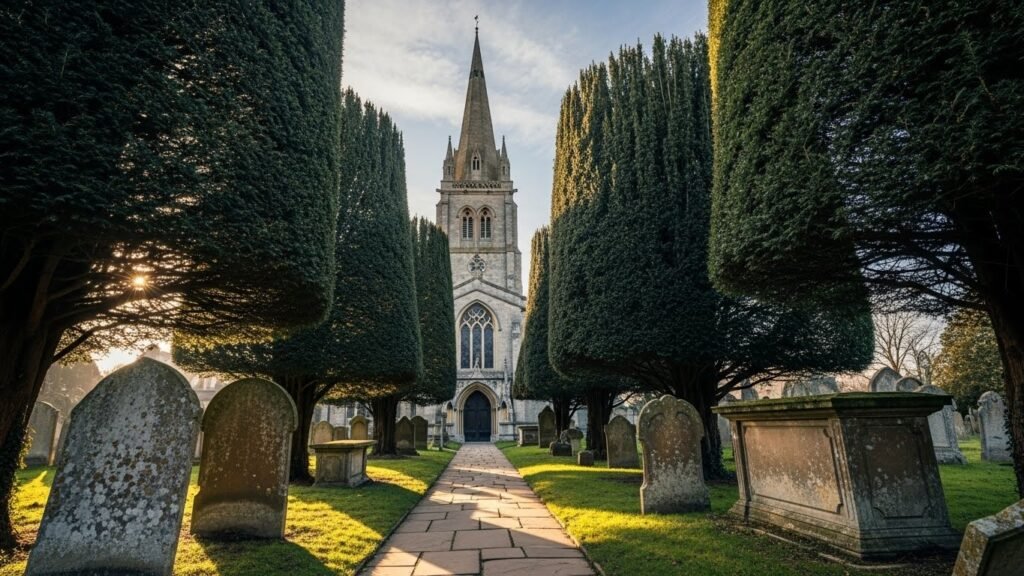
Painswick is a very elegant village located on a hill. It is known as the Queen of the Cotswolds because it is so pretty. The buildings here are made of a pale grey stone rather than the usual yellow. This gives the village a very clean and sophisticated look. It has narrow streets and beautiful views of the valleys below. It is a very peaceful place that feels a bit more exclusive. You will love exploring its hidden corners.
The Legend of the 99 Yew Trees
The churchyard of St. Mary’s is famous for its 99 yew trees. These trees are all clipped into neat shapes and look very cool. There is a local legend that a 100th tree will never grow. People say that if you plant a 100th tree, it will always die. This story has been around for a long time and adds to the village’s charm. The churchyard is a very peaceful spot for a walk. It is one of the most photographed churchyards in the UK.
Unique Architecture
Painswick stone is famous for its high quality and light color. Many grand houses in the village were built by rich wool merchants. You can see this wealth in the detailed carvings on the buildings. The village also has many narrow “donkey paths” between the houses. These were used in the past to transport wool and goods. The whole village feels very consistent and well-kept. It is a great example of refined English architecture.
The Painswick Rococo Garden
- The Garden Design dates back to the 1740s and is very unique.
- The Snowdrop Walk is a popular event in early spring when the flowers bloom.
- The Follies are decorative buildings hidden throughout the garden.
- The Maze is a fun challenge for visitors of all ages.
Winchcombe: The Hidden Gem
Winchcombe is a charming town that often gets overlooked by tourists. It has a very authentic and local feel to it. It is located in a valley between Broadway and Cheltenham. The town has a mix of stone cottages and black-and-white timbered houses. It is a great base for people who love walking in the countryside. There is a lot of history to discover here, including a royal castle. It is a true hidden gem in the region.
Sudeley Castle
Sudeley Castle is the main attraction near the town. It is a beautiful castle with over 1,000 years of history. It is the only private castle in England to have a Queen buried in its grounds. Queen Katherine Parr, the last wife of Henry VIII, is buried in the chapel here. The castle has amazing gardens that have won many awards. You can explore the royal rooms and see ancient artifacts. It is a wonderful place for a day trip.
Town Character
The town itself has a very friendly and welcoming atmosphere. You can see many “grotesques” or stone carvings on St. Peter’s Church. These are funny and scary faces that were meant to ward off evil. Winchcombe is also a “walkers’ welcome” town. This means they are very happy to see hikers from the Cotswold Way. You will find many nice pubs and bakeries to refuel in. It feels like a place where people actually live and work.
Historic Sites Nearby
- Belas Knap is a Neolithic long barrow located on a hill above the town.
- Hailes Abbey is the ruins of a former Cistercian monastery nearby.
- The Winchcombe Museum tells the story of the town’s long history.
- The Steam Railway stops at a nearby station for a nostalgic trip.
Stanton and Snowshill: Off the Beaten Path
If you want to escape the crowds, you should visit Stanton and Snowshill. These two villages are tucked away in the hills and feel very secluded. They are some of the most unspoiled places in the whole region. You won’t find many shops or tourist signs here. They offer a real taste of quiet country life. They are perfect for a peaceful afternoon drive or walk.
Stanton: The Untouched Village
Stanton is often called the most authentic village in the Cotswolds. It has stayed almost exactly the same for hundreds of years. There are no commercial shops or modern buildings to spoil the view. The houses are made of a very rich, dark golden stone. You can visit The Mount Inn at the top of the village. It offers some of the best views across the Vale of Evesham. It is a very tranquil spot to enjoy a drink.
Snowshill: The Eccentric Village
Snowshill is a small village famous for Snowshill Manor, an eccentric estate now owned and managed by the National Trust. It was the home of an eccentric man named Charles Paget Wade. He spent his life collecting all sorts of strange and interesting objects. His motto was “Everything, Nothing, Something.” The village itself is very pretty and sits high on a hill. Because of its height, it often sees the first snow of the year.
Snowshill Highlights
- The Lavender Farm nearby is a sea of purple in the summer months.
- The Village Green is a classic English spot with a small church.
- The Model Boats in the manor garden are very detailed and fun to see.
- The Quiet Lanes around the village are perfect for a peaceful stroll.
Tetbury: The Royal Connection
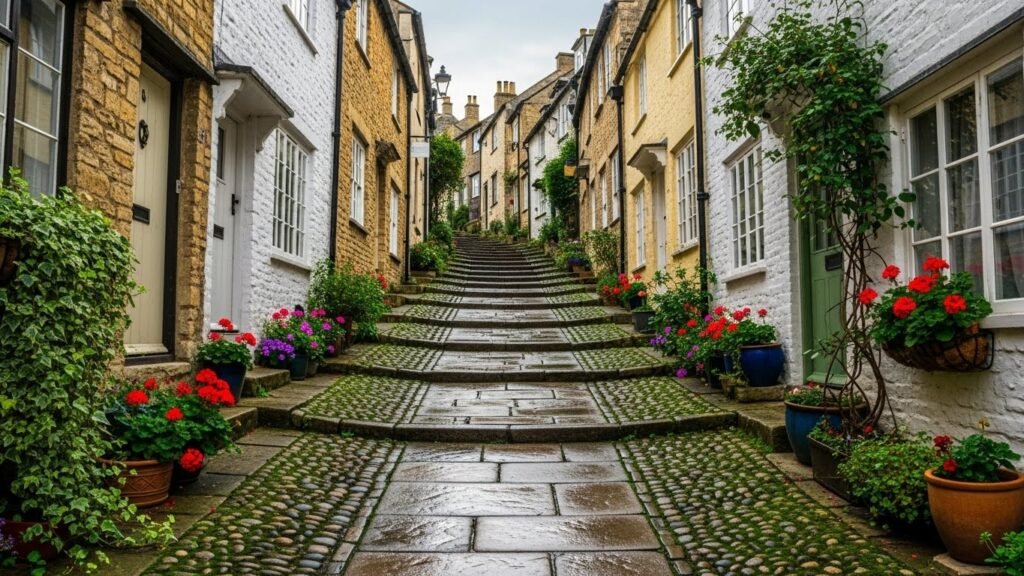
Tetbury is a historic market town with a royal touch. It is located near Highgrove House, the home of King Charles III. The town has a very sophisticated and wealthy vibe. It is famous for its many antique shops and boutique stores. You will see a lot of beautiful medieval architecture here. It is a great place for people who love shopping and history. The town is very proud of its royal neighbors.
Highgrove and Royalty
You can feel the royal influence all over Tetbury. There is a Highgrove Shop in the town center that sells local products. You can also book a tour of the Royal Gardens at Highgrove House. These gardens are very famous for their beauty and sustainable design. Many people visit the town just because of this royal connection. It adds a sense of prestige to the local area. The town is always very clean and well-presented.
The Chipping Steps
One of the most historic spots in town is the Chipping Steps. These are a set of stone steps lined with tiny cottages. In the past, this was where hiring fairs were held. People would come here to look for work on local farms. Today, it is a very picturesque spot for a walk. The cottages look like they are tumbling down the hill. It is a great place to see the town’s medieval layout.
Antique Hunting
- The Antique Shops in Tetbury are famous all over the world.
- The Market House is a grand building in the center where markets still happen.
- St. Mary the Virgin Church has one of the tallest and most elegant spires.
- Boutique Fashion Stores offer high-end clothes and accessories.
Blockley and Minchinhampton: Industry and Commons
These two spots show a different side of the cotswold villages. They have their own unique stories of industry and nature. Blockley was once a busy hub for making silk. Minchinhampton is famous for its huge open common land. Both offer a less touristy experience of the region. They are great places to explore if you want something a bit different.
Blockley: The Silk Industry
Blockley is a very pretty village with a strong industrial past. After the wool trade declined, the village turned to making silk. At one time, there were six silk mills powered by the local brook. You can still see some of the old mill buildings today. The stone in Blockley is a very bright and cheerful golden color. It has a very cozy and friendly feel to it. It is a great place to see how history changes over time.
Minchinhampton: The Common
Minchinhampton is a town sitting right next to a huge open space called the Common. This land is owned by the National Trust and is free for everyone to use. One of the most famous things about it is the free-roaming cattle. You will often see cows and horses walking right across the roads! The common offers amazing views of the Stroud Valleys below. It is a popular spot for kite flying and walking. The town itself is also very charming with old stone houses.
Local Features
- The Old Market House in Minchinhampton still stands on stone pillars.
- The Golf Course on the common has cows as unusual hazards!
- The Golden Valley views are spectacular, especially at sunset.
- Traditional Cafes offer a great place to rest after a long walk.
Thematic Routes: Tailoring Your Trip
You can plan your trip to the cotswold villages based on what you love. There are many different themes you can follow. This helps you get the most out of your visit. Whether you like movies, food, or exercise, there is a route for you. It makes your itinerary feel more personal and fun. Here are some ideas to get you started.
The Film and TV Trail
Many of your favorite shows and movies were filmed here. You can visit Bampton, which was used as the village in Downton Abbey. Gloucester Cathedral’s cloisters were used as the hallways of Hogwarts in Harry Potter. The town of Lacock has appeared in many period films like Pride and Prejudice. You can even find spots from the Bridget Jones’s Diary movies. It is fun to stand in the same places as your favorite actors. It makes the history of the buildings feel more alive.
The Culinary Journey
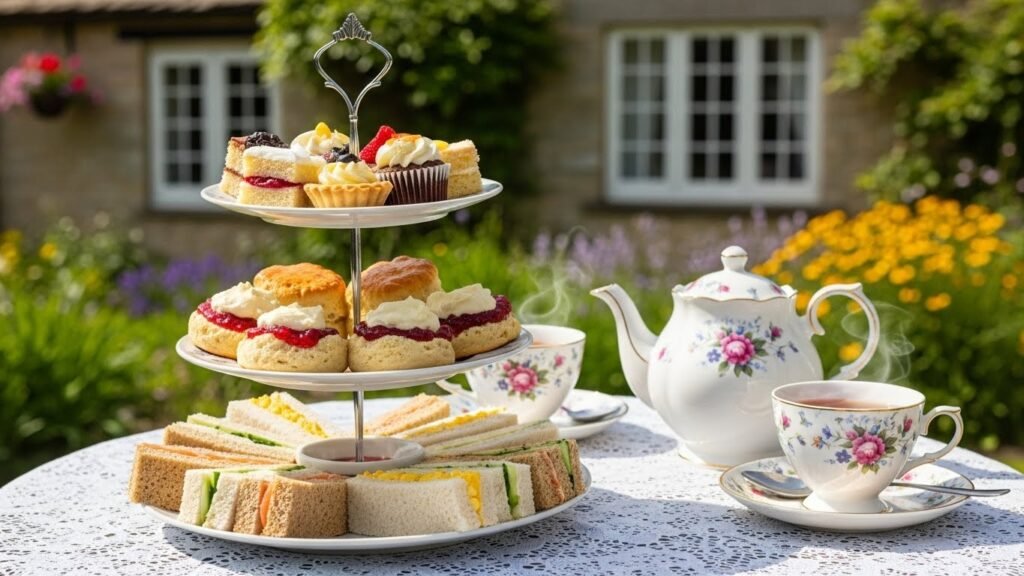
The Cotswolds is a great place for food lovers. You can try local cheeses like the famous Double Gloucester. Many towns have local gins and beers made right nearby. You should definitely stop for a traditional afternoon tea with scones and jam. There are many award-winning pubs that serve high-quality local meat and veggies. Visiting a local bakery for a fresh treat is a must. The food here is fresh, local, and very tasty.
The Active Explorer
- The Cotswold Way offers miles of paths for serious hikers.
- Circular Walks are great for casual strollers who want a shorter trip.
- Cycling Trails take you through the quietest country lanes and valleys.
- Horse Riding is a popular way to see the rolling hills from a new view.
Practical Planning and Logistics
Planning a trip to the cotswold villages takes a little bit of work. It is a large area, so you need to decide where to go. You should think about how you will get around and where you will stay. This helps make your trip smooth and stress-free. There is no wrong time to visit, but each season is different. Here is some practical advice for your journey.
Best Time to Visit
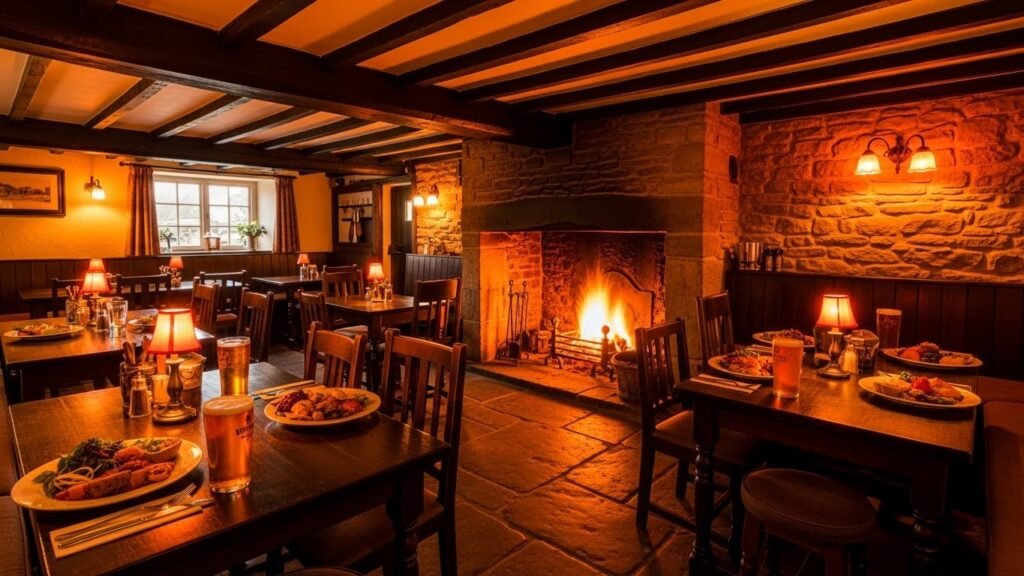
Spring is a wonderful time to see the blossoms and newborn lambs. The gardens are starting to wake up and everything looks very green. Summer is the most popular time, but it can be very crowded. If you visit in autumn, you will see the golden leaves on the trees. This looks amazing against the honey-colored stone houses. Winter is quiet and cozy, with festive markets and roaring fires in the pubs. Each season offers a unique vibe for your staycation.
Getting Around
The best way to see the region is by car. This lets you explore the tiny villages and narrow country lanes at your own pace. If you don’t want to drive, you can use public transport. There are trains from London to towns like Moreton-in-Marsh. You can then use local buses, like the Pulhams Coaches, to get around. Just remember that buses don’t run very often in the rural areas. Walking and cycling are also great ways to see the smaller details.
Where to Stay
- Boutique Hotels offer a luxury experience in historic buildings.
- Historic Inns give you a cozy room above a traditional pub.
- Self-Catering Cottages are perfect for families who want more space.
- Glamping Sites allow you to sleep close to nature in a fancy tent.
Preserving the Cotswolds
It is important to remember that these villages are real homes for people. We need to visit them in a way that is respectful and kind. This helps keep the area beautiful for everyone in the future. There are many organizations that work hard to protect the land and buildings. As a visitor, you can play a part in this too. It is all about being a responsible traveler.
You can help by supporting local independent businesses. Buy your food from the local bakery or deli instead of a big chain. Respect the “living” nature of the villages by not being too loud. Be careful where you park your car, especially in the tiny lanes. Follow the rules when walking on public footpaths through farm fields. This helps the farmers keep their animals safe. Your visit can have a positive impact on the local community.
The National Trust and English Heritage look after many of the best sites. They work to keep the historic architecture in good shape. You can also enjoy local festivals that celebrate the area’s culture. The Cotswold Olimpick Games and the Cooper’s Hill Cheese-Rolling are very famous. These events show the fun and quirky side of local life. By learning about the history and culture, you help keep it alive. The cotswold villages are a treasure that we should all help to protect.
Summary of Cotswold Villages and Towns
| Village / Town | Top Attractions & Places to Visit | Popular Activities |
| Castle Combe | Market Cross, St. Andrew’s Church, Bybrook Bridge, The Manor House | Photography, luxury dining, visiting the nearby racing circuit |
| Bibury | Arlington Row, Rack Isle, River Coln, Bibury Trout Farm | Scenic walks, trout fishing, wildlife spotting |
| Bourton-on-the-Water | The Model Village, Cotswold Motoring Museum, Birdland, River Windrush | Paddling in the river, family sightseeing, visiting tea rooms |
| Lower Slaughter | The Old Mill (Museum & Shop), River Eye, historic cottages | Eating organic ice cream, peaceful riverside walking |
| Upper Slaughter | St. Peter’s Church, the Manor House, “Doubly Thankful” memorial | Secluded walking, exploring war history, quiet contemplation |
| Broadway | Broadway Tower, The Lygon Arms, High Street galleries | Hiking the Cotswold Way, antique shopping, fine dining |
| Chipping Campden | 17th-century Market Hall, Grevel House, St. James’ Church | Starting the Cotswold Way trek, watching the Olimpick Games |
| Stow-on-the-Wold | St. Edward’s Fairytale Door, Market Square, historic Alleys | Antique hunting, drinking coffee in the square, book shopping |
| Cirencester | Corinium Museum, St. John the Baptist Church, Cirencester Park | Exploring Roman history, local market shopping, park walks |
| Painswick | St. Mary’s Church (99 Yew Trees), Rococo Garden, donkey paths | Garden touring, scenic photography, valley hiking |
| Winchcombe | Sudeley Castle, Belas Knap Long Barrow, St. Peter’s Church | Royal history tours, Neolithic exploring, steam train rides |
| Stanton | The Mount Inn, high-street stone cottages | Country pub lunching, enjoying panoramic valley views |
| Snowshill | Snowshill Manor (National Trust), Snowshill Lavender Fields | Exploring eccentric collections, walking through lavender |
| Tetbury | Highgrove Shop, The Chipping Steps, Market House | Royal-themed shopping, antique browsing, architectural walks |
| Blockley | Historic Silk Mills, Blockley Brook, golden stone streets | Industrial history walks, enjoying village cafe culture |
| Minchinhampton | Minchinhampton Common, The Old Market House | Kite flying, walking among free-roaming cattle, golfing |
Frequently Asked Questions
What is the best way to travel between villages without a car?
The most reliable method is using local bus services like Pulhams or Stagecoach, or hiring a local taxi. Some villages are also connected by well-marked walking trails like the Cotswold Way, allowing for travel on foot between neighboring spots like the Slaughters.
Are there any “haunted” locations in the Cotswolds?
Several historic sites claim paranormal activity, most notably the Ancient Ram Inn in Wotton-under-Edge and Sudeley Castle, which is said to be haunted by the “Tall Lady” (Queen Katherine Parr).
Where can I find the famous Cotswold lavender fields?
The most famous fields are located at Snowshill Lavender near Broadway. They typically bloom from mid-June to early August, with the peak usually occurring in July.
Are the Cotswolds dog-friendly?
Yes, the region is exceptionally dog-friendly. Most walking trails, parks, and a large majority of traditional pubs and cafes welcome dogs, and many local hotels offer specific pet-friendly rooms.
Can I visit a working wool mill today?
While most historic mills are now museums or residences, Cotswold Woollen Weavers in Filkins offers a look at traditional machinery and continues to produce woollen cloth using heritage methods.
What are the “wool churches” exactly?
These are grand, oversized parish churches built during the 15th and 16th centuries. They were funded by wealthy wool merchants who wanted to showcase their prosperity and secure their spiritual legacy.
Is drone photography allowed in the villages?
Generally, no. Most iconic spots like Arlington Row are owned by the National Trust, which prohibits drone flight without specific permits. Many villages also have local restrictions to protect the privacy of residents.
What is “Cotswold Stone” geologically?
It is a yellow oolitic Jurassic limestone. It is rich in fossils and was formed roughly 180 million years ago when the area was covered by a warm, shallow sea.
Are there any major music or arts festivals in the region?
Yes, the Cheltenham Festivals (Literature, Jazz, Science, and Music) are world-renowned. Additionally, The Big Feastival held at Alex James’ farm in Kingham combines food and music.
Where is the best place to see the bluebells?
Foxholes Nature Reserve near Burford and Kiftsgate Court Gardens are famous for their spectacular bluebell carpets during late April and early May.
What are the local food specialties I should try?
- Single Gloucester Cheese which is only made on local farms.
- Tewkesbury Mustard known for its pungent kick.
- Cotswold Lamb which has been a regional staple for centuries.
How do I find the hidden “secret” villages?
Look for villages like Miserden, Naunton, or Duntisbourne Abbots. These are often located away from the main “A” roads and lack large tourist car parks, keeping them quiet.
Is it expensive to visit the Cotswolds?
While luxury hotels and fine dining can be pricey, the region offers many budget options. Walking the trails, visiting churches, and exploring village centers is free, and there are many affordable B&Bs and campsites.
Can I visit the Cotswolds by train from London?
Yes. Direct trains run from London Paddington to Moreton-in-Marsh, Kemble (for Cirencester), and Cheltenham Spa. The journey typically takes between 90 minutes and 2 hours.
What are the “Double Thankful” villages?
These are villages where all the members of the armed forces who left to fight in both World War I and World War II returned home safely. Upper Slaughter is the most famous example.
Where can I see traditional thatched cottages?
While many villages have a few, Chipping Campden and the village of Stanton have some of the most beautifully maintained examples of traditional Cotswold thatch.
What is the Cotswold Olimpick Games?
Held annually at Dover’s Hill near Chipping Campden, this historic event dates back to 1612. It features unique “sports” like shin-kicking and tug-of-war.
Are there Roman ruins other than those in Cirencester?
Yes, the North Leigh Roman Villa and the Chedworth Roman Villa are two of the largest and most impressive remains in Britain, featuring well-preserved mosaics and hypocaust systems.
Can I swim in the rivers?
Wild swimming is popular in certain spots, such as the River Thames at Lechlade. However, the smaller village rivers like the Windrush are usually too shallow for swimming and are better suited for paddling.
What is the “Cotswold Lion”?
This is not a predator, but a breed of sheep. Known for their long, shaggy fleece, they were the foundation of the region’s medieval wealth and can still be seen at the Cotswold Farm Park.