 Skip to content
Planning Your Western USA Journey: Logistics and Preparation
The dream of a road trip through the Western USA often begins with Yellowstone and Grand Teton National Park. This epic adventure is the gold standard for national parks travel. You need a solid itinerary to tackle this massive loop. Proper planning is key to enjoying the scenery and avoiding major travel headaches.
Road Trip Blueprint and Duration
We designed this as a comprehensive, multi-state travel guide. The core experience focuses on the parks themselves. You can complete the main Yellowstone and Grand Teton National Park portion in about seven days.
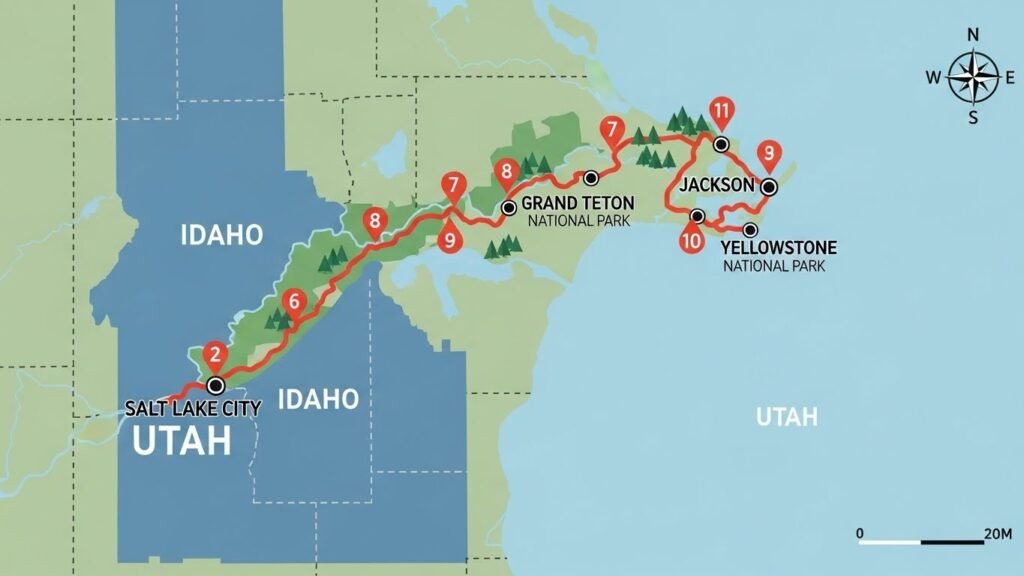
Our full itinerary features eleven major stops. This grand loop includes Utah, Idaho, Montana, and Wyoming. We recommend moving north from Salt Lake City (SLC) toward Jackson. This flow optimizes your time and keeps the driving straightforward.
Best Time to Visit and Seasonal Considerations
Timing is everything for your adventure. The best time to visit is from early summer through mid-fall. These months offer the most reliable weather.
Shoulder Seasons Offer Big Perks
Consider traveling during the shoulder seasons—May or September. You will see fewer crowds and enjoy better prices. Campsite reservations are also easier to secure in September.
- Peak Season (July/August): Expect maximum crowds and high temperatures. Parking will be challenging at all major destinations.
- Winter Travel: Most park roads are closed during winter. The crucial road connecting Grand Teton National Park and Yellowstone usually does not open until mid-May.
- Fall (October): The foliage is beautiful, but be ready for cold lows. The Jenny Lake boat shuttle often stops running. This adds four miles to the popular Cascade Canyon hike.
Pre-Trip Essentials: Passes, Permits, and Safety
You must organize several things before hitting the road. This groundwork ensures a smooth trip.
Passes and Reservations
Save money with an annual pass. Purchase the America the Beautiful Pass for $80. This pass covers the entrance fee for both national parks. All campsite reservations must be booked months ahead during summer.
- Download Navigation: Get the Shaka Guide Audio Tour. This provides turn-by-turn directions synced via GPS.
- Check Conditions: Always check Road Closures via the National Park Service website.
- Packing: A well-prepared Road Trip Packing List is essential. Do not forget a first aid kit and snacks.
Pets and Park Rules
Yellowstone and Grand Teton National Park are not pet-friendly. Dogs are banned from all trails and geysers boardwalks. If you bring a pet, you will miss most of the hiking. This is important to remember.
Gateways: History and The Drive North
We start the loop in Salt Lake City, Utah (SLC). This is a common starting point for a Western USA tour.
Salt Lake City, Utah (SLC) (Stop 1)
SLC is the most convenient major airport to begin your drive. It is located about five hours from Jackson.
Spiritual Heart and Architecture
The city’s spiritual heart is Temple Square. It is located right downtown. You can view the famous Salt Lake Temple and the historic Salt Lake Tabernacle. The City Creek Center is nearby for shopping.
- Travel Tip: SLC is a great place to pick up your rental car cheaply.
- Route Start: From SLC, you will take Interstate Highway 15 (I-15) north briefly. Then you connect to I-80 East.
The Drive to Wyoming
The route continues on I-80 East toward Evanston, WY. From Evanston, you take US-89 north. This is the main road that guides you up through Alpine and the Snake River valley toward Jackson.
Ogden, Utah (Stop 2)
Ogden is a quick detour or early stop north of SLC. It was a major transportation hub during the pioneering days.
Crossroads of the West
Ogden was known historically as the Crossroads of the West. This was due to the transcontinental railroad.
- Historic 25th Street: Walk along this famous street. It is full of galleries and restaurants. This area has an Old West feel.
- Union Station: Visit this historic building. It houses the Utah State Railroad Museum. It offers a look at the region’s past.
Grand Teton and Jackson Hole
You will eventually cross the Teton Pass or drive the valley road to reach Jackson. This marks the true start of the national parks segment.
Jackson Hole: The Southern Gateway (Stop 3 / Day 1)
Jackson is the vibrant town south of Grand Teton National Park. It sits in the valley known as Jackson Hole. It is famous as a major ski area in the winter.
Town Square and Western Cuisine

Your arrival here is the end of the long drive. Jackson’s iconic Town Square welcomes you. It is famous for its four arches made of elk antlers.
- Must-Try Dining: You can find excellent Western cuisine here. Try Figs for amazing Lebanese food. Persephone Bakery is perfect for breakfast. Hand-Fired Pizza and Healthy Being Cafe and Juicery offer other great options.
- Setting Up: Find your lodging or set up camp immediately.
Lodging and Camping in the Teton Area
Accommodation near Grand Teton National Park is expensive. A basic 3-star hotel can cost well over $200 per night. Camping is the best value.
Car Camping 101 Guide
Many people choose car camping here. The area is known for its vast public land and BLM sites. However, the most convenient sites are inside the National Park Service boundary.
Grand Teton Campground Options (Reservations Essential)
All park lodges and sites book up fast. Securing a spot is crucial.
Colter Bay offers the most amenities. It has a grocery store and showers. Signal Mountain provides gorgeous views of Jackson Lake. This sets you up perfectly for the next few days. Thus, your itinerary moves smoothly into exploring the mountains.
Grand Teton National Park: Scenic Drives and Core Hikes

Grand Teton National Park: Scenic Drives and Core Hikes (Day 2 & 3)
You are now in the heart of the high country. Grand Teton National Park offers spectacular mountain views. It is a land of rugged peaks and pristine lakes. It is one of the most scenic national parks in the world.
Iconic Viewpoints and Scenic Routes
The main attraction is the Teton Range itself. These mountains jut straight up from the valley floor. Drive the Teton Park Road for the best experience. It offers optimal viewing and access points.
- Snake River Overlook: This is where Ansel Adams took his famous photograph. The Snake River winds dramatically below the peaks. It is a must-see spot.
- Oxbow Bend: This still section of the river is perfect for photography. You can often spot moose and other wildlife here.
Must-Do Day Hikes
The park has dozens of trails. We focus on two essential hikes. They capture the best of the Teton landscape. Remember to carry bear spray and make noise while hiking.
Day 2 Hike: Death Canyon
This is a strenuous but rewarding hike. You ascend into a dramatic canyon. The canyon is sandwiched between Prospectors Mountain and Albright Peak. It offers incredible views of Phelps Lake Overlook.
- Trail Highlights: You hike through beautiful wildflower meadows. You reach the historic Patrol Cabin.
- Difficulty: The ascent is challenging. However, the scenery makes it worth the effort.
Day 3 Hike: Cascade Canyon
This is one of the most popular trails. You often start by taking the Jenny Lake boat shuttle. This saves about four miles of hiking around the lake. The boat ride offers beautiful views.
- Beginning the Hike: You first reach the powerful Hidden Falls. Then you climb up to Inspiration Point for an expansive view of Jenny Lake.
- Into the Canyon: The trail continues deeper into Cascade Canyon. It is common to spot elk and moose in this area. It is truly an epic experience.
Relaxation Stop
After two days of solid hiking, you deserve a break. Drive up the Signal Mountain Road. It offers a stunning, panoramic aerial view of the entire valley. Visit the Signal Mountain Lodge. Try a treat like their famous huckleberry margarita. The Lodge is right on Jackson Lake.
Transitioning to Yellowstone National Park
Yellowstone’s Geothermal and Wildlife Logistics (Stop 5)
Leaving the Tetons, you head north. The road links you directly to Yellowstone. This is the world’s first and most famous National Park. It is a place of amazing geological wonders.
Driving Strategy and Rules
The main road in Yellowstone is the Yellowstone Loop Road. It connects all the major sights. We recommend traveling in a counter-clockwise direction. This simplifies parking at popular spots.
- Speed Limits: Obey all posted speed limits. This protects wildlife and prevents accidents.
- Wildlife Jams: Be patient with “bison jams.” Never approach wildlife.
Visitor Centers and History
Stop at the Grant Village Visitors Center. It is located near Yellowstone Lake. You can learn about the massive 1988 Yellowstone Fire. This historic fire shaped much of the modern landscape.
The Southern Geothermal Loop: Geysers and Hot Springs (Day 6 Focus)
This area contains the highest concentration of geothermal features. It is a place of smoke, steam, and incredible colors.
Upper and Midway Geyser Basins
This is the main event for many visitors. The basins are home to half of the world’s geysers.
- Old Faithful: The world-famous geyser is always a reliable performer. Check the posted eruption times immediately upon arrival. Plan your visit around the eruption.
- Grand Prismatic Spring: This is the largest hot spring in the USA. It is known for its vivid, colorful bands. The colors are created by microscopic organisms called thermophiles.
- Viewing Tip: For the best overhead view of Grand Prismatic Spring, drive past the main parking lot. Take the short Fairy Falls Trail to the viewing platform. This view is truly epic.
- Other Features: Explore the nearby Artist Paint Pots. This area features colorful hot springs and mudpots bubbling away.
Yellowstone’s Lake Area and Acidic Features (Day 4 Focus)
This section of the park offers a different look at the geothermal activity. It shows how it interacts with the huge Yellowstone Lake.
West Thumb Geyser Basin
This basin sits uniquely on the edge of Yellowstone Lake. It is generally less crowded than the Upper Basin. You can see cones and pools right by the water.
- Key Pools: Check out the deep blue Abyss Pool and the lakeside Fishing Cone. The scenery here is spectacular.
The Most Acidic Spots
Drive to the area near the Mud Volcano. Here you will find the park’s most extreme features.
- Sulphur Cauldron and Mud Volcano: These features are known for being the park’s most acidic hot springs. The air often smells of sulfur. It is a reminder of the power of the earth.
You have now completed the core of the park’s famous southern loop.
Yellowstone’s North Loop and the Idaho Attractions
You have successfully explored the geysers and the southern half of the Yellowstone loop. Now it is time to head north. This area is famous for its vast landscape, colorful terraces, and abundant wildlife.
The Northern Loop: Wildlife and Terraces (Day 5 Focus)
Day five is all about spotting animals and seeing the park’s hydrothermal deposits. This section is a must-see for all nature lovers.
Lamar Valley: America’s Serengeti
The Lamar Valley is recognized as the premier spot for wildlife viewing in Yellowstone. This wide, open valley is often called “America’s Serengeti.”
- Spotting Animals: Bring a good pair of binoculars. Look for bison herds, elk, and especially wolves and bears.
- Best Time: The best time to spot predators is during dawn or dusk. They are most active when the light is low.
Mammoth Hot Springs
Driving further north brings you to Mammoth Hot Springs. These are completely different from the geyser basins you saw earlier.
- Travertine Terraces: The area is famous for its unique, multi-tiered travertine terraces. Hot water cools as it rises. This deposits calcium carbonate, forming the colorful, tiered structure.
- Exploration: You can explore both the Upper and Lower Terraces via boardwalks and paved roads. The scenery is constantly changing due to the shifting flow of the hot water.
Northern Hike
The Osprey Falls Hike is a great option for a deep dive into the northern woods. It is a key hiking attraction. Always check the current trail conditions with the Visitor Center before starting this trek.
Yellowstone’s Grand Canyon Area (Day 4 Focus Continued)

Although it is centrally located, many people visit the Grand Canyon of the Yellowstone as they transition between the southern and northern loops. This massive feature is a spectacular sight.
- Canyon and River: The canyon was carved by the powerful Yellowstone River. The river is lined with colorful, hydrothermally altered rock.
- Waterfalls: The canyon features two magnificent waterfalls.
- Upper Falls: Located upstream and easily viewed.
- Lower Falls: Nearly twice the height of Niagara Falls.
- Best Viewpoints: Make sure to visit Artist Point for the most famous view. Also check out Inspiration Point for a different angle.
West Yellowstone, Montana (Stop 6)
Leaving the park via the western entrance brings you to the gateway town of West Yellowstone. This Montana town is busy and full of things to do.
Gateway Attractions
This town offers great educational destinations. They are perfect for family travel.
- Grizzly & Wolf Discovery Center: This is a key attraction. It is a sanctuary for rescued bears and wolves that cannot survive in the wild. It is a safe way to see these amazing animals up close.
- Earthquake Lake Visitor Center: Drive west to this spot. It offers a fascinating look at the historic flooding and geologic event. This earthquake in 1959 formed Earthquake Lake.
Southern Idaho’s Unique Stops
Leaving Montana, you turn south into Idaho. This state offers unique history and incredible places to relax. The road trip continues smoothly down Interstate Highway 15 (I-15).
Pocatello, Idaho (Stop 7)
Pocatello is a larger city in southern Idaho. It provides a fun, quirky stopping point.
- Cultural Stop: Visit the Museum of Clean. This one-of-a-kind hands-on museum focuses on the importance of cleanliness in all aspects of life. It is very different from a typical museum.
- Outdoor Activities: Head to Ross Park. This area is known for great mountain biking and rock climbing.
Lava Hot Springs, Idaho (Stop 8)
This stop is all about relaxation. It is a fantastic break from the long drive. Lava Hot Springs is a small town built around natural hot pools.
- Relaxation: The hot springs pools use sulfur-free water. This means no rotten egg smell. The water is channeled directly from natural springs. Temperatures range from 38 to 44.4 Degree Centigrade. This is a perfect way to soothe your body.
- Summer Adventure: You can tube down the Portneuf River. Lava Adventures offers tubing and zip lining. This adds some adventure to your day. The itinerary now takes us into the vast landscape of Utah.
The Dinosaur Corridor, Final Utah Stops, and Conclusion
You have successfully navigated the national parks and the Idaho region. Now we conclude the epic road trip by exploring the vast, prehistoric landscape of eastern and central Utah. This section offers history, water adventure, and relaxation before returning to Salt Lake City (SLC).
Utah’s Flaming Gorge and Recreational Wilderness
Our first stop in Utah is a legendary place known for water sports and stunning canyon views. This is a great place for uncrowded trails.
Flaming Gorge, Utah (Stop 9)
Flaming Gorge is a massive reservoir and recreational area. It spans across the Utah and Wyoming borders. It is a bucket list destination for outdoor lovers.
- Recreation Area: Explore the Flaming Gorge National Recreation Area. The area features the dramatic red cliffs of Red Canyon.
- Water Activities: The Green River is famous for trophy fishing, especially trout. You can also rent a kayak or go paddling trails on the reservoir.
- River Rafting: Many visitors enjoy a self-guided rafting trip down the calmer sections of the Green River. It is an adventure you won’t forget.
Outlaw History
Take time to visit the historic ranch nearby. The Jarvie Ranch offers a look into the Old West. The ranch is associated with the famous outlaw Butch Cassidy.
Vernal: Stepping Back in Time

Heading south and west, you reach the heart of Dinosaur country. This region is a paradise for history buffs and family travel.
Vernal, Utah (Stop 10)
Vernal is the gateway to one of the country’s most important fossil sites. It is often called Dinoland.
- Main Attraction: The world-renowned Dinosaur National Monument is over 300 square miles. It holds priceless prehistoric artifacts.
- Key Exhibit: You must visit the famous Wall of Bones. This is a massive rock wall embedded with hundreds of dinosaur fossils. It is a powerful reminder of the creatures that once roamed this landscape.
- Regional Activities: The area is great for outdoors activities. You can explore three different state parks. There are great opportunities for rafting and fishing on local rivers.
Final Destination and Loop Conclusion
The final leg of your journey takes you back into civilization. You leave the high desert and return to the mountains and valleys near SLC.
Park City, Utah (Stop 11 / The Loop Closer)
Park City is your final major stop before concluding the road trip. It is a major mountain resorts area. It is famous for both winter and summer activities.
- Seasonal Activities: In winter, it is a world-class spot for ski and snowboard fun. In summer, you can enjoy mountain biking and fly fish on the rivers.
- Relaxation: The historic Main Street is beautiful. You can relax here. Explore the many shops, galleries, and restaurants before you leave.
Final Travel Day
Your incredible itinerary ends here. You complete the full loop. The drive from Park City back to Salt Lake City (SLC) is very short. This makes for an easy airport run. This whole travel experience covered thousands of miles. It showed you the best of the Western USA.
Summary and Next Steps
This road trip was truly epic. You experienced the geothermal geological wonders of Yellowstone. You saw the rugged scenery and massive mountains of Grand Teton National Park. Plus, you enjoyed the adventure and unique history of Idaho and Utah. Every single stop offered something unique for your memory book. You are now ready to plan your next great journey.
Essential Safety and Practical Tips for the Parks
Since your road trip success depends on safety and logistics, these crucial details for Yellowstone and Grand Teton National Park are essential. They will ensure your adventure is smooth and responsible.
Navigating Wildlife Encounters
Yellowstone and Grand Teton National Park are home to large, unpredictable wildlife. Understanding and following rules is non-negotiable for your safety and the animals’ protection.
Mandatory Wildlife Distance Rules
The National Park Service has strict distance requirements. These are not suggestions; they are federal law.
- You must stay at least 25 yards (23 meters) away from all bison, elk, moose, and other large animals.
- You must maintain at least 100 yards (91 meters) from bears and wolves. This includes stopping your car and backing away if an animal approaches you.
Bear Safety Protocol
The parks have both black bears and grizzlies. You must be prepared for both.
- Always hike in groups. Make noise to avoid surprising a bear.
- Carry bear spray and know how to use it. It is your most effective defense against an aggressive bear.
- Never leave food or scented items unattended. Use the provided bear boxes at campsite reservations and keep your cooler locked in your vehicle.
Bison and Elk Behavior
Bison are massive and fast, despite their appearance. Never try to pet or pose near one.
- If bison are blocking the road or a boardwalk, be patient. Wait for them to move on their own. Never honk or harass them.
- During the fall rut (mating season), elk are especially aggressive. Give them extra space.
Geothermal Safety and Environmental Ethics
The geological wonders of Yellowstone are beautiful but incredibly dangerous. The thermal water is often boiling hot and highly acidic.
Boardwalk and Hot Spring Dangers

You must never leave the marked boardwalks. This rule is absolute.
- The ground surrounding the geysers and hot springs is thin crust over scalding water.
- Dozens of people have been severely burned or killed after falling into the hot springs. The water temperature is often close to the boiling point.
Protecting Thermal Features
These features are fragile and thousands of years old. Do your part to protect them.
- Do not throw anything into the geysers or hot springs, including coins or trash. This can block the vents and damage the delicate formations and colors forever.
Practical Driving and Connectivity
Navigating the parks requires specific awareness of limited services.
Fuel and Gas Availability
Gas stations are scarce inside the national parks. The price of fuel is much higher than in gateway towns like West Yellowstone or Jackson.
- Always fill your tank completely before entering Yellowstone.
- Plan your route to refuel in gateway towns like West Yellowstone or Pocatello.
Cell Service and Navigation
You cannot rely on your phone for maps or communication inside the parks.
- Cell phone service is nearly non-existent for long stretches of the Yellowstone Loop Road and remote areas of Grand Teton National Park.
- Download all maps (including the Shaka Guide Audio Tour) and contact information before you leave civilization.
- Tell someone your itinerary and expected return time.
High Altitude Considerations
Much of the road trip takes place at high elevation.
- Teton Pass is over 8,400 feet. Sections of Yellowstone are above 8,000 feet.
- Drink plenty of water and limit alcohol intake. Take it easy on your first day of intense hiking to avoid altitude sickness.
Geothermal Timing and Cycles
Understanding the geysers helps you plan your day efficiently. Most are unpredictable.
Predictable vs. Unpredictable Geysers
Only a handful of geysers are monitored and predictable.
- Predictable Geysers: Old Faithful is the most famous. You can check the expected eruption times at the Visitor Center or online.
- Highly Irregular Geysers: The vast majority of geysers erupt randomly. For example, Steamboat Geyser is the world’s tallest, but its eruptions can be years apart.
Alternative Park Activities and Experiences
The national parks offer more than just driving and hiking. Make time for these enriching experiences.
Water Activities and Boating
Take advantage of the huge, clear lakes.
- You can rent kayaks, canoes, or motorboats at large marinas on Jackson Lake or Yellowstone Lake.
- This provides unique views of the landscape that you cannot get from the road.
Free Ranger Programs
These programs offer expert insight into the parks’ science and history.
- The National Park Service offers free Ranger Programs daily at many campgrounds and lodges.
- Topics cover everything from wildlife tracking to geological wonders. They are highly recommended for family travel.
Staying Inside Yellowstone National Park
While the previous parts focused on camping and Jackson Hole lodging, the historic Yellowstone lodges are an experience in themselves.
Historic Lodge Accommodations
Booking inside Yellowstone allows you to be close to the attractions at night.
- Key Lodges: Look into the Old Faithful Inn (a historic log structure) and the Mammoth Hot Springs Hotel.
- Booking Window: These lodges are highly sought after. Reservations often must be made up to a year in advance due to demand.
- Convenience: Staying inside saves significant driving time, especially near popular spots like the Upper Geyser Basin.
Frequently Asked Questions (FAQs) About the Road Trip
What is the nearest major airport to Yellowstone’s north entrance?
The closest major airport to Yellowstone’s north entrance is Bozeman, Montana (BZN). It is approximately a one-hour and 40-minute drive to the town of Gardiner and the North Entrance.
Do I need a timed-entry permit for Grand Teton or Yellowstone?
Currently, neither Yellowstone nor Grand Teton National Park requires a vehicle timed-entry permit for general access. They do require the America the Beautiful Pass or paying the entrance fee.
What is the typical road condition on Teton Pass?
Teton Pass (Highway 22 between Jackson and Victor, Idaho) is a steep, winding mountain road. It can be challenging, especially in winter or early spring due to snow and potential road closures.
Can I find free camping (BLM land) near the national parks?
Yes, you can find free camping on BLM sites (Bureau of Land Management) and national forest land outside the park boundaries. Areas near Jackson and West Yellowstone offer dispersed camping options, which are ideal for car camping.
How many days are typically needed for Yellowstone alone?
To adequately cover Yellowstone’s major sections (the North, South, and Central loops), including Old Faithful, Lamar Valley, and the Grand Canyon of the Yellowstone, you should plan on a minimum of three to four full days.
Are there any toll roads on the main itinerary loop?
No, the main itinerary following the interstates (I-80 East, I-15) and U.S. Highways (US-89) does not typically include any required toll roads.
What are the best places to see prairie dogs?
You can frequently spot prairie dogs in the expansive grasslands, particularly near the entrance areas or in the Lamar Valley of Yellowstone.
Is there a good time to visit to avoid major traffic delays?
Yes. To avoid the worst traffic delays (often called “bison jams”), travel before 8:00 AM or after 5:00 PM, especially in the Upper Geyser Basin and Lamar Valley areas during peak summer months.
What should I pack for unpredictable weather in the mountains?
You should pack layers. The weather can change fast in the mountains, often going from warm sun to freezing rain or snow in a single afternoon. Include rain gear and warm jackets even in July.
What is the closest town to Grand Prismatic Spring?
The closest town with full services is West Yellowstone, Montana. However, the nearest major lodges are the Old Faithful area lodges inside the park.
Can I drive an RV or pull a trailer on the Yellowstone Loop Road?
Yes, you can drive RVs and pull trailers on the main Yellowstone Loop Road. However, many parking lots at key attractions (like Old Faithful) have limited space for long vehicles.
Are there any specific historic Native American sites on this route?
Yes, the entire region is rich in Native American History. Specifically, the Dinosaur National Monument area near Vernal and the lands surrounding the parks hold historical significance for the Navajo tribe and other regional tribes.
What is the average price for a campsite reservation inside the parks?
A campsite reservation inside Grand Teton National Park or Yellowstone typically ranges from $30 to $55 per night, depending on the amenities (e.g., showers, full hookups).
What is the maximum recommended speed limit inside Yellowstone?
The maximum speed limit within the National Park is generally 45 mph (72 km/h) on main roads and often drops to 35 mph or less in high wildlife areas.
What type of fishing permit do I need for the Green River in Utah?
If you plan on trophy fishing on the Green River near Flaming Gorge, you will need a valid Utah State fishing license and often a special stamp or permit for that specific section of the river.
Where can I get current eruption prediction times for geysers?
You can get the current geysers prediction times for the predictable geological wonders (Old Faithful, etc.) at the Old Faithful Visitor Center and the Grant Village Visitors Center inside Yellowstone.
Is the water at Lava Hot Springs safe for children?
Yes, the natural hot springs pools in Lava Hot Springs are generally very mild and safe for kids. The town also features a separate municipal water park with slides and pools.
What is the best way to travel with children (kids) on this long road trip?
The best way is to break up the drive and utilize the many outdoors activities. Frequent breaks, a good playlist, and ensuring you stay in a campsite or lodging with evening activities (like Ranger Programs) are key for family travel.
Are there any limitations on drone usage in the national parks?
Yes, flying drones (unmanned aircraft systems) is strictly prohibited in all areas of Yellowstone and Grand Teton National Park to protect wildlife and visitor experience.
Why is the drive from Salt Lake City to Jackson important?
The drive from Salt Lake City (SLC) to Jackson is the beginning of the loop. It serves as the primary gateway for air travel and connects Interstate Highway 15 (I-15) and I-80 East travelers to the US-89 scenic route into Wyoming.