 Skip to content
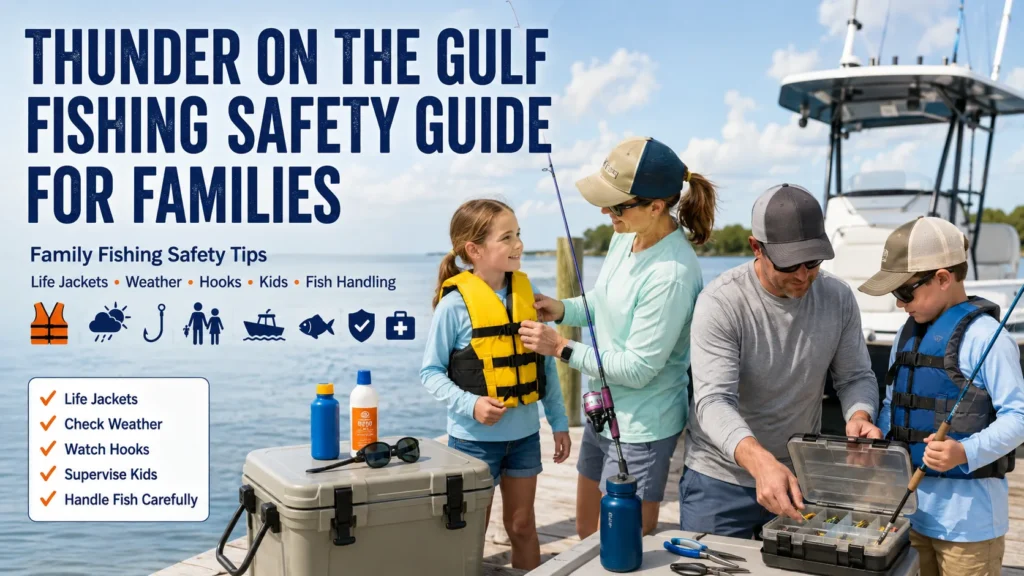
If I were planning a Thunder on the Gulf fishing trip with children, I would put safety ahead of catching fish. A family fishing trip can be a great experience, but Gulf water, hooks, moving boats, changing weather, and unfamiliar fish all need some planning.
This Thunder on the Gulf fishing safety guide focuses on the practical things I would check before and during a family fishing trip, whether you are using a charter, fishing from a pier, or fishing from shore.
Quick Answer
The safest way to enjoy Thunder on the Gulf fishing with kids is to prepare before you leave, check weather and water conditions, use properly fitted life jackets where required or appropriate, supervise children closely, and keep hooks and tackle under control. I would also let adults handle unfamiliar fish and follow the captain’s instructions on any charter.
Thunder on the Gulf Fishing Safety Checklist

I find that a simple checklist makes family trips much easier. Instead of trying to remember everything once you are already at the water, I would check these items before leaving.
| Safety check | What I would do |
| Weather | Check the forecast and look for storms, strong winds, or rough conditions |
| Water conditions | Check waves, currents, and local warnings where relevant |
| Life jackets | Make sure the right sizes are available and fit properly |
| Fishing gear | Check rods, reels, lines, hooks, and tackle before the trip |
| Sun protection | Pack sunscreen, hats, sunglasses, and suitable clothing |
| Water and snacks | Bring enough drinking water and easy snacks for the family |
| First-aid supplies | Carry basic first-aid items for minor problems |
| Charter rules | Ask what safety equipment and fishing gear the boat provides |
| Children | Explain the basic fishing safety rules before reaching the water |
| Emergency plan | Know who is responsible for the children and follow the captain’s instructions |
I would rather spend a few extra minutes checking these things than deal with a preventable problem later.
Check the Weather and Water Before Fishing

Weather should be one of the first things I check before a Gulf fishing trip. A sunny morning does not always mean conditions will stay the same for the entire outing.
Look at the forecast for:
- Wind
- Rain
- Thunderstorms
- Waves
- Temperature
- Water conditions
- Any local warnings
If you are fishing from shore or a pier, pay attention to local beach warning flags and current conditions. For fishing, this does not mean every warning automatically cancels your plans. It means I would take the conditions seriously and change the plan if they make the outing unsafe.
If you book a fishing charter, the captain has the final say on whether the trip should continue. I would follow the captain’s instructions if weather or water conditions change.
Life Jacket Safety for Kids

Life jackets are one of the first things I would check before getting on a boat.
A life jacket should fit the child properly. It should also be in good condition and easy to access.
For a charter trip, I would ask these questions before booking:
- Are child-sized life jackets available?
- What sizes do you carry?
- Does my child need to wear one for the entire trip?
- Can we bring our own approved life jacket if the supplied one does not fit well?
- Where are the life jackets stored?
I would never assume that a jacket will fit just because it is labeled for children. Fit matters.
Fishing Boat Safety for Families
A fishing boat has several risks that children may not notice.
The deck can become slippery. Fishing rods can get in the way. Waves can move the boat suddenly. Lines and hooks can also create trip hazards.
Before the boat leaves, I would make sure the kids know:
- Where they can sit or stand.
- Where they should stay while the boat is moving.
- What they should hold when the boat moves.
- Where the life jackets are.
- Which areas are off-limits.
- Who they should tell if they feel sick or unsafe.
On a charter, I would pay close attention to the captain’s safety briefing. I would also keep walkways clear. A fishing trip gets much safer when rods, coolers, bags, and tackle are not scattered across the deck.
Keep Children Safe Around Hooks and Tackle

Hooks are one of the easiest hazards to overlook on a family fishing trip.
A child may see a colorful lure and want to touch it. That is exactly why I would set a simple rule before we start fishing:
Children can fish, but an adult handles hooks when there is any doubt.
I would also teach children to look behind them before casting. Nobody should cast when another person is standing close behind them.
A few simple rules help:
- Keep unused hooks inside the tackle box.
- Do not let children swing lures around.
- Check the area behind you before casting.
- Keep pliers and cutters in a safe place.
- Let an adult change difficult rigs.
- Stop casting if the fishing area becomes crowded.
- Never rush when removing a hook.
The goal is not to make children afraid of fishing. I would rather teach them to treat hooks as tools that need care.
Let Adults Handle Unfamiliar Fish

Catching a fish can be the best part of the trip for a child, but I would not let a young angler grab every fish that comes over the side.
Some Gulf fish have sharp spines, teeth, or other parts that can cause injury. Hardhead catfish are one local example. Their dorsal and pectoral spines can cause painful injuries, so I would leave unfamiliar fish to an adult.
A good family rule is:
If you do not know how to hold the fish, do not pick it up.
I would let the child watch, ask questions, and learn how the fish is handled. That still gives them a useful part in the experience without asking them to take an unnecessary risk.
If the charter captain or guide gives specific instructions for handling a catch, I would follow those instructions.
Fishing Safety at a Pier
Pier fishing has a different set of risks from fishing on a boat.
You need to think about:
- Slippery surfaces
- Railings
- Open water
- Other anglers
- Casting space
- Hooks
- Strong wind
- Waves
I would give children a clear area where they can fish and make sure they are not moving around behind other people who are casting.
I would also keep young children close to an adult near the water’s edge.
A crowded pier needs extra care because several people may be casting at the same time. I would rather wait a few seconds for a clear casting area than rush a cast.
Shore Fishing Safety With Kids
Shore fishing can feel easier because you are not on a moving boat, but the water can still create risks.
Before setting up, I would look at the shoreline and water conditions. Pay attention to waves, currents, slippery rocks, and how close the children are getting to the water.
I would also avoid letting children wander away while adults are focused on fishing.
If the beach conditions become unsuitable, I would pack up. A fishing trip is not worth pushing through conditions that make the shoreline unsafe.
Protect Kids From Sun and Heat
Gulf Coast fishing can mean long periods outside, and children may not realize how hot or tired they are until they already feel uncomfortable.
I would pack:
- Drinking water
- Sunscreen
- Sunglasses
- A hat
- Lightweight clothing
- Towels
- Easy snacks
- Extra clothing for younger children
I would also plan breaks instead of expecting children to fish continuously.
This is one reason I prefer a flexible family fishing plan. If the kids need shade, water, food, or a break, I would stop fishing for a while.
A successful family fishing trip does not mean everyone has to hold a rod every minute.
What Kids Should Know Before the Trip

I would explain the basic rules before reaching the boat, pier, or shoreline.
Keep them simple:
1. Stay Close to Your Adult
Children should know who is responsible for watching them.
2. Never Touch a Hook Without Permission
Even a small hook can cause an injury.
3. Look Behind You Before Casting
Make sure nobody is standing in the casting area.
4. Listen When the Captain or Adult Gives an Instruction
Especially on a boat, instructions may need to be followed quickly.
5. Tell an Adult if You Feel Sick or Unsafe
Children should never feel they have to stay quiet because they do not want to interrupt the fishing.
I would explain these rules calmly rather than making the safety talk sound scary.
What I Would Ask a Fishing Charter Before Booking
If I were taking children on a fishing charter, I would ask a few questions before paying for the trip.
Is the Trip Suitable for Children?
Ask about the minimum age, trip length, and type of fishing.
Some trips are better suited to younger children than others. I would choose an outing that matches the child’s age, attention span, and comfort level.
Are Life Jackets Provided?
Ask about child sizes and fit.
Do not assume that every charter carries the exact size your child needs.
What Fishing Gear Is Provided?
Ask whether the charter supplies:
- Rods
- Reels
- Tackle
- Bait
- Fishing licenses
- Safety equipment
I would also ask whether there is anything the family needs to bring themselves.
What Happens if Weather Conditions Change?
This is worth asking before booking.
The operator should have a clear safety policy and explain what happens if conditions become unsuitable.
How Much Supervision Do Parents Need to Provide?
I would assume that parents remain responsible for watching their children unless the charter clearly says otherwise.
What to Do if Something Goes Wrong
The best response to a problem is usually a calm one.
If a Hook Causes an Injury
Stop using the tackle and get adult help. Do not let a child try to remove a deeply embedded hook.
If Someone Gets a Fish Spine Injury
Move away from the fish and get help from the captain, guide, or another responsible adult. Serious injuries need professional medical attention.
If a Child Becomes Sick
Stop fishing and move them to a safe, comfortable place. Give them water if appropriate and follow the captain’s instructions on a boat.
If Weather Suddenly Worsens
Do not try to make your own decision against the captain’s instructions on a charter. Follow the crew’s safety directions and leave the exposed area when conditions require it.
If Someone Falls Overboard
Alert the captain or other adults immediately and follow the boat’s emergency procedure. Do not jump into the water after them unless trained personnel specifically direct you to do so.
The exact emergency procedure depends on where you are fishing and what type of boat or location you are using.
My Family Fishing Safety Checklist Before Leaving
Before I leave for a Thunder on the Gulf fishing trip with kids, I would run through this short list:
- Weather checked
- Water conditions checked
- Life jackets checked
- Children’s sizes confirmed
- Fishing rods checked
- Hooks and tackle stored safely
- Sunscreen packed
- Hats and sunglasses packed
- Water packed
- Snacks packed
- First-aid supplies packed
- Phone charged
- Charter instructions confirmed
- Children know the basic safety rules
- Emergency instructions understood
This takes very little time, but it can prevent a lot of avoidable problems.
Thunder on the Gulf Fishing Safety: Final Take
For me, family fishing safety comes down to preparation, supervision, and knowing when to change the plan.
I would check the weather, make sure children have suitable flotation equipment when needed, keep hooks under control, let adults handle unfamiliar fish, and listen closely to the captain on a charter. I would also accept that sometimes the safest choice is to fish for less time or postpone the trip.
The goal is simple: keep the family safe while leaving enough room for everyone to enjoy the fishing.
FAQs About Thunder on the Gulf Fishing Safety
Is Thunder on the Gulf fishing safe for kids?
It can be a safe and enjoyable family activity when you plan ahead and supervise children closely. I would check the weather and water conditions, use properly fitted life jackets on boats, keep hooks under control, and follow the captain’s safety instructions.
What safety gear should I bring for a family fishing trip?
I would bring suitable life jackets when needed, sunscreen, drinking water, a first-aid kit, sunglasses, hats, and safe storage for hooks and tackle. For a full list of fishing equipment, I would also check your Thunder on the Gulf fishing gear checklist.
Do kids need life jackets while fishing?
The exact requirements depend on the boat, the child’s age, local rules, and the type of trip. I would ask the charter about its requirements before booking and make sure any life jacket fits the child properly.
How can I keep kids safe around fishing hooks?
I would keep unused hooks inside the tackle box, teach children to look behind them before casting, and let an adult handle difficult rigs or hook removal. Children should never swing lures or cast when someone is standing behind them.
Should children handle the fish they catch?
I would let younger children avoid handling unfamiliar fish. Some Gulf fish have sharp spines or other parts that can cause injury. An adult can remove the hook and show the child how the fish is handled safely.
What should I do if the weather changes during a fishing trip?
If you are on a charter, follow the captain’s instructions. If you are fishing from shore or a pier, I would stop and reassess the conditions rather than continuing just because the trip has already started.
Is pier fishing safe for children?
Pier fishing can be suitable for families, but children need close supervision around the water. I would also watch for slippery surfaces, other anglers, hooks, waves, and limited casting space.
What should children know before going fishing?
I would teach them five basic rules: stay close to the supervising adult, never touch hooks without permission, look behind them before casting, listen to safety instructions, and tell an adult immediately if they feel sick or unsafe.
What should I ask for a fishing charter before taking my kids?
I would ask about the minimum age, trip length, child-sized life jackets, included fishing gear, weather policies, and how much supervision parents need to provide. These questions can help you choose a trip that suits your family.